The strongest keto response in type 2 diabetes showed up where many readers would care most: in obese patients trying to move both glucose and weight. In an American Diabetes Association abstract, researchers followed 505 people who completed a 12-week trial after 611 were enrolled, and found that the ketogenic arm produced the largest HbA1c and body-weight reductions in obese participants, while a lower-carbohydrate plan helped overweight participants in both directions.
All of the participants were taking metformin and were randomized to either a ketogenic diet or a low-carbohydrate diet. Clinical measures and serum samples were collected at baseline and again at 3 months, and the team used untargeted chromatography-mass spectrometry to look beyond standard diabetes markers and into the metabolome. That matters for keto readers because it tests a bigger question than simple calorie trimming or carb counting: do keto and lower-carb diets act through the same pathway, or do they leave different biochemical fingerprints?
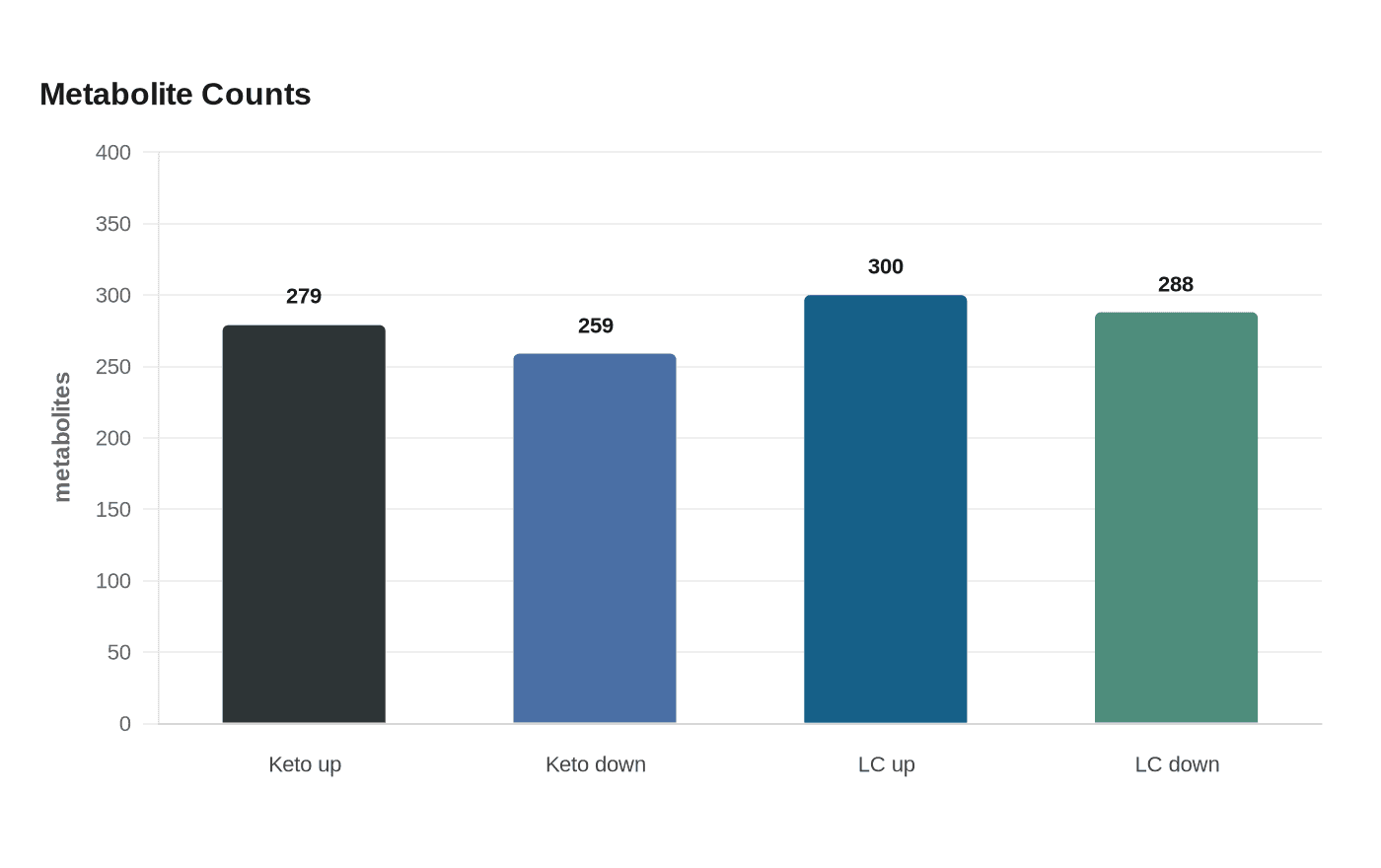
The metabolomics readout pointed to meaningful differences. The analysis identified 2,410 post-intervention markers. In the ketogenic group, 279 metabolites were upregulated and 259 were downregulated. In the low-carbohydrate group, 300 metabolites were upregulated and 288 were downregulated. The lower-carbohydrate arm also showed a negative association between weight and histidinyl hydroxyproline, and a positive association between HbA1c and 4-hydroxyphenylacetylglutamic acid. In the ketogenic arm, HbA1c tracked positively with glutamyl isoleucine and negatively with diethanolamine.
That pattern gives the abstract its real-world value. The authors are not just saying fewer carbs worked better in one group; they are suggesting the two approaches may influence diabetes biology in distinct ways, which opens the door to matching diet style to patient phenotype. That lines up with the American Diabetes Association’s 2026 Standards of Care, which say nutrition plans should improve A1C, blood pressure, cholesterol, and body-weight goals, and with obesity guidance that says modest weight loss improves glycemia while larger weight loss can substantially lower A1C and fasting glucose and may promote remission.
The broader literature already leans in the same direction. A 2025 meta-analysis of 17 randomized trials with 1,197 participants found low-carbohydrate diets improved HbA1c, fasting glucose, triglycerides, HDL cholesterol, weight, BMI, blood pressure, and waist circumference in overweight or obese people with type 2 diabetes. But the new metabolomics data sharpen the debate for keto followers: success may depend not only on carb restriction itself, but on whether the person in front of you is the kind of patient whose metabolism responds best to strict keto rather than a more flexible low-carb plan.
Every story on Keto Diet Magazine is assembled by an automated editorial system that works from verified research, official records, and credible reporting, then clears automated accuracy and moderation checks before it goes live. The standards that system follows are set and overseen by the people who run the publication. Read our full editorial policy.
Did this article answer your question?