Children's Health has treated hundreds of children on a strict ketogenic diet for seizure reduction since 2005, with support services built in. Keto looks simple on social media, but the body does not handle it the same way. A high-fat, very-low-carbohydrate plan pushes the liver toward fat oxidation and ketone production, a fuel shift that mimics fasting physiology and can be perfectly manageable for some people, dangerous for others.
The first question is metabolism, not willpower
That is why ketogenic diets are treated as a medically supervised therapy in some settings, especially drug-resistant epilepsy, rather than just a lifestyle tweak. The diet has long been used in epilepsy care, and the International Ketogenic Diet Study Group published updated pediatric recommendations in 2018 after a decade of research and clinical experience.
Keto is not simply about skipping bread and sugar. It changes the way energy is made and used, so the real self-screen is whether your body can safely tolerate a heavy reliance on fat. If the answer is no, the consequences can be severe.
Avoid keto completely if fat cannot be burned safely
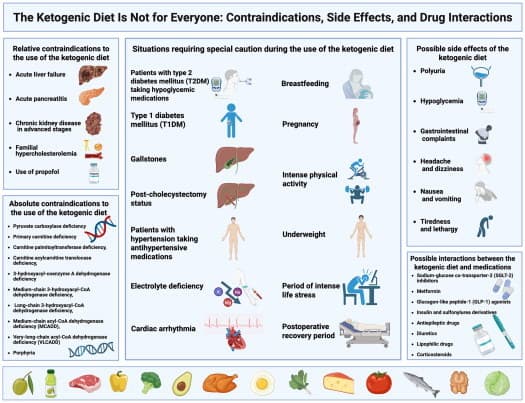
The biggest red flags are rare inherited metabolic disorders that impair fat handling. These include primary carnitine deficiency, carnitine palmitoyltransferase I deficiency, carnitine palmitoyltransferase II deficiency, carnitine translocase deficiency, medium-chain acyl-CoA dehydrogenase deficiency, very-long-chain acyl-CoA dehydrogenase deficiency, and long-chain 3-hydroxyacyl-CoA dehydrogenase deficiency.
In those conditions, the body cannot properly break down fat for energy. Pushing metabolism toward fat-based fuel can trigger severe hypoglycemia, weakness, rhabdomyolysis, liver problems, or life-threatening metabolic crises. That is why fatty-acid oxidation defects are exclusion criteria for ketogenic therapy.

Pyruvate carboxylase deficiency and related disorders of carbohydrate metabolism belong in the same danger zone. Keto is often sold online as a universal fix for blood sugar problems, but some metabolic defects depend on pathways that a ketogenic plan restricts. If you have a known inherited metabolic disorder, keto is not a casual experiment, it is a specialist-level decision.
Only try keto with specialist supervision
Drug-resistant epilepsy is the clearest example of when keto belongs in a clinical program. In pediatric care, the diet is commonly started only after a multidisciplinary evaluation, with ongoing monitoring because it is a prescription therapy, not a generic wellness plan.
Before a child starts, hospital-based protocols often require screening labs such as serum amino acids, urine organic acids, an acylcarnitine profile, lactate, pyruvate, and ammonia. Some initiation pathways also list malnutrition and defects in fatty-acid oxidation as exclusion criteria, which shows how seriously teams take the metabolic screen before the first meal is swapped.
The same caution extends beyond pediatrics. A 2021 review in Frontiers in Nutrition flagged pregnant women and people with kidney disease as groups at risk of adverse health effects on keto. Severe liver disease, pancreatitis, gallbladder disease, a history of disordered eating, significant malnutrition, kidney disease, and a history of kidney stones all deserve individualized medical review before anyone starts a high-fat, restrictive plan.
What the pediatric safety net is trying to catch
Those screening labs help identify hidden disorders that can turn a ketogenic diet from treatment into harm, especially in children whose energy needs and metabolic reserves are different from adults’. Kidney stone formation and bone health are longer-term concerns in pediatric care.
The International League Against Epilepsy maintains a free-access collection of ketogenic diet articles for epilepsy care.
Where the lower-risk group starts
If you are a generally healthy adult, not pregnant, without known liver, kidney, or gallbladder disease, without a history of eating disorders or significant malnutrition, and without any known metabolic disorder, keto is usually in the lower-risk category compared with the groups above. That does not make it trivial, but it does mean the major hard stops are less likely to apply.
Even then, the safest version of keto starts with a clean medical history, especially if there is any family history of unexplained infant deaths, metabolic disease, repeated episodes of low blood sugar, muscle breakdown, or liver problems. Those details matter because inherited fat-oxidation disorders are rare, but when they are present, they change the answer completely.
Every story on Keto Diet Magazine is assembled by an automated editorial system that works from verified research, official records, and credible reporting, then clears automated accuracy and moderation checks before it goes live. The standards that system follows are set and overseen by the people who run the publication. Read our full editorial policy.
Did this article answer your question?