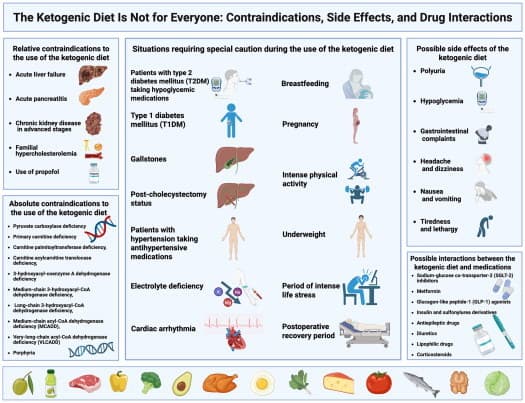
Low-carb eating during pregnancy can improve glucose control, but it does not come free. A new American Diabetes Association abstract presented on June 6, 2026, suggests that very low carbohydrate intake may help gestational diabetes numbers, while also raising familiar keto-era concerns about fiber, vitamins, minerals, and overall dietary adequacy.
What the new analysis found
The abstract, a secondary analysis of the DiGest trial, looked at 215 women with gestational diabetes before randomization. Investigators used masked continuous glucose monitoring and 24-hour dietary recalls to compare women whose habitual carbohydrate intake fell into three bands: standard at more than 175 grams per day, low at 120 to 175 grams, and very low below 120 grams.
The pattern was clear enough to matter, but not simple enough to turn into a blanket keto rule. Women eating low or very low carbohydrate consumed less energy, less fiber, and lower amounts of some vitamins and minerals, while taking in proportionally more protein and fat. On the glucose side, eating under 120 grams of carbohydrate per day was linked with less time above range on continuous glucose monitoring, which points to better day-to-day glycemic control.
Birthweight told a more nuanced story. There was an observed reduction in birthweight only when lower carbohydrate intake was paired with energy restriction. Low carbohydrate intake by itself was not associated with a birthweight difference. That matters because it suggests the benefit is not just about carb count, but about the full dietary package: energy intake, nutrient density, and how the whole diet is structured.
Why pregnancy changes the keto calculation
For keto-curious pregnant readers, the headline is not that carbs are “bad” in pregnancy. It is that pregnancy changes the risk-benefit equation. The recommended dietary allowance for carbohydrate in pregnancy is 175 grams per day, set to support maternal and fetal glucose needs, including the brain’s demand for glucose. That benchmark exists for a reason, and it is not an arbitrary high-carb preference.
The American Diabetes Association’s 2026 Standards of Care also frame the stakes clearly: diabetes in pregnancy is increasing in the U.S. alongside the global obesity epidemic, and hyperglycemia in pregnancy is tied to serious outcomes including preeclampsia, fetal demise, macrosomia, neonatal hypoglycemia, and later-life metabolic risk in offspring. In other words, better glucose control is a real goal, not a cosmetic one. But pregnancy is also a period when underdoing calories, fiber, or micronutrients can create a different set of problems.
That is why the new analysis lands as a cautionary piece for keto-minded readers. The abstract does not say that less carbohydrate is always better. It says a very low carbohydrate intake appeared safe and improved glycemia, while also making nutrient adequacy a live concern. In pregnancy, that trade-off matters more than it does in many nonpregnant adults, because the diet has to support both maternal health and fetal growth at the same time.
How DiGest fits the bigger picture
The DiGest program is an important part of the backdrop here. It is a multicentre, randomized, double-blind whole-diet intervention conducted in England and funded by Diabetes UK. The protocol planned to randomize 500 women with gestational diabetes and a BMI of at least 25 kg/m² to either standard 2,000-kcal/day or reduced 1,200-kcal/day diet boxes from around 28 to 29 weeks of gestation until delivery.
The main DiGest trial, published online on February 19, 2025, randomized 425 participants. It found that the reduced-energy diet was safe in pregnancy, but it did not change maternal weight change or offspring standardized birthweight. That result matters because it shows how hard it is to move pregnancy outcomes with diet alone, even in a carefully run trial, and it keeps the focus on safety and adequacy rather than quick wins.
The new secondary analysis adds another layer: not all low-carb eating patterns look the same. It is possible to lower carbohydrate intake and improve glycemia, but the rest of the diet still has to carry the load. If energy intake is too low, or if the food choices are stripped of fiber and key micronutrients, the diet may solve one problem while creating another.
Pattern quality matters as much as carb count
That theme is not unique to DiGest. A 2024 prospective cohort study in Wuhan, China found that a healthy low-carbohydrate pattern during pregnancy, one emphasizing plant protein and unsaturated fat, was associated with a lower risk of gestational diabetes. By contrast, an unhealthy low-carb pattern was linked with a higher risk.
That distinction is exactly the point keto readers often miss when pregnancy enters the picture. Low-carb is not one single thing. A lower-carb menu built around eggs, fish, nuts, seeds, nonstarchy vegetables, and unsaturated fats is not nutritionally identical to a lower-carb menu that crowds out fiber, folate, iron, calcium, and vitamin D. Pregnancy makes those differences more consequential, not less.
For readers thinking about a pregnancy version of keto, the practical takeaway is straightforward:
- Keep the medical team in the loop before tightening carb intake.
- Watch folate, iron, vitamin D, calcium, fiber, and total calories as closely as glucose readings.
- Treat very low carbohydrate intake as a clinical decision, not a casual lifestyle swap.
- Focus on diet quality, not just the daily carb number.
The bottom line for keto-curious pregnancy
The new ADA abstract does not give keto a green light for pregnancy, and it does not ban lower-carb eating either. It points to a narrower, more useful conclusion: lower carbohydrate intake can improve glucose metrics in gestational diabetes, but pregnancy adds nutritional demands that make extreme restriction a delicate proposition.
That is the tension at the center of this story. Less carbohydrate may help steady glucose, yet pregnancy asks for enough fuel, enough fiber, and enough micronutrients to support two bodies at once. In that setting, the real question is not whether low-carb works, but whether the benefit in glucose control is worth the nutritional trade-offs.
Every story on Keto Diet Magazine is assembled by an automated editorial system that works from verified research, official records, and credible reporting, then clears automated accuracy and moderation checks before it goes live. The standards that system follows are set and overseen by the people who run the publication. Read our full editorial policy.
Did this article answer your question?