Keto’s real medical history is exactly why the schizophrenia chatter is so slippery. Ketogenic diet therapy has been used for epilepsy since the 1920s, and major epilepsy guidance now treats it as an established, effective nonpharmacologic option for intractable childhood epilepsy. That history matters, but it does not magically turn a serious, preliminary psychiatric hypothesis into a proven treatment.
What keto has actually earned
In epilepsy, keto is not internet folklore. Johns Hopkins Medicine says its pediatric epilepsy team has used the ketogenic diet since the 1920s and has treated more than 1,500 children with it. The 2018 International Ketogenic Diet Study Group update goes even further, describing ketogenic dietary therapies as established, effective nonpharmacologic treatments for intractable childhood epilepsy.
It is also not one single plan. The epilepsy toolbox includes the classic ketogenic diet, the modified Atkins diet, the medium-chain triglyceride ketogenic diet, and the low glycemic index treatment. That distinction matters because people often talk about “keto” as if every version works the same way, when in clinical practice these are different therapies with different levels of restriction and different use cases.
Why schizophrenia is not the same conversation
Schizophrenia is a very different disease from epilepsy, and that difference is the center of the misinformation problem. The World Health Organization says schizophrenia causes psychosis and is associated with considerable disability. The National Institute of Mental Health says it is usually first diagnosed between ages 16 and 30, which means it often hits people right as education, work, and relationships are taking shape.
The mortality burden is also severe. The WHO says people with schizophrenia are two to three times more likely to die early than the general population. A comparative-risk study estimated the condition was responsible for about 50,000 deaths and almost 1.5 million years of life lost globally in 2019 from ischemic heart disease, stroke, and diabetes combined. That is why any diet discussion in this space has to be careful: people with schizophrenia already face elevated cardiovascular risk before keto ever enters the room.
What the newer keto-psychiatry studies do, and do not, show
The most interesting recent work does not prove a cure. It points to feasibility, signal, and a reason to keep studying. A 2024 Stanford pilot study followed 21 adults with schizophrenia or bipolar disorder who had metabolic abnormalities and found that a ketogenic diet was feasible and acceptable as a supplemental treatment. A related publication from that trial reported improvements in weight, BMI, waist circumference, and visceral adipose tissue among participants who stuck with the plan.
That is promising, but it is still early. The current evidence base for ketogenic diets in schizophrenia is built on small pilot studies and case reports, not definitive randomized evidence. A randomized controlled clinical trial protocol for ketogenic metabolic therapy in schizophrenia and bipolar disorder was published in 2024, which shows the field is trying to answer the question properly, not just loudly.
That distinction is the whole game. A pilot study can tell you whether a path is worth walking. It cannot tell you that the destination is cure.
Why the diet is easy to oversell
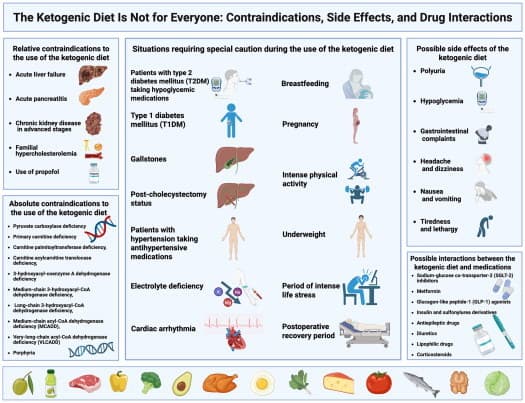
Keto is hard work even when it is used for a condition with a long evidence trail. It is highly restrictive, often difficult to maintain, and can become problematic without professional supervision. Long-term use can raise issues with lipids, nutrient adequacy, and cardiovascular risk, which is especially relevant for people with schizophrenia, since cardiometabolic disease is already a major part of their health burden.
Harvard Medical School has also pointed to evidence that keto diets may raise cardiovascular risk factors such as elevated LDL cholesterol, which is another reason not to turn a promising idea into a blanket recommendation. If someone is already vulnerable to weight gain, diabetes, or heart disease, the burden of proof for a restrictive diet should be high, not viral.
That is where the internet tends to fail. A legitimate medical history in epilepsy gets dragged into a completely different disease, then simplified into a miracle narrative because the word keto already carries identity, culture, and politics. Once that happens, nuance disappears fast, and the line between “worth studying” and “proven therapy” gets flattened into one catchy claim.
How to read keto-and-mental-health claims without getting spun
If you want to separate signal from hype, keep three questions in mind:
- Is the claim based on epilepsy evidence, or on actual schizophrenia data?
- Is the study a pilot, a case report, or a randomized trial with enough people to matter?
- Does the claim talk about symptom improvement, metabolic change, or cure, and are those being confused?
The healthy version of this conversation is not anti-keto. It is pro-evidence. Nutritional psychiatry is a real and interesting field, and researchers, from Stanford Medicine to other academic centers, are asking serious questions about whether metabolic therapy can help some patients. But serious questions need serious methods, and the bar stays high because the stakes are high.
That is the part the online debate keeps missing. Keto’s epilepsy legacy is real, well documented, and medically respectable, but it does not prove schizophrenia claims on its own. If the science for mental health is going to move forward, it will do so through controlled trials and careful language, not through the kind of certainty the feed rewards.
Every story on Keto Diet Magazine is assembled by an automated editorial system that works from verified research, official records, and credible reporting, then clears automated accuracy and moderation checks before it goes live. The standards that system follows are set and overseen by the people who run the publication. Read our full editorial policy.
Did this article answer your question?