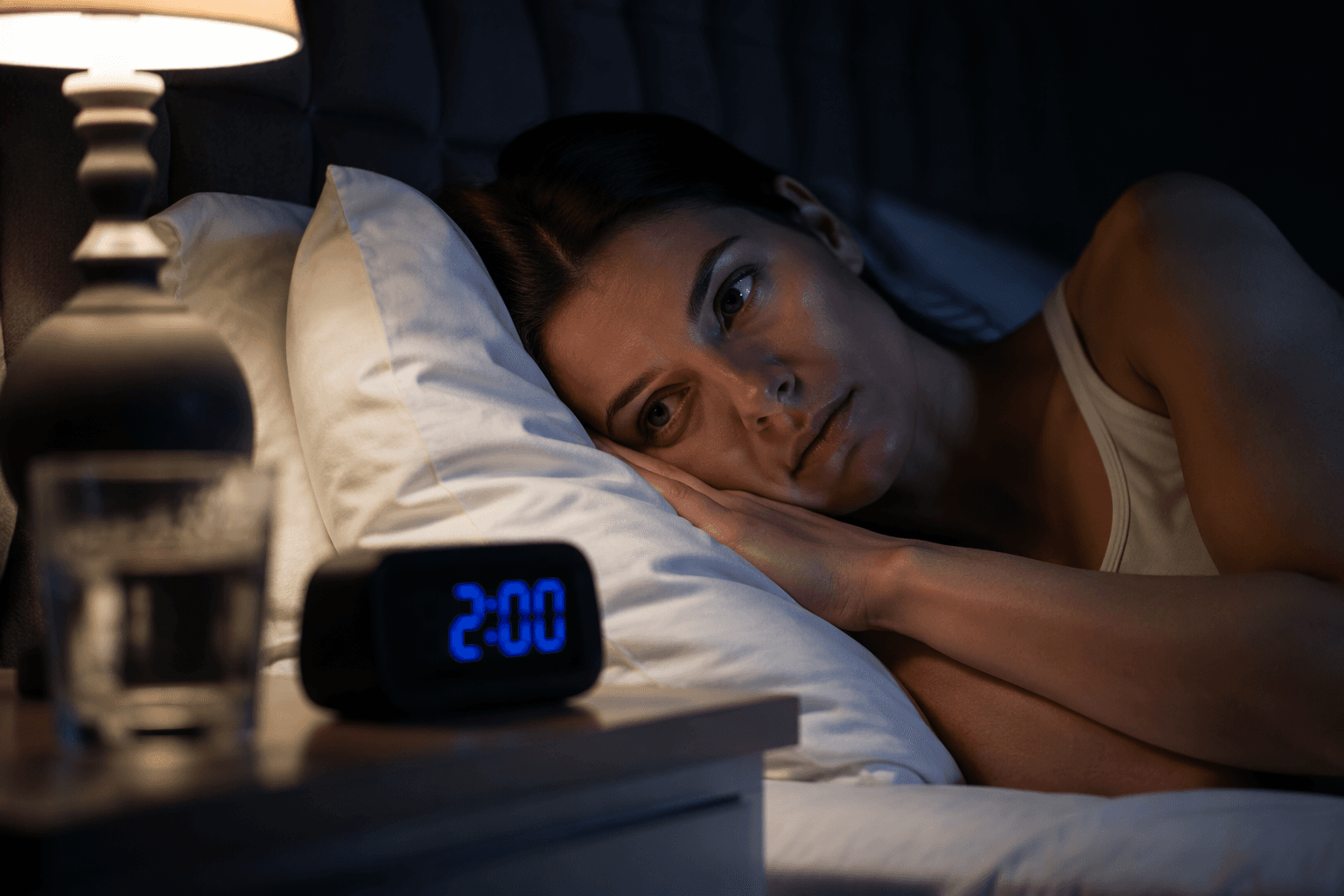
A racing heart at 3 a.m. can be a keto problem, not ordinary insomnia: very low carbohydrate intake can drain liver glycogen overnight. In that state, the body can push cortisol-driven gluconeogenesis between about 2 and 4 a.m., and some people feel it as a sudden, alert wake-up.
Why ultra-low carb can pull you out of sleep
When carbs are pushed very low, the body has less overnight glucose available from liver glycogen. That can shift the system into gluconeogenesis, the process of making new glucose, with cortisol involved in the surge that can interrupt sleep.
This is most likely to show up during the transition period, when the body is still adapting to a lower-carb pattern. Sleep Foundation and American Academy of Sleep Medicine resources both flag insomnia, awakenings, and changes in sleep quality as concerns people report on low-carb plans, which fits the pattern many keto followers describe when they suddenly start waking early and cannot drift back off.
How to tell keto-related wake-ups from generic insomnia
The biggest clue is timing. Keto-related sleep disruption often lands in a narrow window, roughly 2 to 4 a.m., rather than showing up as vague, all-night restlessness. The wake-up can feel physical, not just mental, with a pounding heart, a sense of being “on,” or a body that seems to have switched into daytime mode too soon.
The second clue is when it starts. If the problem appeared soon after tightening carbs, especially in the first stretch of a low-carb or ketogenic cut, that points toward diet-related sleep disruption more than a long-standing insomnia pattern. Sleep disruption on low-carb diets is often discussed as a transition-period issue rather than a permanent effect.
What the research says about carbs and sleep
The biology is plausible, though the evidence base is mixed. A 2022 review in PMC, “Carbohydrate and sleep: An evaluation of putative mechanisms,” points to several possible pathways: glucose availability, insulin, tryptophan and serotonin signaling, and circadian hormones. The review also makes the key limitation clear: the evidence base is still mixed.
Two more papers add context without settling the debate. A 2021 systematic review, meta-analysis, and meta-regression in Nutrients examined the effects of carbohydrates on sleep, and a 2024 Frontiers in Nutrition study looked at the relationship between carbohydrate intake and sleep patterns. Together, they indicate that carbohydrate timing and type may influence sleep quality, but the findings are not uniform across studies.
This is not a brand-new concern, either. The recent reviews show that the exact mechanism and the size of the effect still vary from person to person. A 2008 PubMed study, “Acute effects of the very low carbohydrate diet on sleep indices,” examined sleep indices during a very low-carbohydrate diet.
What to adjust before abandoning keto
The most practical fix is often the least dramatic one: add a small evening carb serving instead of scrapping low-carb eating entirely. Small carbs such as berries or sweet potato can be enough to blunt the overnight drop for some people.
A useful troubleshooting approach is to make one change at a time and watch the sleep pattern closely.
1. Keep the day’s carbs low, but add a modest portion with dinner or as an evening snack.
2. Choose a simple carb source, like berries or sweet potato, rather than a large mixed meal.
3. Track whether the 2 to 4 a.m. wake-up eases over the next few nights.
Because the research points to timing as well as total intake, the evening window is worth paying attention to. If sleep gets better after a small carb addition, that is a strong clue that the issue was the overnight fuel shift rather than generic insomnia.
Every story on Keto Diet Magazine is assembled by an automated editorial system that works from verified research, official records, and credible reporting, then clears automated accuracy and moderation checks before it goes live. The standards that system follows are set and overseen by the people who run the publication. Read our full editorial policy.
Did this article answer your question?