A recent Hearty Home Cook meal plan treats vegan keto as a macro puzzle, not a contradiction. The whole point is simple: you can stay in ketosis without animal foods if you stop chasing the usual bacon-and-butter template and start building meals around fat, fiber, and disciplined carb counts.
How vegan keto actually works
The diet still aims for the same metabolic switch as any other keto plan. When glucose runs low, the liver begins making ketones from fatty acids, and your body shifts from burning sugar to burning fat. Hearty Home Cook lays out the standard keto-style macro target as roughly 70% to 80% fat, 15% to 25% protein, and 5% to 10% net carbs, which is the part that matters most if you are trying to keep plant-based eating from drifting out of ketosis.
That net-carb detail is where a lot of people get sloppy. Subtracting fiber lets you keep the volume of food relatively high, so you are not forced into tiny, miserable portions just to stay under the carb ceiling. That is the practical advantage of vegan keto: you can lean on high-fiber plant foods and still keep total carbohydrate low enough to remain in ketosis, as long as you respect the math.
The fats that do the heavy lifting
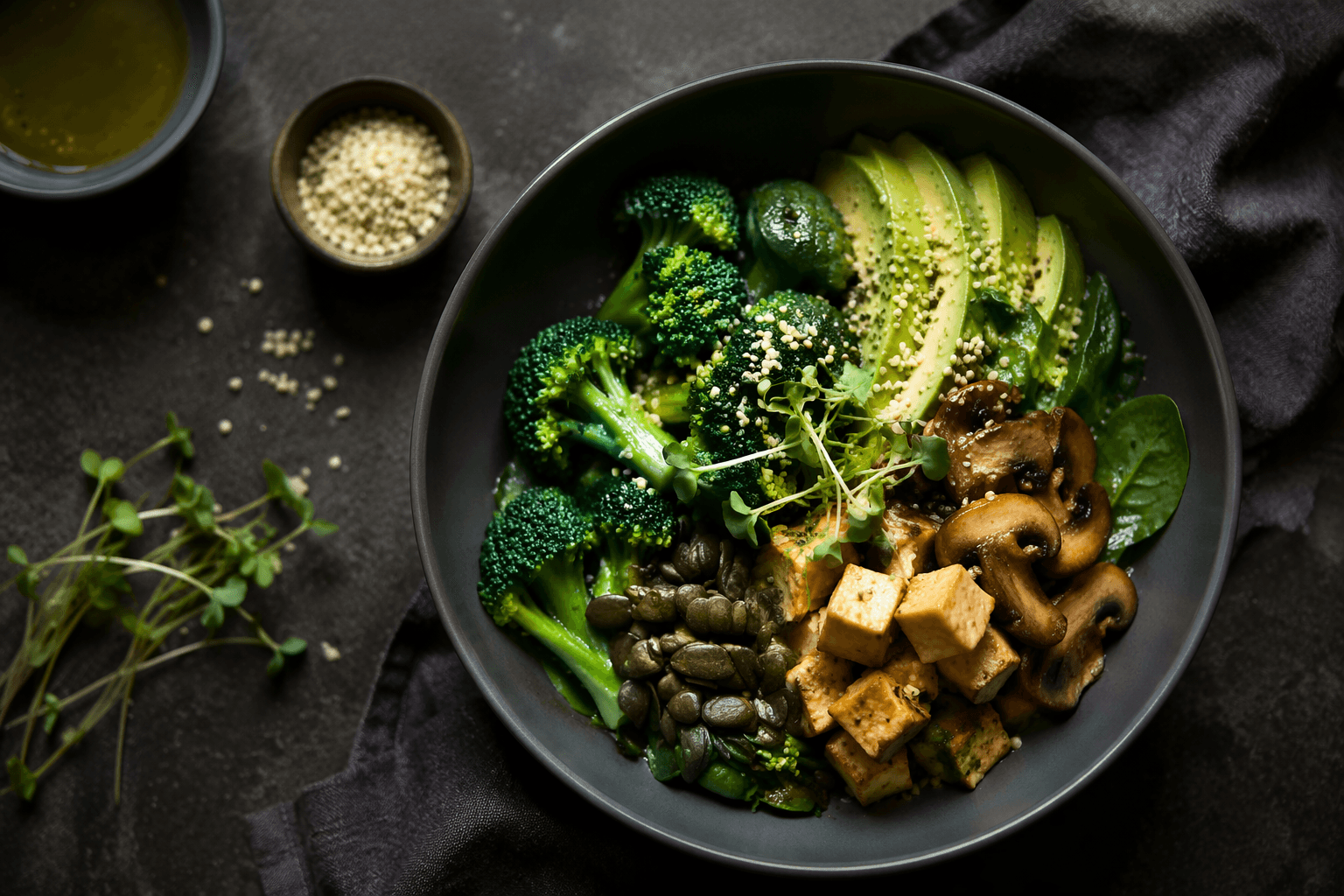
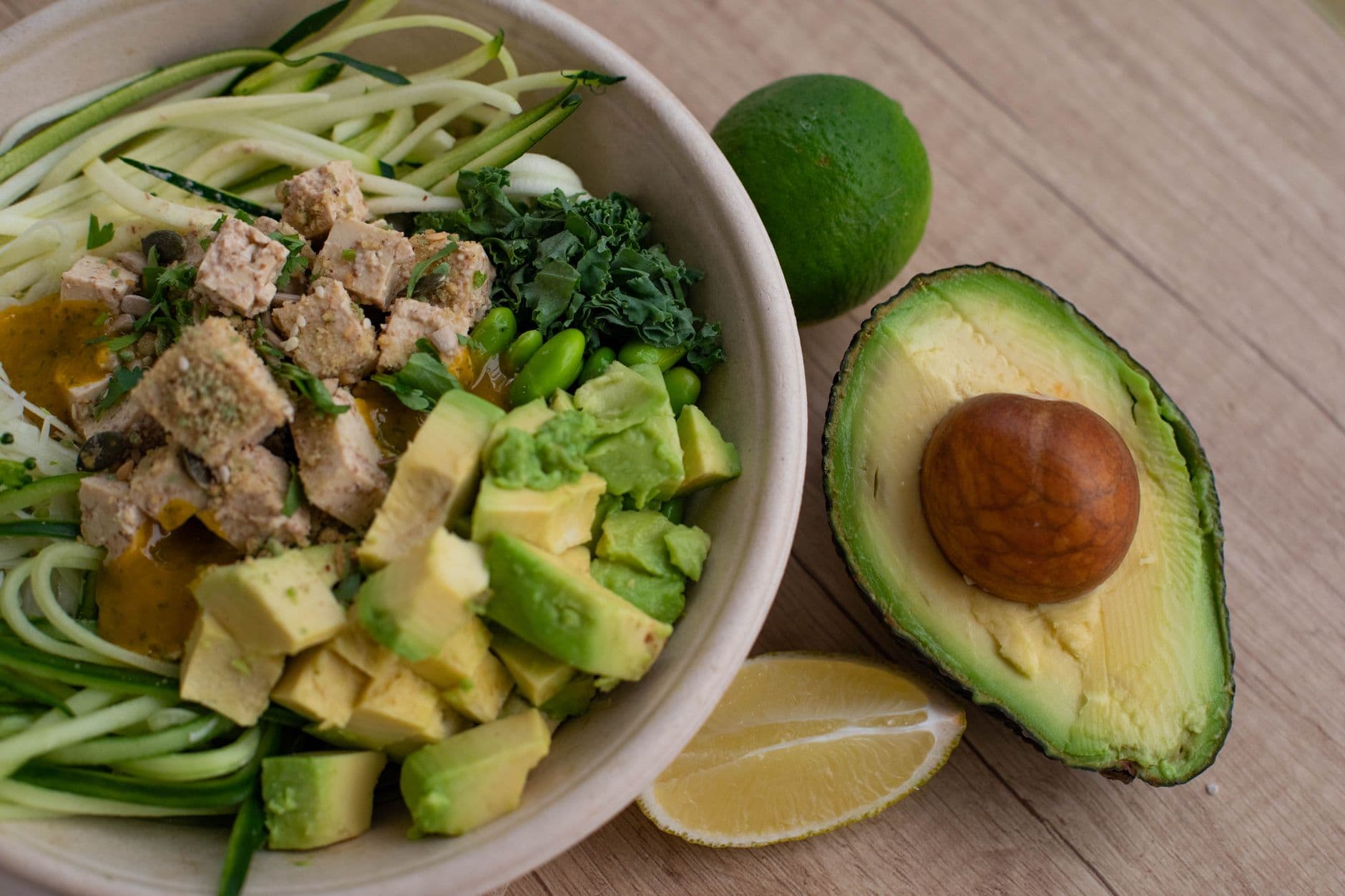
If you try to do vegan keto with the same mindset you would use for standard vegan eating, you will miss the point. This is not the place to build plates around grains, beans, and fruit. The guide makes the case for a different pantry: avocados, coconut oil, nuts, seeds, and other high-fat plant foods that can carry the diet without blowing up carb totals.
That also changes how you should think about meals. Instead of asking how to replace cheese or eggs, ask how to create enough fat density in each plate to hit the macro target. In practice, that means portions matter as much as ingredients. A meal can look plant-forward and still be keto, but only if the fat source is deliberate and the carb creep is controlled.
Why the keto label is more than a trend
Harvard Health puts the diet in a much older frame than the internet usually does. It says ketogenic eating has been used for centuries in medicine and was introduced as an effective treatment for epilepsy in children in 1920. It also notes that a true ketogenic diet can supply as much as 90% of daily calories from fat, which is a good reality check for anyone assuming keto is just “low carb with some extra avocado.”
That same context matters because keto is not something to treat casually. Harvard warns that pushing fats and proteins too hard, or cutting carbs too aggressively, can carry risks. Vegan keto may sound gentler than the animal-based version, but it still demands the same discipline around macro balance, and the same respect for what happens when you strip a diet down too far.
The nutrient gaps you cannot ignore
This is where vegan keto gets tricky fast. Harvard Health says vitamin B12 is found naturally only in animal products, and the NHS flags B12, iodine, selenium, calcium, vitamin D, and omega-3 as nutrients vegans need to pay attention to. On top of that, Harvard notes that vegans who do not eat animal foods are at risk for iodine deficiency.
Cutting grains, legumes, and many fruits makes those gaps harder, not easier, because vegan keto removes some of the easiest plant-based sources of calories and minerals at the same time. If you want the diet to be more than a short-term stunt, you need fortified foods or supplements in the picture, especially for B12 and the other nutrients the NHS highlights. Otherwise, you can hit ketosis and still fall short on basic nutrition.
What the research says about plant-based and keto patterns
The current interest in vegan keto is not just ideological. In a National Institutes of Health crossover study, volunteers followed vegan and ketogenic diets for two weeks each in random order. NIH reported that the vegan phase was associated with innate-immune responses, while the keto phase was associated with adaptive-immune responses, and the Nature Medicine paper noted that ketogenic feeding increased ketone bodies and produced different effects on immune cell frequencies, the microbiome, and host amino acid metabolism.
That does not prove vegan keto is superior. It does show that the metabolic and immune effects of plant-based eating and ketogenic eating are not interchangeable, even when both are tightly controlled. If you care about ketosis, you are not just changing macros. You are changing the body’s fuel state and, according to the NIH and Nature Medicine work, likely changing how the immune system and microbiome respond as well.
An earlier NIH inpatient trial adds another useful point. The plant-based low-fat diet in that study was 10.3% fat and 75.2% carbohydrate, while the animal-based low-carb diet was 75.8% fat and 10% carbohydrate. Participants ate 550 to 700 fewer calories per day on the plant-based low-fat diet, even though they reported similar hunger, enjoyment, and fullness. That is a reminder that food structure, not just willpower, shapes intake.
Harvard T.H. Chan School of Public Health has also reported that low-carbohydrate diets emphasizing healthy plant-based proteins and fats were associated with slower long-term weight gain than animal-based low-carb diets. That finding does not turn vegan keto into a miracle, but it does support the idea that the source of your fat and protein matters, not just the carb number on paper.
The real tradeoffs
Vegan keto can work, but it is not the flexible, forgiving version of plant-based eating that a lot of people hope for. It is more expensive than basic vegan staples if you lean heavily on nuts, seeds, avocados, and specialty keto products. It is also less convenient, because every meal has to be built with carb counts in mind, and that takes planning.
The bigger tradeoff is variety. Once you cut out most grains, legumes, and fruit, the diet narrows fast. That is why the most practical version of vegan keto is the one that stays brutally simple: keep protein adequate, keep carbs low, make fat the anchor, and do not pretend that plant-based automatically means nutritionally complete.
The takeaway from the Hearty Home Cook meal plan is the same one that runs through the rest of the evidence: vegan keto is hard, but it is not impossible. If you treat it like a macro problem instead of a lifestyle slogan, the fuel switch still works.
Every story on Keto Diet Magazine is assembled by an automated editorial system that works from verified research, official records, and credible reporting, then clears automated accuracy and moderation checks before it goes live. The standards that system follows are set and overseen by the people who run the publication. Read our full editorial policy.
Did this article answer your question?