%3Amax_bytes(150000)%3Astrip_icc()%2F6437804-roasted-spaghetti-squash-with-ground-turkey-and-vegetables-Melisa-4x3-1-f4cc4cc0164b47a4b2032b8be8ad7252.jpg&w=1920&q=75)
A pasta-style dinner that stays firmly in low-carb territory
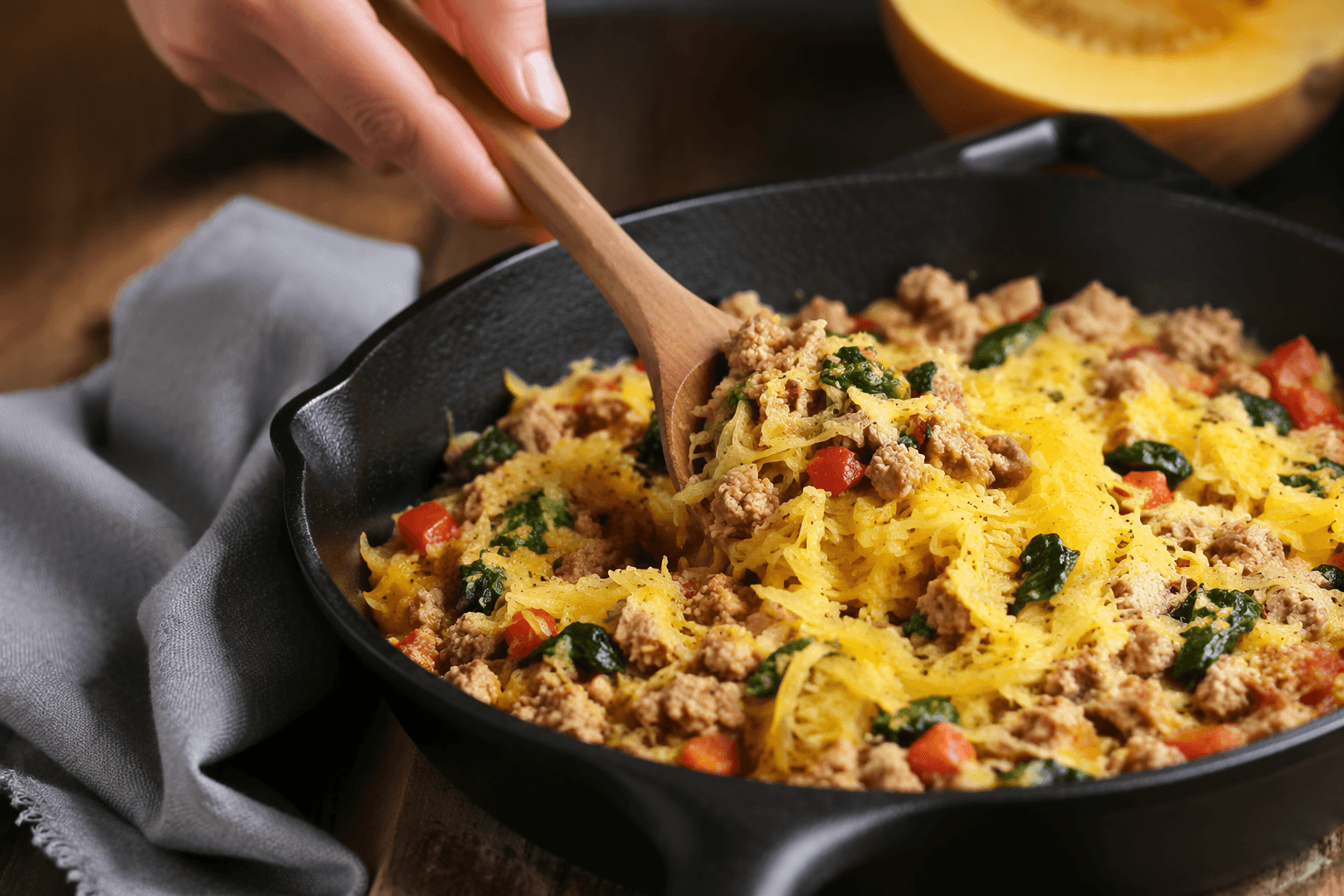
Spaghetti squash gives this turkey skillet the comfort-food feel of a pasta bowl without leaning on wheat noodles. Roasted until tender, the squash pulls into strands that mimic spaghetti well enough to carry a savory topping, and it can even stay in its shell for serving when you want a built-in bowl. That simple swap is the heart of the dish: familiar Italian-style flavor, but with a vegetable base that keeps the meal lighter and more keto-friendly than a standard skillet pasta.
The recipe from Melisa at Allrecipes combines roasted spaghetti squash with browned ground turkey, diced tomatoes, asparagus, onion, basil, garlic, oregano, chicken broth, salt, and black pepper. It is built as a two-serving dinner and takes about 50 minutes, which makes it a realistic weeknight option rather than a weekend project. The page frames it as a low-carb alternative to pasta, and that is exactly where its appeal lands for keto-minded cooks who still want a dinner that feels hearty and complete.
Why spaghetti squash works so well as the base
Spaghetti squash earns its place here because it brings volume, texture, and a mild flavor that lets the skillet mixture do the heavy lifting. Cleveland Clinic notes that spaghetti squash can help cut calories from a meal without sacrificing a pasta-like mouthfeel, and that is the big practical win for anyone trying to keep dinner satisfying without piling on starch. Healthline similarly describes it as a vegetable that can be used as a pasta substitute, which is why it shows up so often in low-carb kitchens.
The nutrition profile also explains the fit. USDA-based data list 1 cup of cooked spaghetti squash at about 42 calories, 10 grams of total carbohydrate, 2.2 grams of fiber, and about 7.5 grams of net carbs. Cleveland Clinic describes a cup as about 40 calories and emphasizes that it is high in fiber and low in carbs. That is not zero-carb territory, so this is not a textbook strict-keto ingredient, but it is a smart one when you want a pasta-like experience without the usual load from semolina noodles.
Where the carbs are coming from
If you are keeping this firmly keto, the carbohydrate count is coming mostly from the squash itself and from the vegetables in the skillet. Tomatoes and onion add the most obvious carb contribution in the topping, while asparagus contributes a smaller amount but still adds bulk and freshness. Chicken broth can also vary by brand, so it is worth choosing one without added sugars if you are watching every gram.
That is why the recipe works best as a keto adaptation rather than a classic carb-free dish. The squash provides the bulk that pasta normally would, while the turkey and vegetables keep the plate balanced and filling. For readers who track net carbs closely, the move is not to abandon the recipe, but to tighten the ingredient list so the vegetables support the meal without pushing the totals higher than you want.
How to keep the skillet more keto
The easiest way to make this dish more keto is to focus on the sauce and vegetables you choose. Keep the ground turkey, garlic, basil, oregano, and black pepper, since those ingredients bring flavor without much carbohydrate weight. From there, the main adjustments are about trimming the more sugar-forward vegetables and choosing broth carefully.
A few simple tweaks make the biggest difference:
- Use less onion, or swap in a smaller amount for flavor rather than volume.
- Choose diced tomatoes with no added sugar.
- Stick with plain chicken broth or stock, not a seasoned version with sweeteners.
- Add extra asparagus if you want more fullness without heavily changing the carb profile.
- Finish with a little olive oil or butter if you want more satiety in a true keto dinner.
Those changes keep the dish anchored in the same comfort-food lane while making it easier to fit into a low-carb meal plan. The result still feels like a full skillet supper, just with fewer places for carbs to hide.
A weeknight workflow that actually makes sense
This recipe is especially appealing because the timing is practical. The squash roasts while the filling cooks, so you are not standing around waiting for one component to finish before starting the next. That parallel workflow is what makes lower-carb cooking sustainable on busy nights: it reduces the feeling that a healthy dinner has to be a chore.
Start by halving the spaghetti squash and roasting it until tender. While that happens, brown the ground turkey and cook down the vegetables with the herbs and broth. When the squash is ready, scrape the flesh into strands or leave it in the shell for serving, then spoon the turkey mixture over the top. The structure is simple, but that is exactly why it works for repeat dinners and meal prep.
Why the bowl feels filling without being heavy
The American Diabetes Association has long emphasized that non-starchy vegetables are low in calories and carbohydrates, yet still satisfying because they bring vitamins, minerals, fiber, and phytochemicals. That framework fits this skillet neatly. The spaghetti squash, asparagus, tomatoes, onion, basil, and garlic create a high-volume base, while the ground turkey contributes the lean protein that makes the meal feel like dinner instead of a side dish.
The ADA Plate Method recommends filling half the plate with non-starchy vegetables and one quarter with lean protein, which is essentially the logic behind this recipe in skillet form. Instead of depending on pasta for fullness, the dish leans on vegetables for volume and turkey for staying power. That combination is part of why low-carb eaters keep returning to meals like this one: the plate still feels abundant.
A familiar format that does not feel like a compromise
Allrecipes lists the dish at 4.6 stars based on 22 ratings and 13 reviews, which suggests the flavor and texture are landing well with home cooks. That matters because spaghetti squash can be polarizing when it is handled badly, but here it is paired with a savory, herb-forward turkey mixture that gives the strands a clear purpose. The familiar Italian-style seasoning helps the whole skillet read as comfort food, not diet food.
For families, that is a useful middle ground. Carb-conscious eaters get a bowl that fits low-carb goals, while everyone else gets a colorful, substantial dinner that does not require a separate meal. In a keto kitchen, that kind of versatility is more than a convenience. It is what makes a dish like this easy to keep coming back to when you want something that tastes like pasta night, only lighter, cleaner, and far more weeknight-friendly.
Every story on Keto Diet Magazine is assembled by an automated editorial system that works from verified research, official records, and credible reporting, then clears automated accuracy and moderation checks before it goes live. The standards that system follows are set and overseen by the people who run the publication. Read our full editorial policy.
Did this article answer your question?