Pro Cycling Embraces Carb Revolution, Ditching Low-Carb Racing Fuel
The peloton's carb boom is a reality check: race-day fueling for 42 kph stage racing is not the same test as keto for fat loss, appetite control, or daily energy.
The modern peloton has rediscovered sugar
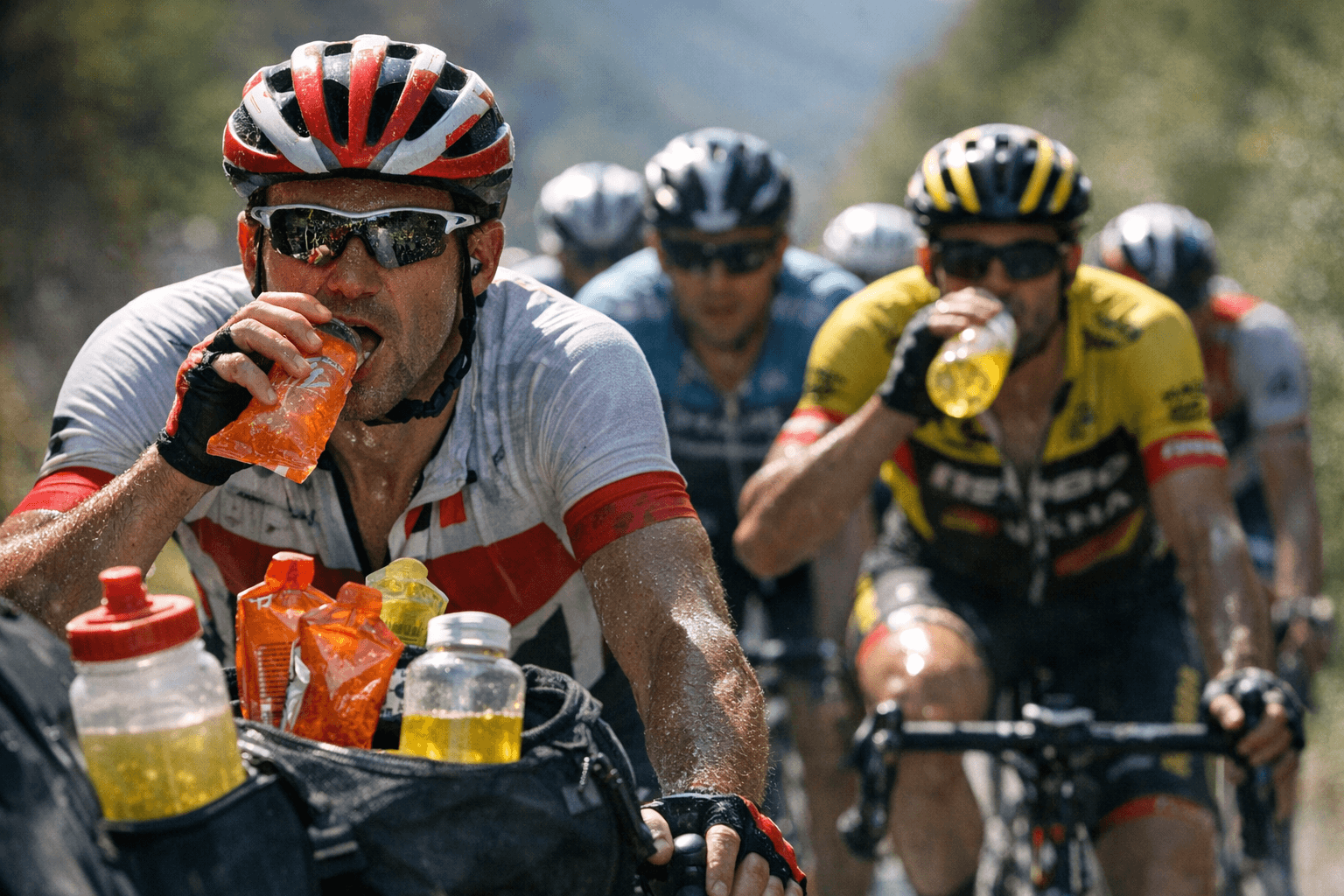
The modern peloton has rediscovered sugar. Riders who once flirted with low-carb fasting now reach for gels, drink mixes, fruit pastes, and even fraises Tagada, because race day at Tour speed is a very different problem from everyday low-carb living. That is the central lesson here: elite cycling fuel is built for surviving brutal hours at max output, not for settling the long-running keto debate.
Why the old low-carb story lost steam
For years, the Team Sky playbook and the Froome era turned low-carb and fasted training into part of the sport's "marginal gain" mythology. The appeal was easy to understand: push the body toward fat use, spare glycogen, and squeeze out tiny edges that might matter in a Grand Tour. The names attached to that era, Bradley Wiggins, Chris Froome, and Geraint Thomas, helped make the idea feel like the future.
By early 2024, that certainty was already cracking. A five-week periodized carbohydrate study in well-trained cyclists found no advantage for the low-carb approach over an energy-matched high-carbohydrate diet. The paper also reported no differences in carbohydrate oxidation, lipid oxidation, or post-exercise lactate, which matters because it challenged the notion that low-carb training automatically delivers better fat burning or better performance in riders who are already highly trained. That is not a small correction. It is a direct hit to the idea that empty tank training is inherently superior.
How high-carb racing really looks now
By 2025, the pendulum had swung much further. A 2025 narrative review in Sports Medicine defined high-carbohydrate fueling in cycling as at least 100 grams per hour, while still saying the performance benefit remains unresolved in the literature. In other words, the sport has embraced a higher-carb norm without pretending the science has handed down a final verdict.
Former Ineos Grenadiers nutritionist Aitor Viribay Morales pushed the ceiling even higher. "We still don’t know the carbohydrate ceiling, but 120g is certainly not the limit," he said, adding that riders are being seen at 150 to 160 grams per hour and, in some cases, 200 grams for certain hours of racing. That is a staggering intake, but it starts to make sense when the work is measured against Tour de France punishment rather than a club ride.
At EF Pro Cycling, nutritionist Amaia Martioda said riders often consume 120 grams of carbs per hour during Tour stages, using bars, gels, and drink mixes. She also said a single Tour day can burn up to 10,000 calories. That is the scale of the modern fueling arms race: a rider is not just eating for comfort, but trying to replace damage in real time while the race keeps accelerating.
The team data backs that up. Tour fueling figures showed Team Lotto riders averaging 106 grams of carbohydrate per hour across seven datasets, with Arnaud De Lie reaching 131 grams per hour on a flat stage into Châteauroux. That is a practical picture of the new normal. The goal is no longer to stay low-carb at all costs. The goal is to keep power output from collapsing when the race is moving too fast to coast.
Speed is part of the story too
The carb boom is happening inside a sport that is already flying. The 2022 Tour de France was the fastest in the modern era at 42.03 kph, and the 2024 Paris-Roubaix record came in at 5:25:58, an average speed of 47.802 kph. Cycling coverage has linked that speed boom partly to nutrition, not just bike tech and training, and that connection helps explain why teams are treating food like performance hardware.
This is why the conversation now stretches across the current elite landscape, from UAE Emirates and Visma-Lease a Bike to riders like Tadej Pogačar and Mathieu van der Poel. WorldTour staff are talking about nutrition and performance as one system, not two separate departments. In that world, carbs are not a moral compromise. They are a tool for surviving the highest speeds the sport has ever seen.
What this does and does not mean for keto
This is the reality check for the keto community. Pro cycling's carb revolution is a race-day answer for extraordinary endurance, not a blanket verdict on low-carb eating. If your goal is appetite control, body composition, steady energy, or a simpler way to eat day to day, the fueling needs of a six-hour Grand Tour stage do not automatically apply to your life.
The American College of Sports Medicine review on endurance cyclists makes that context explicit: ketogenic dieting still has a place in the cycling nutrition conversation, but cycling performance is strongly tied to proper fueling over rides longer than 90 minutes. That is the key distinction. A rider chasing watts across the Pyrenees or the Alps is solving a different problem than someone using keto to manage hunger or keep energy levels steady through an ordinary day.
Even the candy on the menu underlines the difference. Fraise Tagada contains 88 grams of carbohydrate and 74 grams of sugar per 100 grams, which is exactly why it fits a race convoy and not a keto kitchen. The peloton's sugar habit is not a refutation of low-carb living. It is proof that extreme endurance sports and lifestyle keto live in different worlds, with different rules, different stakes, and very different fuel bills.
The bottom line
The modern peloton has not rejected nutrition science. It has pushed it toward a much more aggressive carbohydrate strategy, where 100 grams per hour is the entry point, 120 grams is common, and 150 to 200 grams is no longer unthinkable. For keto readers, the takeaway is simple: do not mistake pro cycling's fuel arms race for a universal nutrition verdict. Race-day performance and everyday low-carb living are solving two entirely different problems.
Know something we missed? Have a correction or additional information?
Submit a Tip