
A new review is sharpening the risk conversation around keto: not whether the diet can raise LDL cholesterol, but who seems most vulnerable when it does. Zachary S. DiMattia and Kristina S. Petersen of The Pennsylvania State University argued in the Journal of the American Heart Association that adults with normal body weight who follow ketogenic diets may be a distinct subgroup more likely to post dramatic LDL-C spikes, even when they otherwise look metabolically healthy.
The paper, published May 5, 2026 and posted online April 28, pulled together short-term trials in healthy adults with normal BMI and found mean LDL-C increases ranging from 18 to 70 mg/dL. That is not a small bump in a lipids panel, especially in a community that often treats keto as a performance or body-composition tool. The review points straight at the lean-mass-hyper-responder debate: some low-carb dieters, often leaner people eating very low carbohydrate and high fat, see striking rises in LDL-C that online circles have argued may be harmless. DiMattia and Petersen say the evidence does not support that reassurance.
What the review does not show is just as important. Long-term ASCVD outcomes in lean ketogenic-diet users have not been directly studied, and the limited coronary imaging data available do not establish cardiovascular safety. LDL cholesterol remains a well-established causal and cumulative risk factor for atherosclerotic cardiovascular disease, so even a short-term rise matters if it sticks around for months or years. That is the core warning for normal-weight keto dieters who assume good blood sugar or a lean waistline cancels out lipid risk.
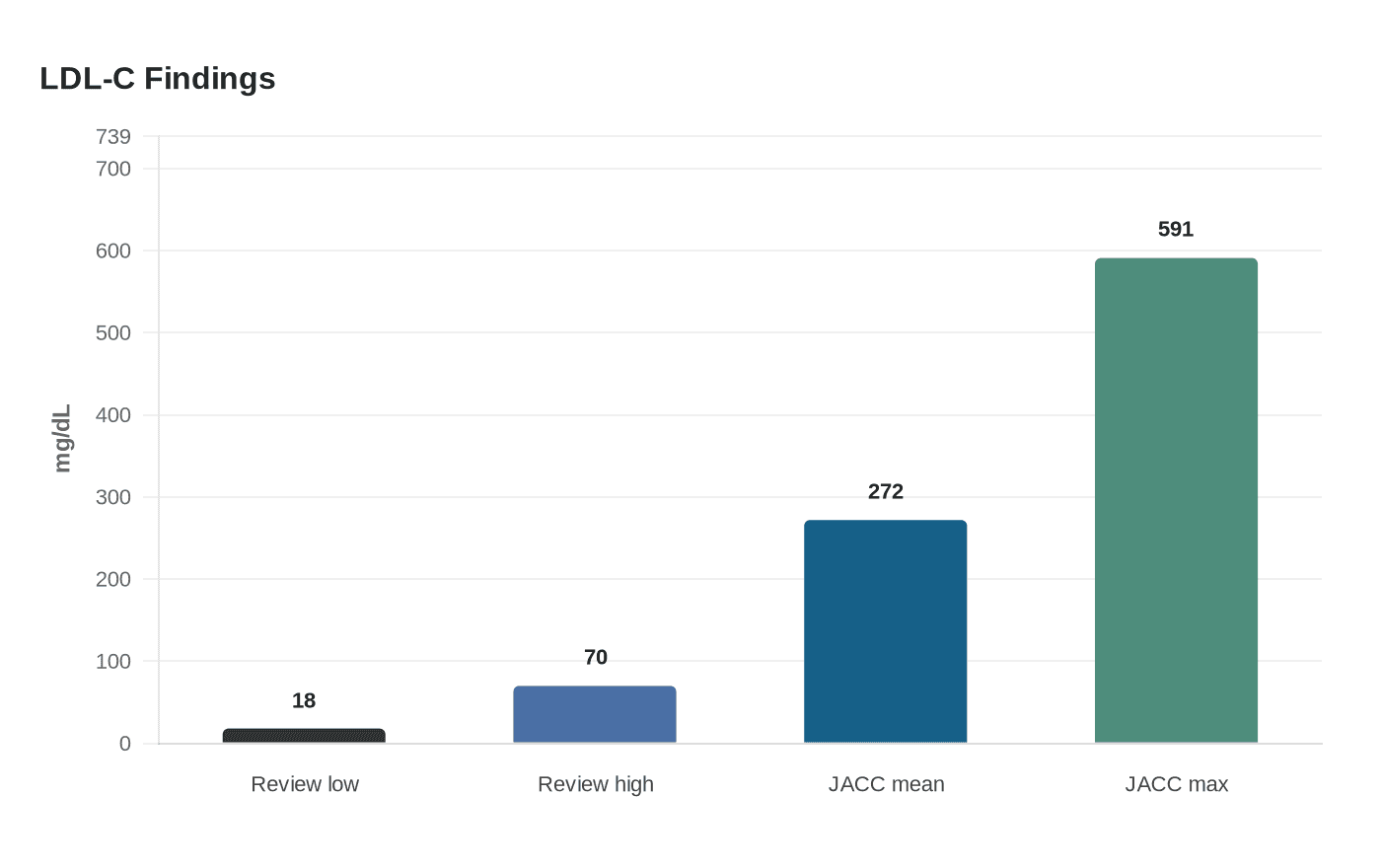
The review lands alongside a 2024 JACC: Advances analysis of 80 ketogenic-diet participants with carbohydrate-restriction-induced LDL-C of at least 190 mg/dL. Their mean LDL-C was 272 mg/dL, the maximum hit 591 mg/dL, and they had been on keto for an average of 4.7 years. That study found no significant difference in plaque burden compared with matched controls, but it was not a long-term outcomes trial, so it cannot prove safety. The distinction matters: no obvious plaque signal in one imaging snapshot is not the same thing as no cardiovascular risk over time.
DiMattia and Petersen said moderate carbohydrate reintroduction, around 50 to 100 grams per day, may substantially reverse keto-induced LDL elevations, and medication can lower values further when needed. Their practical message was clear: if you are lean and using keto for performance or lifestyle reasons, lipid monitoring needs to be part of the plan, not an afterthought. That advice lines up with updated American Heart Association and American College of Cardiology guidance in March 2026, which pushed earlier treatment, selective apoB testing and coronary calcium scoring, and lower LDL-C goals based on risk. Penn State is now also running a controlled feeding study in healthy adults with differing BMI, testing 28 days of ketogenic diet effects on blood lipids, vascular health and mechanistic markers.
Every story on Keto Diet Magazine is assembled by an automated editorial system that works from verified research, official records, and credible reporting, then clears automated accuracy and moderation checks before it goes live. The standards that system follows are set and overseen by the people who run the publication. Read our full editorial policy.
Did this article answer your question?