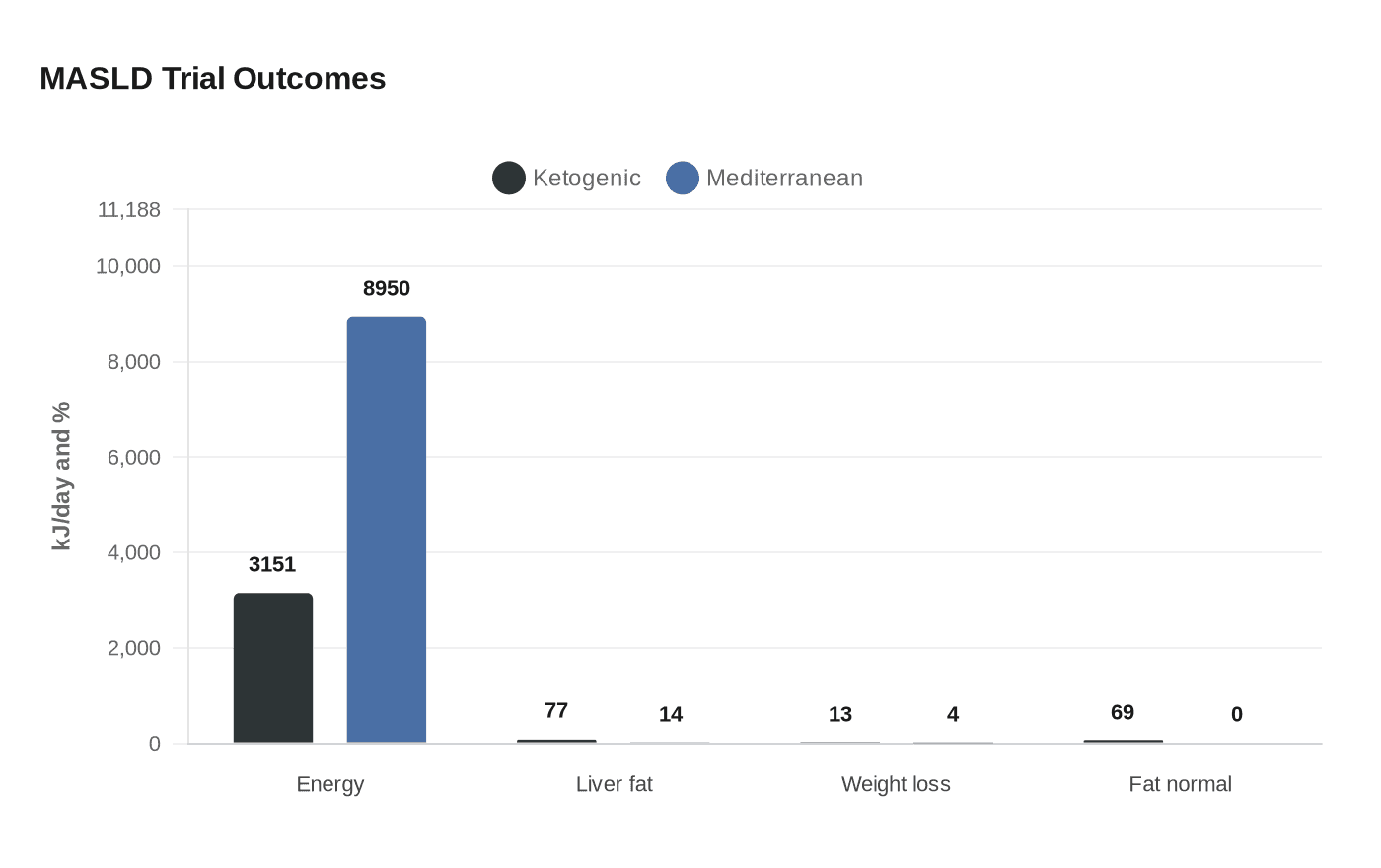
The headline number is eye-catching, but the real story is the setting: this was not standard keto, it was a very low energy ketogenic protocol built for people with metabolic dysfunction-associated steatotic liver disease, or MASLD, a condition now estimated to affect more than one-third of adults worldwide. In a single-center randomized trial of 25 adults with histologically confirmed MASLD and body mass index between 27 and 35, the ketogenic arm was prescribed just 3,151 kJ per day, far below the 8,950 kJ per day given to the Mediterranean diet group.
After 12 weeks, magnetic resonance imaging showed liver fat had fallen 77% in the ketogenic group, compared with 14% in the Mediterranean group. Sixty-nine percent of the ketogenic participants normalized hepatic fat, while none of the Mediterranean participants reached that mark. Liver histology improved in both groups, but the ketogenic arm posted a larger drop in the non-alcoholic fatty liver disease activity score, and the trial also recorded reductions in visceral and subcutaneous fat.

The weight-loss numbers help explain why the liver changes looked so dramatic. The ketogenic group lost a median 13% of body weight by week 12, compared with 4% in the Mediterranean arm, and 71% of ketogenic participants lost more than 10% of their starting weight. Both groups improved insulin sensitivity, which matters in MASLD because the disease is tightly linked to obesity, insulin resistance and type 2 diabetes, and the condition is increasingly seen in younger people as obesity rises.
That is also where the practical reality starts to catch up with the headline. This was a short, open-label pilot, not a large blind trial, and the disease stage was relatively early. Low-dose semaglutide entered only after week 13 in the ketogenic group, so by week 24 the two arms were no longer simply diet versus diet. Even so, the ketogenic group still held a 14% total body-weight loss from baseline, versus 3% in the Mediterranean group.
For keto readers, the distinction matters. A very low energy ketogenic diet is a tightly controlled, medically supervised intervention, not the everyday version built around keeping carbs low at home. The new data suggest that some people with fatty liver disease may benefit from that kind of intensive approach, but the evidence is still developing. A 2024 randomized trial in 24 patients found no significant difference in liver stiffness or steatosis versus DASH-style education, and a 2025 review said the clinical evidence remains limited and called for stronger trials that separate diet effects from weight loss, and test durability, adherence and safety over time.
Every story on Keto Diet Magazine is assembled by an automated editorial system that works from verified research, official records, and credible reporting, then clears automated accuracy and moderation checks before it goes live. The standards that system follows are set and overseen by the people who run the publication. Read our full editorial policy.
Did this article answer your question?