Why this label debate matters
Dr. Lufkin’s push to call ketogenic eating “insulin-lowering” is more than a naming tweak. It is an attempt to strip away some of the cultural baggage that has built up around keto and replace it with a description of what the diet is trying to do biologically: lower insulin, steady blood glucose, and create ketosis. That framing lands differently because ketogenic eating is not some internet-age fad with no pedigree. Johns Hopkins Medicine traces its therapeutic use for epilepsy back to 1921, when Mayo Clinic physician Russell Wilder coined the term “ketogenic diet” on July 27 of that year, and Johns Hopkins later helped pioneer clinical use in children with myoclonic epilepsy.
That history matters because the diet has always lived in two worlds at once, as a medical therapy and as a lifestyle pattern. Johns Hopkins’ timeline says its team treated nearly 1,000 children with myoclonic epilepsy and reported that 54% became seizure-free while another 26% had marked improvement. That is a very different origin story from the one many people hear today when keto is discussed only as a weight-loss trend. The “insulin-lowering” label tries to reconnect the modern conversation to metabolism, but it also risks sanding off the very specific identity that makes keto distinct.
What actually changes in practice
If you translate keto into “insulin-lowering,” the core idea becomes easier to explain, but the practical question is still the same: what goes on the plate? In real life, keto means keeping carbohydrates low enough to push the body toward ketosis, which usually changes food choices in a very recognizable way. Starches, sugar, grains, and other carb-heavy foods move to the edge of the plate, while meat, fish, eggs, fats, and low-carb vegetables become the backbone of the plan.
That is where the new label can help and where it can mislead. It helps if you are trying to explain metabolic intent to a newcomer who hears “keto” and thinks only of internet culture or celebrity diet churn. It misleads if it suggests that any diet aimed at lowering insulin is automatically ketogenic. A lower-carb meal pattern can reduce insulin exposure without reaching ketosis, and that distinction still matters. Keto is the tighter metabolic lane; low-carb is the broader highway.
The diabetes guidance is more flexible than the shouting suggests
The American Diabetes Association has tried to keep this conversation practical rather than ideological. Its guidance says people with diabetes can fit carbohydrates into a healthy meal plan, and it also says lowering overall carbohydrate intake may improve blood glucose management. That is not a blanket endorsement of keto, but it is a clear sign that carbohydrate reduction is not outside mainstream diabetes care.
A 2020 review in Diabetes Spectrum, the ADA-associated journal, went further and said low-carbohydrate diets have been advocated for weight loss and for preventing and treating type 2 diabetes. That is an important distinction for readers in the keto community: the medical conversation is not really about whether carbs are good or bad in the abstract. It is about how much carbohydrate reduction, for which person, and for which goal. The “insulin-lowering” phrase can be useful here because it points to mechanism. It can also blur the line between keto, general low-carb eating, and broader diabetes meal planning if the label gets too loose.
What the data says keto changes
The strongest support for keto’s metabolic effect comes from studies in type 2 diabetes and obesity. A 2020 meta-analysis in Nutrition & Diabetes found that ketogenic-diet interventions in type 2 diabetes lowered fasting glucose by 1.29 mmol/L and HbA1c by 1.07 on average. The same analysis also reported reductions in weight, waist circumference, BMI, triglycerides, and total cholesterol, while HDL increased.
That pattern is exactly why keto keeps getting pulled back into medical debate. It is not just about scale weight. The reported changes touch the full cluster of markers that matter in metabolic health, from glucose control to blood lipids to central adiposity. Add in a 2024 randomized crossover study of 11 people with obesity, which found that a 3-week ketogenic diet increased skeletal muscle insulin sensitivity, and the mechanistic case gets even more interesting. “Insulin-lowering” is not a random rebrand here. It points directly at the physiology researchers are measuring.
Still, the word choice can do too much work if it starts implying that keto is simply any plan that helps insulin numbers. The actual diet pattern remains stricter than the broader low-carb umbrella, and the expected effects depend on staying in that tighter lane long enough for ketosis to matter.
Where the caution starts, especially in type 1 diabetes
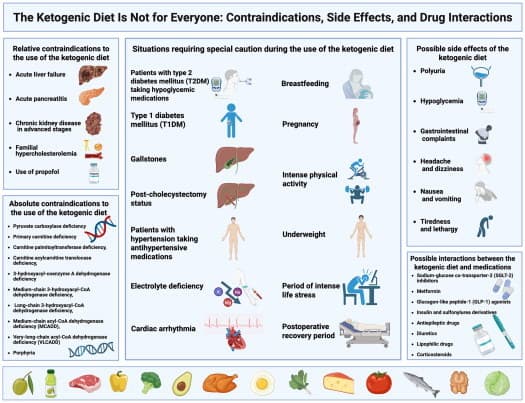
The sharpest warning in the literature comes from type 1 diabetes. A 2021 review in Cleveland Clinic Journal of Medicine said the jury is still out on whether a low-carbohydrate, ketosis-inducing diet is a safe and effective adjunct in type 1 diabetes, and it flagged dyslipidemia, diabetic ketoacidosis, and hypoglycemia as risks. It also noted that insulin therapy usually requires adjustment when someone starts a ketogenic diet.
That is the part any clean rebrand has to keep visible. “Insulin-lowering” may sound clinically elegant, but it does not erase the need for medication changes, monitoring, and caution. In type 1 diabetes, insulin is not just a marker to be lowered. It is a life-sustaining treatment that must be handled carefully if carbohydrate intake drops. This is where a vague label can become dangerous, because the metabolic goal is not the same as the clinical reality.
The latest wave of interest keeps the debate alive
Recent 2026 reporting on a small study suggesting keto may improve beta-cell function in people with type 2 diabetes only adds to the momentum. That kind of finding does not settle the argument, but it explains why the diet keeps re-entering public conversation instead of fading into the background. Every new result seems to pull the discussion in two directions at once: toward more curiosity about insulin and beta-cell function, and toward more skepticism about whether the label is describing a mechanism or repackaging a tribe.
That is why “insulin-lowering” is both appealing and imperfect. As a translation for newcomers, it is useful because it describes what keto is trying to accomplish in the body. As a political rebrand, it risks flattening the differences between ketogenic diets, low-carb diets, and broader diabetes-friendly eating patterns. The cleanest reading is the most honest one: keto is still keto when the carb ceiling is low enough to create ketosis, and the insulin story is part of why it works, not a substitute for the diet itself.
Every story on Keto Diet Magazine is assembled by an automated editorial system that works from verified research, official records, and credible reporting, then clears automated accuracy and moderation checks before it goes live. The standards that system follows are set and overseen by the people who run the publication. Read our full editorial policy.
Did this article answer your question?