A supervised ketogenic protocol tied to KetoCitra cut both kidney and liver volume in a small ADPKD cohort, but the 12-month signal came from only seven patients who stayed with the diet.
Led by Shigeo Horie and Haruna Kawano at Juntendo University in Tokyo, the project was presented as the first clinical investigation in Asia of a ketogenic metabolic intervention for autosomal-dominant polycystic kidney disease. The abstract, WCN26-7921, was presented at the World Congress of Nephrology 2026 and published in Kidney International Reports. It followed 10 patients with Mayo Imaging Class C or higher, a median age of 44, and a median baseline eGFR of 57 mL/min/1.73 m².

The protocol was not a casual keto challenge. Participants followed an institutional ketogenic diet under multidisciplinary supervision, including dietitian guidance, with a focus on adequate hydration and preventing stone formation. They also received KetoCitra, the Santa Barbara Nutrients medical food that supplies exogenous beta-hydroxybutyrate and alkaline citrate. MRI measured total kidney volume and total liver volume at baseline, 3 months, and 12 months.
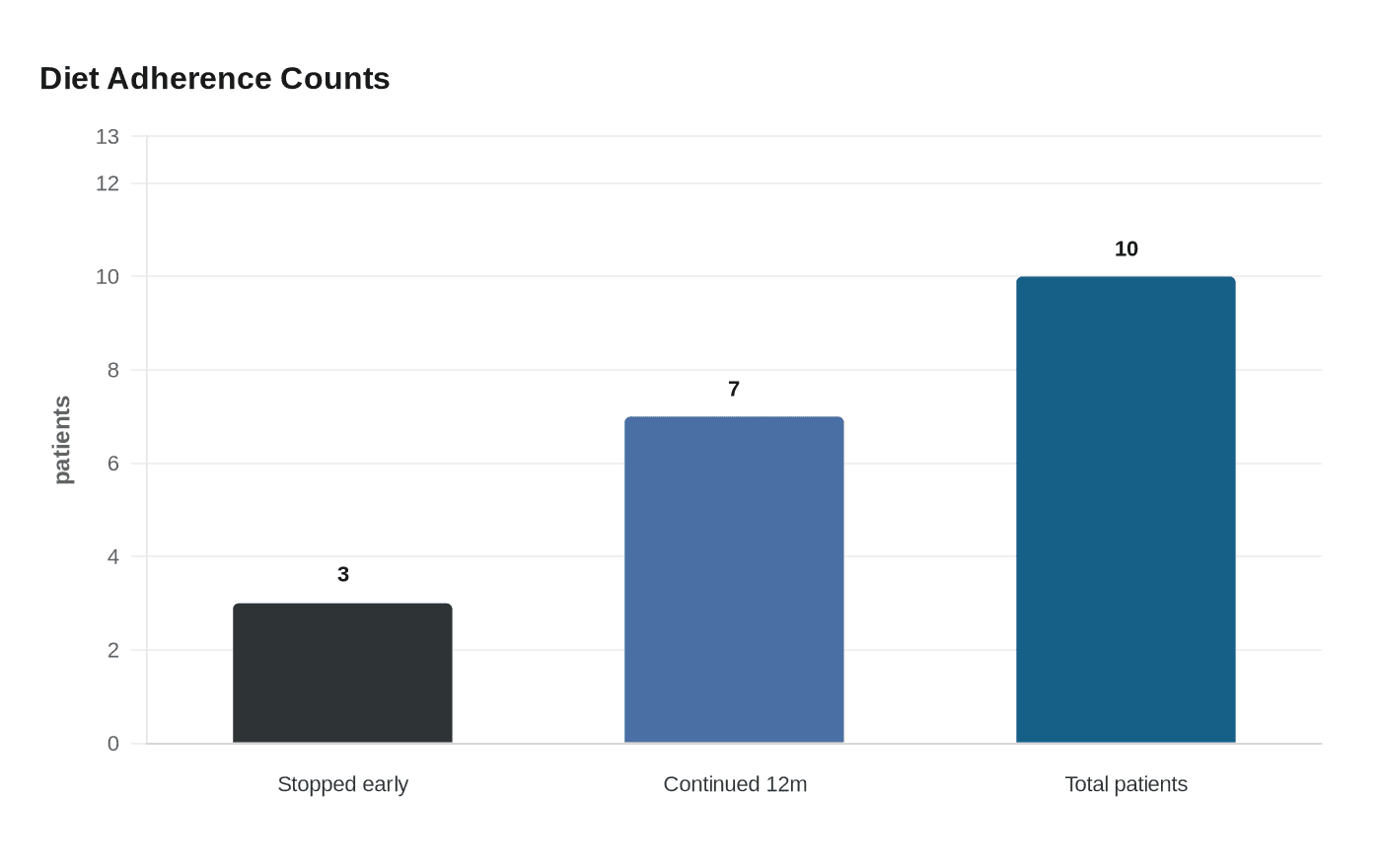
Three patients stopped the ketogenic diet after the initial education period and returned to their usual diet, while seven continued to 12 months. Among those completers, total kidney volume fell significantly at 12 months. Across the full cohort, total liver volume also dropped significantly at 3 and 12 months. That matters in ADPKD because organ-volume reduction is not a cosmetic metric, it is a practical read on cyst burden, and liver enlargement is a common complication as the disease advances. The company also said kidney function stayed stable during the intervention, which is the kind of outcome clinicians want to see when eGFR in this population usually trends downward over time.
The new update sits inside a broader, still-early evidence base. In 2023, the randomized KETO-ADPKD trial tested ketogenic diet, water-fasting, and control arms in an exploratory, open, single-center design, with feasibility and kidney-function signals but lipid changes flagged as a safety issue. Later subgroup work suggested stronger kidney-volume effects with higher ketone-body levels, while the liver-volume benefit did not depend on ketosis depth. Preclinical rat data also showed beta-hydroxybutyrate plus citrate could slow or partially reverse PKD progression, which is the kind of mechanistic backdrop companies lean on when they pitch a medical food.
That is the real line to draw here. This is disease-specific metabolic therapy, run under supervision, not everyday hobbyist keto. The headline is encouraging because the kidneys and liver got smaller on MRI, but the story is still about a small interim cohort, a company-backed protocol, and a field that is trying to prove keto can do more than just move scale weight.
Every story on Keto Diet Magazine is assembled by an automated editorial system that works from verified research, official records, and credible reporting, then clears automated accuracy and moderation checks before it goes live. The standards that system follows are set and overseen by the people who run the publication. Read our full editorial policy.
Did this article answer your question?