Start with the job, not the recipe
Keto meal prep falls apart fastest when every container is trying to do the same thing. A Monday lunch that needs to be crisp, a Wednesday dinner that needs reheating, and a Friday rescue meal all have different demands, and the smartest prep recognizes that up front. Instead of batching a pile of similar dishes, this approach builds the week around one cooked protein, one cold lunch lane, one crisp reheating lane, and one fallback meal.
That simple shift solves the problem most keto eaters know too well: the macros may be right, but the texture is wrong by midweek. Food that gets soggy, rubbery, or repetitive becomes a chore, and once the container stops feeling useful, adherence drops with it. The better question is not whether the recipe is keto in the abstract, but whether it still has a role on Tuesday night.
Give every container a clear lane
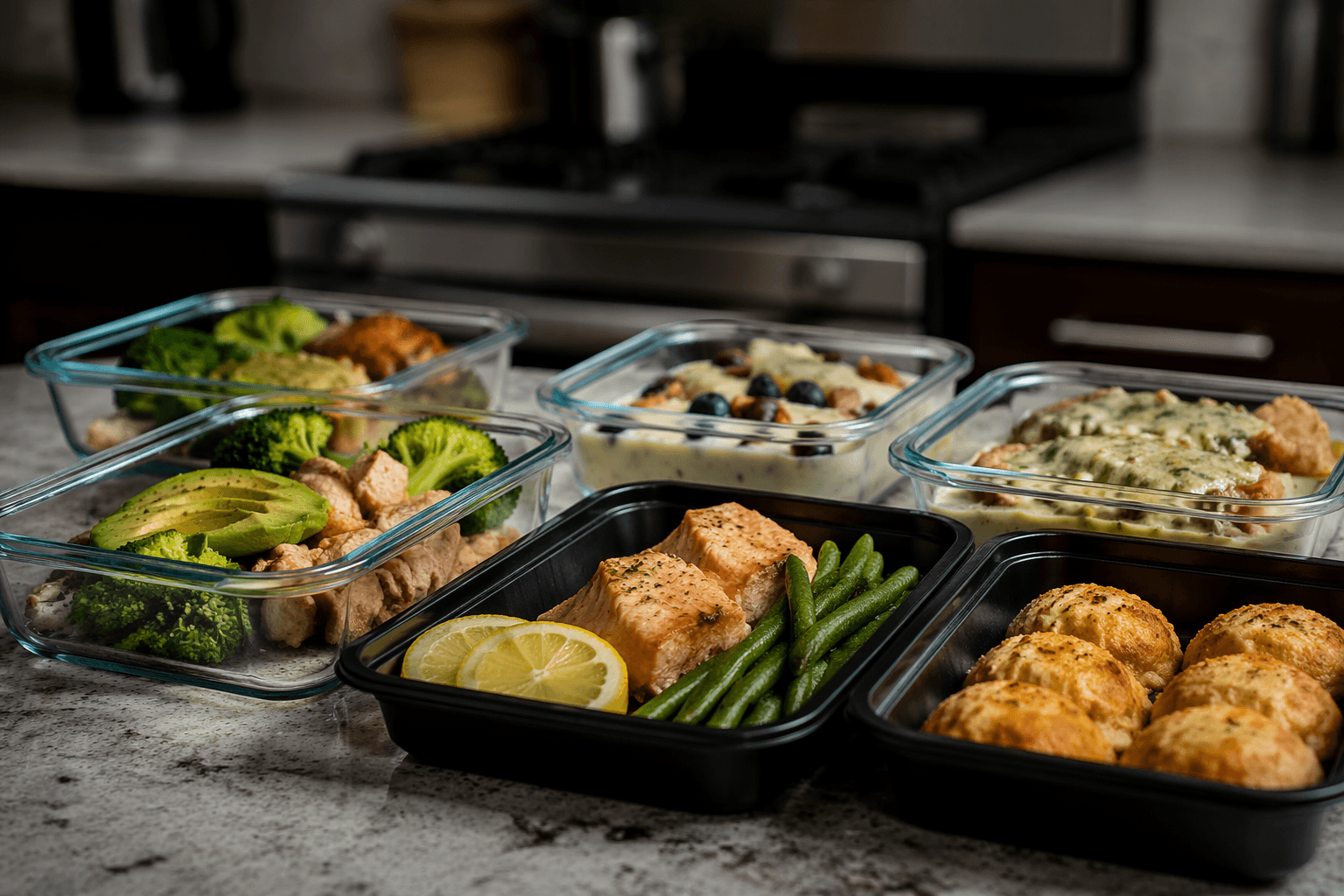
A strong prep week starts with sorting meals by function. The cold lane is built for lunches that hold up without reheating, the crisp lane is built for foods that can be warmed without turning soft, and the fallback lane is there for nights when cooking is not happening at all. That structure keeps Sunday from turning into an overplanned project that nobody wants to face by Wednesday.
The cold lane is where keto lunches do some of their best work. Wraps and pinwheels fit naturally here because they travel well and do not depend on a microwave. A cooked protein can anchor the box, but the supporting ingredients need to stay bright and firm, not wilt into the same texture as everything else.
The crisp reheating lane is for keto dinners that should still feel like a meal after a few days in the fridge. Chicken fries, nuggets, and calzones make more sense here because they can hold a satisfying edge when reheated properly. That matters more than people expect, because crispness is often what separates a meal that gets eaten from a meal that gets avoided.
The fallback meal is the quiet hero of the week. Shrimp, lasagna, or another ready-to-heat option can sit in reserve for the busiest night, when even a well-planned lunch box would feel like too much. A prep plan with a backup meal does not just save time, it protects the rest of the week from a single bad evening.
Think in textures: crisp, creamy, reheatable, grab-and-go
Keto works better when texture is treated as part of the plan, not an accident. Creamy elements make a box feel finished, crisp components give it bite, and grab-and-go foods keep the routine realistic when work, errands, or travel get in the way. If a meal has no texture contrast, it can taste like leftovers on day two even when the ingredients are perfectly fine.
That is why the guide points toward foods that can serve different jobs depending on the day. Wraps and pinwheels are grab-and-go by design. Chicken fries and nuggets belong in the reheating lane. Calzones and lasagna can be built to deliver a more substantial dinner. Shrimp can work as a quick protein that moves from prep to plate without much friction.
This is not about making keto fancier. It is about making it sustainable enough to survive a real workweek, where convenience often decides whether a meal gets eaten or skipped.
Why the logistics matter beyond the fridge
The meal-prep philosophy fits into a larger debate about keto itself. The American Heart Association’s 2023 scientific statement ranked Mediterranean, DASH-style, pescetarian, and vegetarian eating patterns as strongly aligned with heart-healthy guidance, while keto and paleo were said to contradict it. Its 2026 update again emphasized dietary patterns over single foods or nutrients, with fruits, vegetables, whole grains, healthy protein sources, unsaturated fats, and fewer ultraprocessed foods at the center.
Mayo Clinic’s January 21, 2026 guidance says low-carb diets may be used for weight loss, better blood sugar control, or lowering risk of metabolic syndrome, heart disease, or type 2 diabetes. It also advises checking with a healthcare professional before starting any weight-loss diet, especially for people with diabetes, heart disease, or kidney disease. Harvard Health has also noted that keto may lower triglycerides and weight in the short term, but may raise LDL cholesterol and lacks strong evidence for long-term benefit.
That wider context matters because meal prep is not just a kitchen problem. For many people, it is the difference between a diet that looks good on paper and one that survives an ordinary Tuesday.
Keto has always depended on precision
The demand for organized prep is not new to keto. The ketogenic diet was first developed in 1921 at the Mayo Clinic for children with refractory epilepsy. Johns Hopkins Medicine later helped revive its clinical use after it had been overshadowed by anti-seizure drugs, and its pediatric ketogenic diet center has treated more than 1,500 children.
Johns Hopkins also points to one large case series involving nearly 1,000 children with myoclonic epilepsy, led by Samuel Livingston, Lydia Pauli, and dietitian Millicent Kelly. That history explains why keto still carries a reputation for discipline and exactness. This diet was built around careful structure from the start, and modern meal prep works best when it respects that same logic.
Adherence is the real test
The strongest meal prep plan is the one you can repeat. In a 12-week remote mHealth ketogenic intervention with 75 adults with overweight or obesity, self-reported dietary adherence was the most important factor predicting weight loss. A 2019 review reached a similar conclusion: there is no single best diet for long-term weight loss, and adherence is what predicts success.
That is exactly why the job-based prep model makes sense. If tomorrow’s food still has a purpose, whether it needs to be eaten cold, reheated crisp, packed for work, or held in reserve, it is easier to stick with. The goal is not to create a perfect Sunday project; it is to build containers that still feel useful when the week gets messy.
Keto meal prep works when each box earns its place in the fridge. Once the container has a job, the diet stops feeling like leftovers and starts feeling manageable.
Every story on Keto Diet Magazine is assembled by an automated editorial system that works from verified research, official records, and credible reporting, then clears automated accuracy and moderation checks before it goes live. The standards that system follows are set and overseen by the people who run the publication. Read our full editorial policy.
Did this article answer your question?