The real lunch problem
The hard part of keto lunch prep is not making something low-carb. It is making something that survives the commute, the fridge, and a morning of meetings without turning limp, greasy, or strangely sad by noon. Air fryer chicken wraps solve that only if you treat texture like a requirement, not a bonus: crisp chicken, a sturdy carrier, and controlled sauce are what keep the whole thing from collapsing into soggy leftovers.
That is why this style of lunch makes sense for keto. A wrap can look perfect on paper, with the right macros and plenty of protein, and still fail in real life if the tortilla tears, the filling sweats, or the sauce leaks through the bottom before lunchtime. The goal here is not just a recipe. It is a lunch system that still feels intentional after a few hours in a container.
Why air fryer chicken changes the game
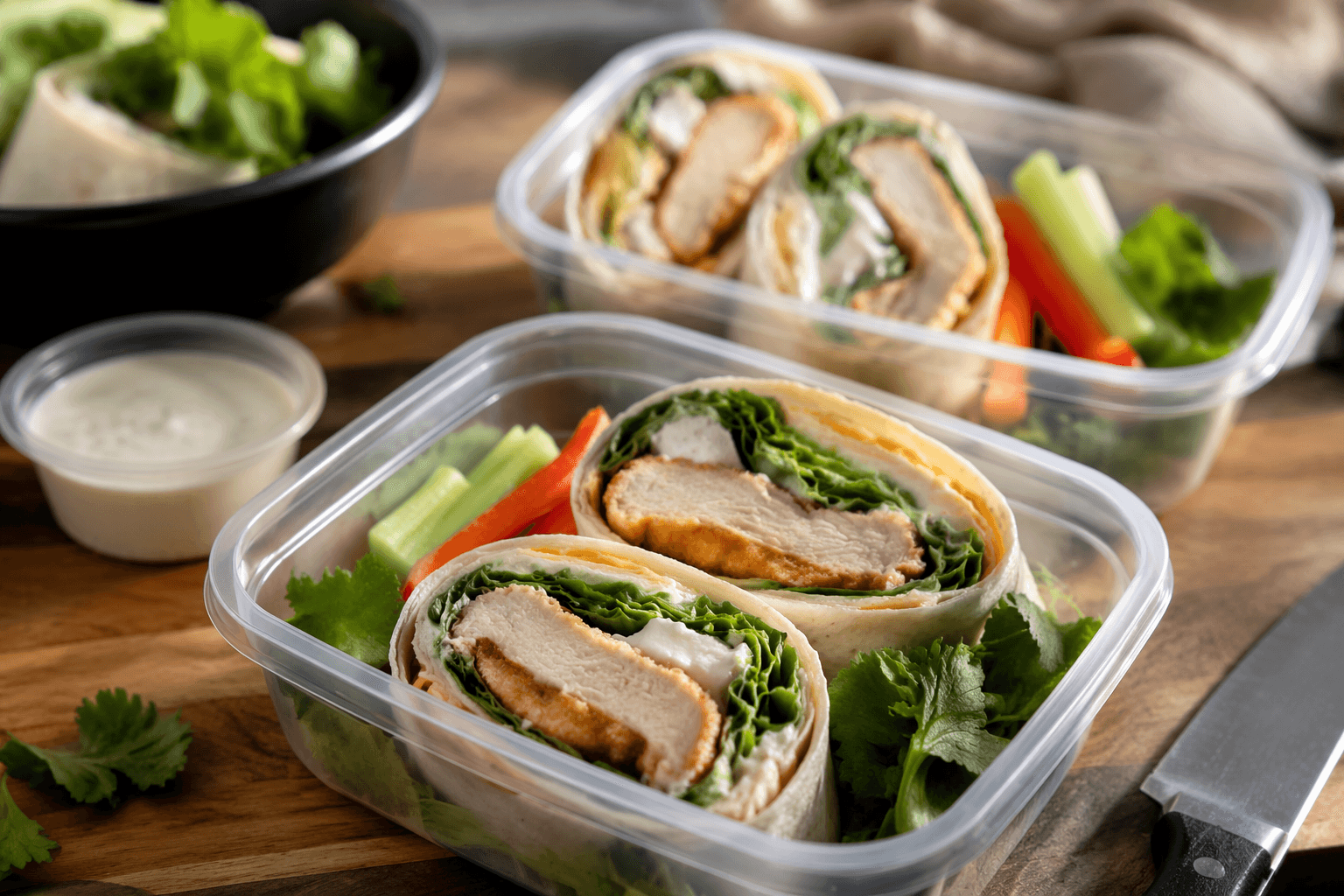
The air fryer matters because it gives the chicken the kind of bite most low-carb lunches miss. Instead of soft, steamed chicken breast that gets lost inside a wrap, you get a crisp exterior that holds up against lettuce, cheese, and a tortilla without turning the whole thing into one soft mass. For anyone who has made keto lunches that tasted fine at 8 a.m. and tired by 12:30 p.m., that textural difference is the entire point.
There is one nonnegotiable detail here: poultry has to reach 165°F internally to be safe to eat. That means the texture goal has to sit on top of a food-safety baseline, not replace it. The U.S. Department of Agriculture Food Safety and Inspection Service also warns against cooking raw, stuffed breaded chicken breast products in an air fryer, so the smart move is to build this wrap around plain chicken that you season, cook, and check properly.
Build the wrap around structure, not just flavor
A good keto lunch wrap starts with a carrier that can actually do the job. Low-carb tortillas have become the obvious choice because they make the wrap format practical again, and Mission Foods, for example, markets Carb Balance soft taco flour tortillas with full nutrition facts. Products like that help explain why wraps remain such a common keto lunch move: they offer a familiar shape without the usual carb load.
But the tortilla is only half the battle. The filling has to be arranged so the heat and moisture stay under control, which means the chicken goes in first, the wetter ingredients stay modest, and the wrap is rolled tightly enough to keep everything in place. If you pile on sauce or overload the center, you get the same old lunch disaster, just with better macros.
- Let the chicken cool slightly before wrapping so steam does not soften the tortilla.
- Keep juicy add-ins limited if you want a lunch that still feels crisp at noon.
- Roll the wrap firmly and slice it only if you are eating right away.
- Use a tortilla that is built for folding, not one that cracks the moment you try to work with it.
A few habits make a difference:
Sauce is where most lunch prep goes wrong
If there is one place to be stingy, it is sauce. Controlled sauce is what separates a wrap that travels well from one that stains the container and turns the tortilla into wallpaper paste. The chicken can be crisp, the carrier can be strong, and the whole thing can still fail if you overdo ranch, mayo, or any other wet filling.
The easiest fix is to keep the sauce on the side whenever possible, then add just enough to flavor the wrap without soaking it. If you want to make it ahead, use a thin barrier of cheese or greens between the tortilla and the moist filling so the wrap has a fighting chance. That is the kind of small detail that turns a once-in-a-while keto lunch into a repeatable weekday habit.
Make lunch prep behave like a routine
The best keto lunch prep is simple enough that you will actually repeat it. Diet Doctor describes packed low-carb and keto lunches as simple, quick, and easy to make, which matches the reality of busy weekdays: the more moving parts a lunch has, the faster it stops being lunch prep and starts being a project. A wrap like this works because you can cook the chicken once, portion the fillings, and assemble only what you need.
That approach fits what the Centers for Disease Control and Prevention says about meal planning too. A meal plan can help you get the nutrition you need and manage blood sugar levels, and counting carbs can make planning easier. Keto follows the same logic in practice: when you already know the wrap’s structure, you are less likely to improvise with something that looks low-carb but does not hold up.
If you want the lunch to survive more than one day, build it this way: 1. Cook a batch of chicken until it reaches 165°F. 2. Cool it before packing to protect the tortilla from steam. 3. Portion tortillas, fillings, and sauce separately when possible. 4. Assemble fresh, or wrap tightly if you need grab-and-go convenience. 5. Keep the sauce controlled so the wrap stays crisp instead of soggy.
Why this fits the bigger keto picture
This kind of lunch makes sense because keto has always been about more than counting carbs. Cleveland Clinic describes keto as a high-fat, very low-carbohydrate diet and notes that it is a medical or therapeutic diet that is not for everyone. Duke Health adds that published research shows ketogenic diets can help reduce hunger and support weight-loss treatment under medical supervision. In other words, this is not just about making lunch look disciplined. It is about making the diet livable enough that people can stick with it.
That broader context matters because keto has moved far beyond its older medical roots. Ohio State Wexner Medical Center notes that ketogenic diets have been used therapeutically for epilepsy for nearly 100 years, and a 2024 narrative review in Frontiers in Medicine says keto is increasingly promoted and has become more popular in recent years. The lunch wrap is part of that shift: it is the practical, everyday version of a diet that only works when the food is both compliant and convenient.
The best thing about these crisp air fryer chicken wraps is that they solve the exact problem most keto lunches cannot. They do not just fit the macros. They still taste like lunch when you finally open the container, and that is the difference between a recipe you make once and a lunch you keep making all month.
Every story on Keto Diet Magazine is assembled by an automated editorial system that works from verified research, official records, and credible reporting, then clears automated accuracy and moderation checks before it goes live. The standards that system follows are set and overseen by the people who run the publication. Read our full editorial policy.
Did this article answer your question?