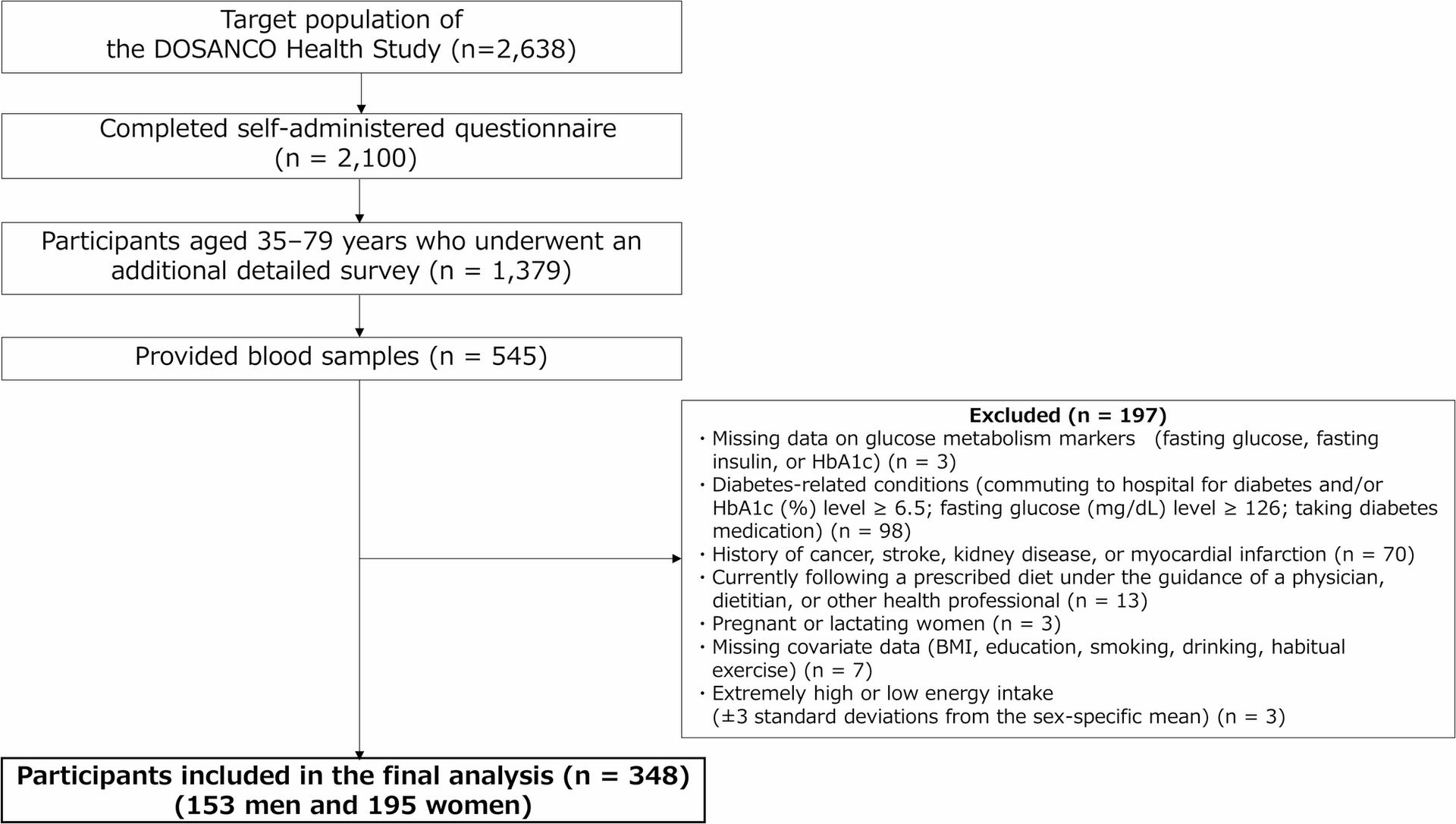
Higher carb restriction did not automatically mean better blood sugar in this Hokkaido sample. Among 348 adults ages 35 to 79 living in Japan in 2015, higher low-carbohydrate diet scores were linked with higher HbA1c, with values rising from 5.35 to 5.52 across quartiles.
That is the part keto readers should not gloss over. The investigators excluded anyone with diagnosed diabetes, anyone on diabetes treatment, and anyone with HbA1c at or above 6.5% or fasting glucose at or above 126 mg/dL, then used a validated food-frequency questionnaire to build three scores: a normal low-carb score, an animal-based score, and a vegetable-based score. All three pointed in the same direction, with higher scores associated with higher HbA1c. In other words, this was not a clean win for low-carb eating.
The catch is the design. This was a cross-sectional study, which means it cannot show that the low-carb pattern caused the higher HbA1c. It also cannot tell whether people with slightly worse glucose markers had already changed how they ate, or whether some third factor was driving both the diet pattern and the lab result. That limitation matters here because keto is not just about subtracting bread and rice; it is about what replaces them, and how the rest of the plate looks.

That broader context is exactly where Japan’s mixed low-carb evidence comes in. A 2015 analysis in the Japan Public Health Center-Based Prospective Study found that a low-carbohydrate diet score was associated with lower type 2 diabetes risk in women, with an odds ratio of 0.63 for the highest quintile versus the lowest. But that association weakened after adjustment for dietary glycemic load. A later prospective analysis in the JACC Study also examined low-carbohydrate diet scores and incident type 2 diabetes, underscoring that the field has not settled on one simple answer.
The Hokkaido authors pointed to another reason to be careful: Japanese diets have shifted over recent decades toward more meat and less fish. That matters in a country where the National Health and Nutrition Survey has long helped shape nutrition policy. It also matters for keto, because a low-carb pattern built in one food culture does not always behave like the same macro split in another.

The practical read is simple. Carb-cutting can help some adults with type 2 diabetes, and the American Diabetes Association still treats nutrition planning as individualized rather than one-size-fits-all. But a poorly constructed low-carb diet can miss the mark, especially if it swaps starch for a food pattern that does not support better glucose control.
Every story on Keto Diet Magazine is assembled by an automated editorial system that works from verified research, official records, and credible reporting, then clears automated accuracy and moderation checks before it goes live. The standards that system follows are set and overseen by the people who run the publication. Read our full editorial policy.
Did this article answer your question?