Why the bowl version works
Keto cooks keep coming back to bowls for one simple reason: they let you keep the part of comfort food that actually matters. Strip away the bread, and a Reuben stops being a sandwich project and becomes a fast, skillet-friendly dinner that still hits salty, creamy, tangy, and crunchy in one bite.
That is exactly why a Reuben in a bowl makes sense. The point is not to recreate rye loaf for the sake of nostalgia. The point is to preserve the deli-style flavor profile while moving the carbs out of the way, and this version does that with the kind of practical confidence keto dinners need on a busy night.
What makes a Reuben taste like a Reuben
A real Reuben is more than corned beef in a different shape. Britannica defines it as corned beef, sauerkraut, Swiss cheese, and Russian or Thousand Island dressing, usually on rye or pumpernickel bread. It is a staple of Jewish delis, and it is not strictly kosher because it combines meat and dairy. Britannica also places the Reuben among the United States’ most successful sandwich formulas, which is a good reminder that this is not a random deli special. It is a tightly built flavor system.
That is why the breadless version still works. If you keep the salty meat, the melted Swiss, the sharp dressing, and some kind of tangy cabbage element, the Reuben identity survives. Lose those, and you are just staring at a cabbage-and-beef skillet with aspirations.
How the keto bowl is built
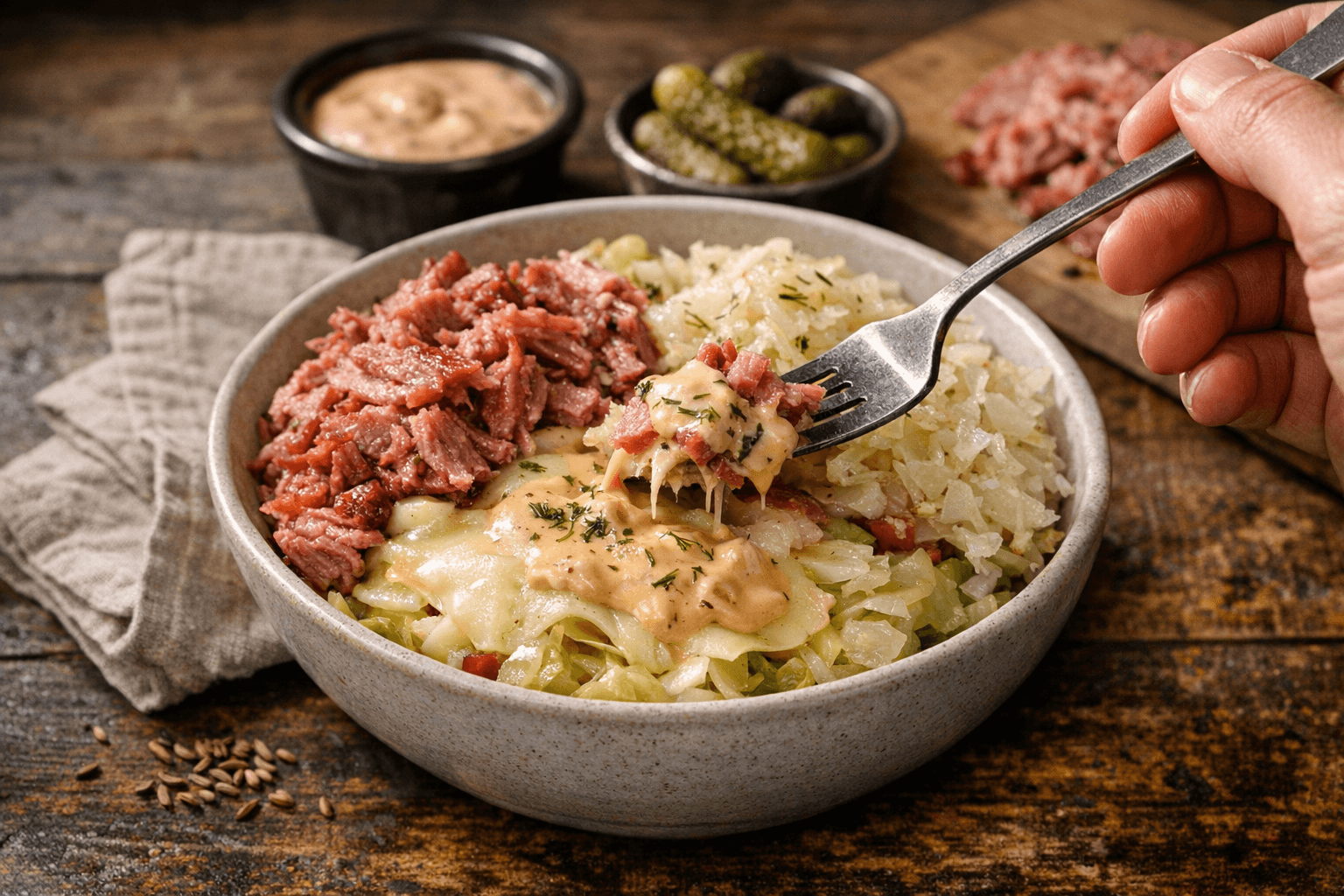
The Lindsay Recipes take on the dish leans into speed and simplicity. Instead of rye, the base is coleslaw mix or shredded cabbage, which gives the bowl crunch, freshness, and the low-carb structure keto diners want. Corned beef is the centerpiece, Swiss cheese is the gooey finish, and the homemade Russian dressing brings the creamy, acidic edge that keeps the whole thing from tasting flat.
That dressing matters more than people think. Mayo gives it body, sugar-free ketchup adds sweetness and color without pushing carbs up, and horseradish sharpens the whole bowl so it tastes deli-bright instead of heavy. If you have ever made a “healthy” skillet meal that came out bland, you know why this matters. The horseradish keeps the dressing awake.
The big selling point is speed. This is designed to land on the table in about 15 minutes, which is the difference between a plan and a repeatable weeknight habit. It also fits meal prep well, because the components are easy to portion, reheat, and assemble without much fuss.
Does it actually replace the sandwich?
Yes, mostly, and that is the interesting part. The strongest Reuben cue is not bread, it is the combination of salty corned beef, melted Swiss, and a tangy, creamy dressing cutting through cabbage. This bowl keeps those notes front and center, so it reads as a Reuben in a way a lot of low-carb “sandwich” hacks do not.
What you do lose is the rye or pumpernickel bite, that dense, toasty chew that gives a classic deli Reuben its structural snap. But for keto, that is the tradeoff that actually makes sense. The bowl does not pretend to be bread. It focuses on the signature flavors instead, and that is why it lands as a real substitute rather than a compromise meal with deli seasoning.
Where it fits in a keto kitchen
This dish is useful because it demonstrates a larger keto method, not just a single recipe. Start with a carb-heavy comfort food, identify the signature flavors, then rebuild it around protein, fat, and vegetables instead of bread. That is a better long-term strategy than chasing fake buns and low-quality substitutes that never quite behave like the real thing.
It also lines up neatly with broader nutrition guidance. The American Diabetes Association says carbs can fit into a healthy meal plan and recommends nutrient-dense carbohydrates, including whole, unprocessed non-starchy vegetables. It also advises filling half the plate with non-starchy vegetables such as broccoli and cauliflower. Cabbage and slaw fit that logic cleanly, which is why a Reuben bowl feels more like a smart plate than a cheat meal trying to cosplay as lunch.
A few easy variations keep the format flexible without drifting away from keto:
- Use turkey instead of corned beef if that is what you have on hand.
- Swap in Greek yogurt for part of the dressing if you want a lighter, tangier base.
- Change the cheese if Swiss is not your thing, though Swiss keeps the Reuben profile most intact.
- Add sautéed vegetables for extra volume and a more complete skillet dinner.
Those tweaks matter because this kind of bowl lives or dies on adaptability. It should work with pantry reality, not just a perfect shopping list.
Why corned beef keeps showing up
There is also a broader food-history reason corned beef keeps landing in these kinds of dishes. Britannica says corned beef is strongly associated with Irish cuisine and is widely eaten on St. Patrick’s Day. That cultural visibility helps explain why it keeps appearing in modern comfort-food recipes far beyond old-school deli counters.
In a Reuben bowl, that association adds to the dish’s familiar, hearty feel. It is the kind of protein people already read as rich and satisfying, which makes it a strong anchor for a low-carb dinner that is supposed to feel indulgent.
The bottom line
The keto Reuben in a bowl works because it understands what makes the original worth craving. It keeps the corned beef, Swiss, and Russian dressing at the center, uses cabbage or slaw to replace the rye, and comes together fast enough to matter on a real weeknight. That is the sweet spot for deconstructed comfort food: not a gimmick, not a compromise, just the same deli personality in a format that fits keto without drama.
Every story on Keto Diet Magazine is assembled by an automated editorial system that works from verified research, official records, and credible reporting, then clears automated accuracy and moderation checks before it goes live. The standards that system follows are set and overseen by the people who run the publication. Read our full editorial policy.
Did this article answer your question?