The keto label can hide a gut check
Dr. Eric Berg’s guide takes aim at one of the trickiest corners of keto shopping: sugar alcohols. They show up in sugar-free candies, chewing gum, desserts, and other processed foods because they deliver sweetness with fewer calories, and the FDA says they are slightly lower in calories than sugar, do not promote tooth decay, and do not cause a sudden increase in blood glucose.
That is exactly why they look so friendly on a keto shelf. But the front of the package can be more reassuring than the ingredient list deserves, because sugar-free does not automatically mean digestive-friendly. For a lot of keto shoppers, the real issue is not whether a sweetener fits a carb budget. It is whether it fits inside a normal day without bloating, gas, or a bathroom emergency.
Why sugar alcohols are everywhere in keto foods
Sugar alcohols have a useful place in low-carb products because they still taste sweet while creating less of a glucose hit than table sugar. Harvard T.H. Chan School of Public Health says they break down slowly in the gut, which helps keep blood sugar and insulin from spiking. That makes them appealing for people trying to stay in ketosis, reduce carbohydrate intake, or keep blood sugar more controlled.
The catch is that the gut does not always process them cleanly. Many sugar alcohols are not fully absorbed in the small intestine, and when that happens, the leftovers can move into the large intestine where bacteria get involved. The National Institute of Diabetes and Digestive and Kidney Diseases says undigested carbohydrates broken down by bacteria in the large intestine are a common cause of gas, which helps explain why sugar alcohols can lead to belching, bloating, distention, and passing gas.
How to read the label like a keto shopper
The fastest way to avoid a surprise is to slow down at the nutrition label instead of stopping at “keto-friendly” or “sugar-free.” FDA guidance says manufacturers may voluntarily list sugar alcohol grams on the Nutrition Facts label, so if the number is there, it is worth noticing rather than skipping past it. The ingredient list matters too, because sugar alcohols can be used in everything from candy and cookies to gum and reduced-sugar snacks.
A few label-reading habits make the shopping cart much safer:
- Check the sweetener name, not just the carb total.
- Watch serving size, because a small serving on the label can hide a bigger real-world portion.
- Look for sugar alcohol grams when they are listed, especially if you already know your gut is sensitive.
- Treat “sugar-free” as a product claim, not a guarantee that it will sit well.
FDA rules also make one warning especially important: foods containing sorbitol or mannitol must carry the statement, “excess consumption may have a laxative effect.” That line is not decorative. It is the package telling you that the dose can matter as much as the ingredient itself.
Maltitol is the sweetener to watch most closely
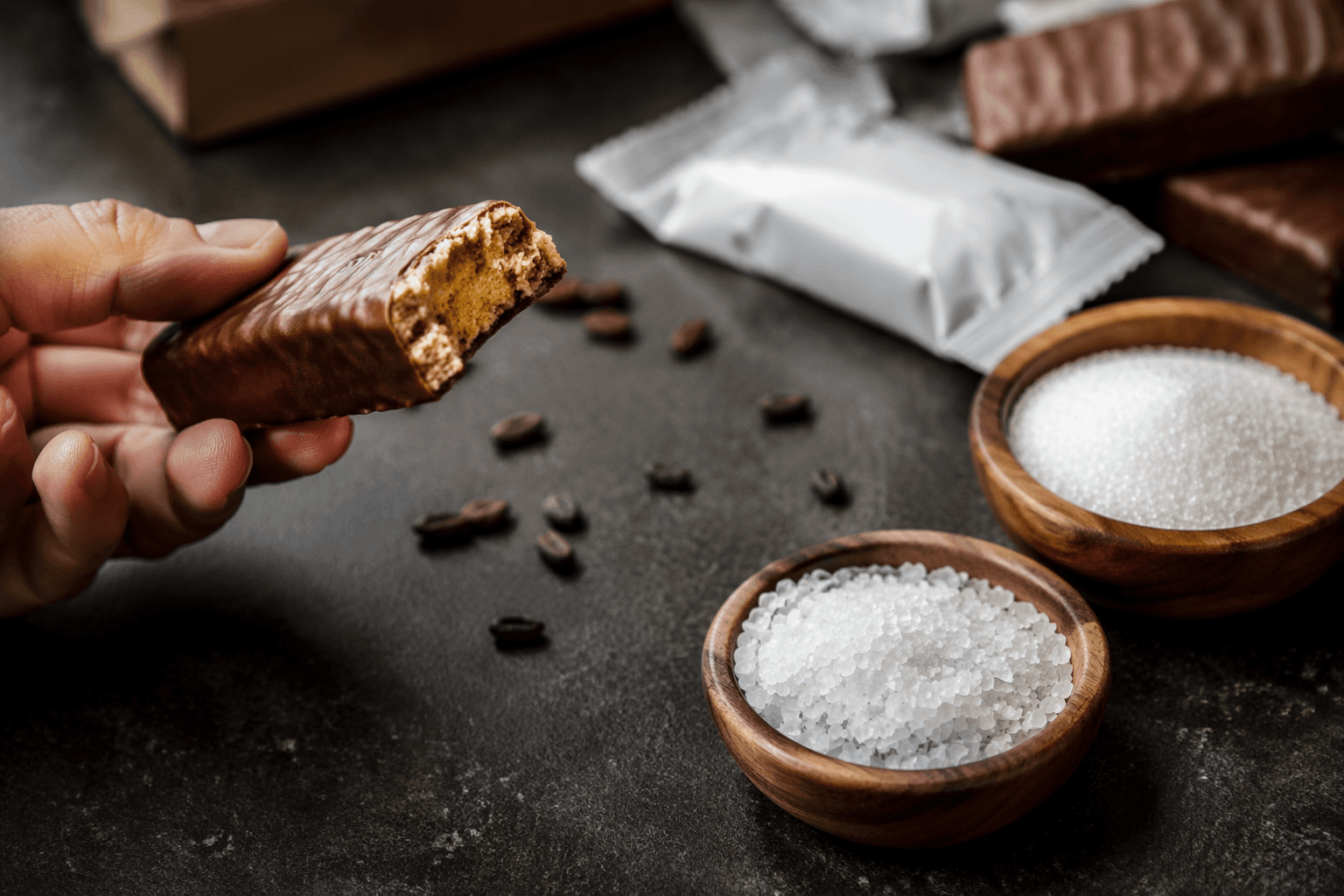
If one sugar alcohol deserves extra skepticism in keto aisles, it is maltitol. Dr. Berg points out that it is widely used in sugar-free chocolate, candy, and baked goods, which is exactly where many keto shoppers least expect trouble. The problem is that maltitol has a higher glycemic index than many other sugar alcohols, so it can raise blood sugar more quickly than people expect from a product marketed as low carb.
That is where keto shopping gets slippery. A chocolate bar may fit the mood of the plan, but if maltitol is doing the heavy lifting, the product can behave less like a free pass and more like a controlled compromise. For anyone using keto to manage cravings, blood sugar, or strict carb intake, maltitol is the ingredient that deserves a second look before the wrapper gets anywhere near your grocery bag.
Why your gut may react even when your carbs look fine
Mayo Clinic says sugar alcohols can cause bloating, gas, and diarrhea, and the amount that triggers symptoms varies from person to person. That variability is what makes keto shopping feel so personal. One person can tolerate a small serving without issue, while another can feel the effects after something that appears modest on paper.
Harvard’s nutrition experts also note that high amounts of sugar alcohols may cause gastrointestinal problems, which is why gradual introduction can help. In practice, that means the “keto” part of a snack is only half the story. The other half is whether the serving size matches your own digestion, not just the label math.
Sugar alcohols are not the same as monk fruit, stevia, or allulose
A lot of keto packaging mixes sweetener names in a way that makes them sound interchangeable, but they are not. Berg’s guide separates sugar alcohols from other sweeteners such as monk fruit, stevia, and allulose, and that distinction matters because the body handles them differently. If a product combines several sweeteners, the name on the front panel may tell you almost nothing about how it will taste in real life or feel after dinner.
That also means the word “natural” or “plant-based” should not be treated as a digestive guarantee. A sweetener can sound cleaner than sugar and still become a problem if the serving is large, the formula is heavily processed, or your own gut is already sensitive to it. For keto shoppers, the ingredient list is often more revealing than the marketing language.
Erythritol adds one more layer of scrutiny
There is another reason sugar alcohols are getting harder to ignore. In March 2023, the National Institutes of Health highlighted research linking higher blood levels of erythritol with increased risk of heart attack and stroke. Cleveland Clinic said the study it publicized included more than 4,000 people in the United States and Europe and was published in Nature Medicine.
That finding does not prove causation, but it does change the mood around erythritol-sweetened products. For people who rely heavily on sugar-free snacks, it adds a second layer of caution on top of the usual stomach concerns. Even when a sweetener helps with carbs, it is still worth asking what kind of tradeoff is hiding inside the package.
The promise on the front of the bag may still be sweet, but the real keto decision lives in the fine print. Sugar alcohols can help a plan stay low carb, yet the same ingredients that make a snack feel safe can also bring bloating, gas, laxative effects, or a bigger blood sugar response than the marketing suggests. On keto, the smartest grocery move is not chasing the loudest sugar-free claim, it is learning which sweeteners your body actually lets you keep.
Every story on Keto Diet Magazine is assembled by an automated editorial system that works from verified research, official records, and credible reporting, then clears automated accuracy and moderation checks before it goes live. The standards that system follows are set and overseen by the people who run the publication. Read our full editorial policy.
Did this article answer your question?