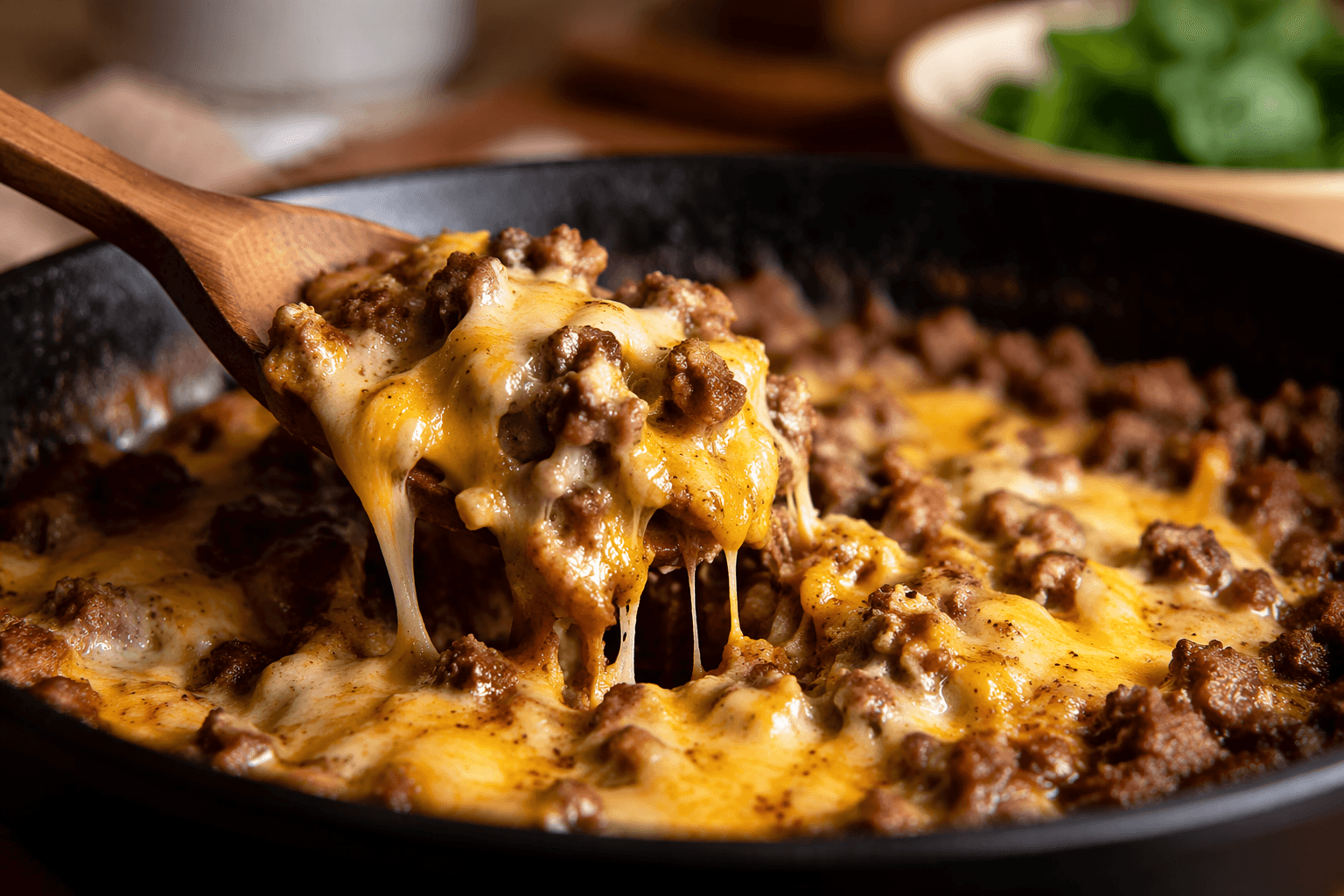
Hamburger meat is the kind of keto ingredient that quietly fixes dinner. It is cheap, filling, flexible, and naturally carb-free, which is exactly why it keeps showing up in keto kitchens that need real food fast. One simple cheeseburger-style skillet, built from ground beef, cream cheese, garlic, and cheddar, shows how a single base ingredient can become a full dinner with about 4 grams of net carbs per serving.
Why ground beef works so well on keto
The appeal goes beyond the low-carb count. Ground beef gives you a high-protein, high-fat foundation that is easy to cook in bulk and easy to turn into different meals without changing your shopping list every night. That is the kind of leverage budget-conscious keto cooking needs, especially when the alternative is a plan that feels expensive, repetitive, or impossible to stick with.
USDA FoodData Central, the USDA’s public-domain nutrition database, makes the numbers plain. A standard 4-ounce serving of 80/20 ground beef has about 19.4 grams of protein, 22.6 grams of fat, and 0 grams of carbohydrate, plus about 2.2 mg of iron and 2.42 mcg of vitamin B12. That combination is why hamburger meat does so much heavy lifting in keto meals, it brings protein, fat, and micronutrients to the plate without adding carbs.
The nutrition math behind a filling dinner
Keto dinners work best when they keep you satisfied long after the plate is empty, and higher-fat cuts help with that. Research on ketogenic nutrition suggests that diets higher in healthy fats can promote satiety and reduce caloric intake, while appetite responses and exact carb thresholds still vary from person to person. A very low-calorie ketogenic diet study also found fewer cravings for sweet, high-fat, starchy, and fast foods, which helps explain why a rich beef-and-cheese dinner can feel so useful on a busy night.
That is where hamburger meat earns its place as a weeknight staple. A skillet of beef, cream cheese, garlic, and cheddar does not just check the macro box, it gives you the kind of rich, savory meal that can keep you out of the snack drawer later. For a lot of people, that is the difference between a keto plan that sounds good on paper and one that actually survives Tuesday.
Choosing the right fat ratio
Not every package of ground beef behaves the same way in the pan, and keto cooks notice that fast. The article’s practical advice is to reach for 80/20 when you want the best flavor and texture in most keto recipes, while 85/15 and 90/10 can make sense when your macro goals call for something leaner. In other words, the goal is not perfection, it is a version of keto you can repeat.
There is also a useful contrast here with mainstream guidance. The American Heart Association says that for hamburgers or meat loaf, people should choose 90% or more lean ground beef. Mayo Clinic notes that USDA’s lean label applies only when a 3.5-ounce serving has less than 10 grams of total fat, less than 4.5 grams of saturated fat, and less than 95 mg of cholesterol. Keto cooking often runs on a different logic than low-fat cooking, but the label language still helps you understand what is in the package before it hits the skillet.
How to turn one package into several dinners
The real strength of hamburger meat is how many directions it can take. One batch can become casseroles, skillets, soups, taco bowls, meatballs, burgers, or meal-prep containers, and each version can stay low-carb with the right add-ins. Garlic and cheddar make sense in the creamy skillet version because they add flavor and richness without sending carbs up, but the same beef can just as easily move into taco seasoning, burger bowls, or a simple baked casserole.
That flexibility matters because keto often fails when dinner gets too complicated. If you start with one affordable protein and keep a few carb-free extras around, you can build a weeknight system instead of chasing one-off recipes. A pan of browned beef becomes the anchor, and then cheese, seasonings, and a little creaminess decide whether the meal lands as comfort food, meal prep, or a fast family dinner.
The bigger picture on red meat
It is also worth keeping the health context in view. The National Cancer Institute says red meat is associated with increased risk of colon and rectum cancer, and the American Institute for Cancer Research recommends limiting red meat to about 12 to 18 ounces cooked per week and eating little, if any, processed meat. That does not erase the value of hamburger meat in keto cooking, but it does argue for using it as a smart staple rather than an every-meal default.
That is the sweet spot for a budget-friendly keto kitchen: enough hamburger meat and cheese to make dinner cheap, filling, and repeatable, but enough variety in the rest of the week to keep the plan sustainable. When a plan can turn one humble package of beef into a rich skillet, a taco bowl, or a batch-cooked lunch without blowing the carb count, keto feels less like restriction and more like a system that actually fits real life.
Every story on Keto Diet Magazine is assembled by an automated editorial system that works from verified research, official records, and credible reporting, then clears automated accuracy and moderation checks before it goes live. The standards that system follows are set and overseen by the people who run the publication. Read our full editorial policy.
Did this article answer your question?