A hot cast-iron skillet turns ground pork into the kind of keto dinner that tastes plated, not patched together. Sarah Thompson’s method leans on rosemary, thyme, garlic, onion, smoked paprika, cumin, Dijon, and broth to create a juicy, savory finish in about 30 minutes, with the kind of restaurant-style browning that makes weeknight food feel finished.
Why ground pork earns its place on keto
Ground pork is one of those ingredients that quietly does the most work in a keto kitchen. National Pork Board guidance calls it affordable, fresh, extremely versatile, and especially good at soaking up whatever flavor you add to it, which is exactly why it behaves so well in a skillet built around herbs and spice. It also comes with a useful fat cushion: the National Pork Board says ground pork is typically sold at an average 70% lean, 30% fat ratio.
That fat balance matters because USDA FoodData Central shows ground pork can vary a lot by leanness, with examples ranging from 96% to 91% lean down to 78% to 72% lean. Sarah’s 80/20 suggestion lands in the middle of that spread, giving you enough fat for flavor and moisture without turning the pan greasy. For a keto dinner, that balance matters because the meat carries the whole meal instead of drying out and asking sauce to save it.
How the skillet builds restaurant-level flavor
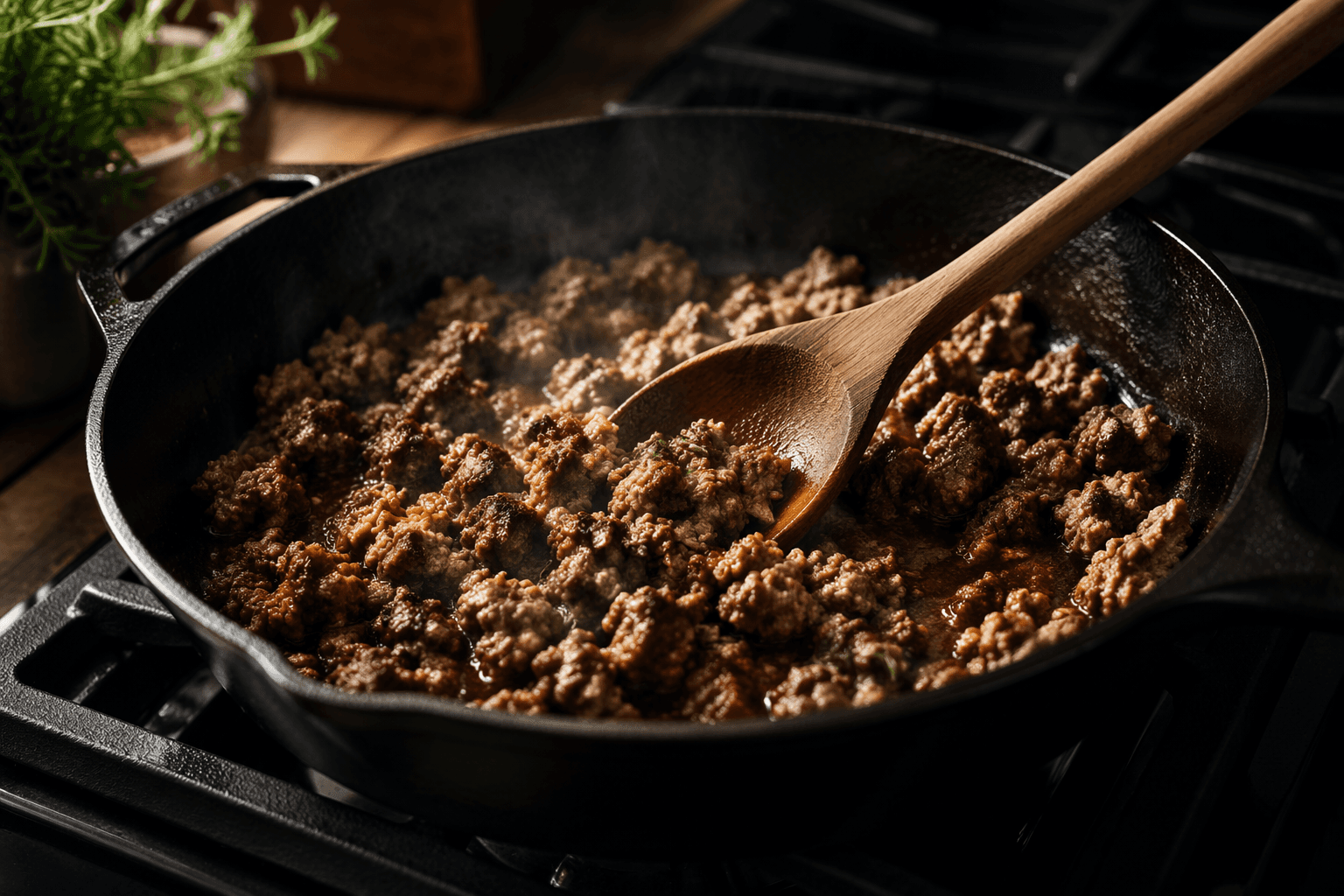
The real trick is not just the ingredient list, it is the order. The pork goes into a cast-iron skillet first, where high heat encourages browning before the herbs and aromatics go in, and that is where the savory depth comes from. The Maillard reaction, the browning process associated with Louis-Camille Maillard, is the science behind that scent you get when meat hits a hot pan and suddenly smells expensive.
Cast iron helps because it holds steady heat and rewards patience. A quick sear gives the pork browned edges, then the garlic, onion, rosemary, thyme, smoked paprika, cumin, sea salt, black pepper, and red pepper flakes can bloom in the rendered fat instead of steaming in a crowded pan. That is what makes the dish feel like a skillet dinner from a restaurant line, not a basic ground-meat scramble.
Dijon mustard and chicken broth finish the job by pulling the browned bits into something close to a simple pan sauce. The mustard sharpens the pork’s richness, the broth loosens the fond at the bottom of the skillet, and the whole pan suddenly reads as layered and intentional instead of just seasoned. Avocado oil gives you a clean starting point for the sear, especially when you want the pork to brown fast without adding a heavy flavor of its own.
The 30-minute method that keeps it juicy
This is a weeknight rescue recipe because it does not ask for much beyond one skillet and a few pantry staples. Heat avocado oil in the cast iron, add the ground pork, and let it brown before stirring constantly, so the meat has time to develop color. Once the pork is no longer raw, the garlic, onion, and herbs can go in, followed by the spices, Dijon, and chicken broth to bring everything together.
- Use fresh rosemary and fresh thyme for a cleaner herbal edge.
- Keep the smoked paprika and cumin in the mix for warmth and depth.
- Add red pepper flakes only as far as you want the heat to travel.
- Let the broth and Dijon coat the meat instead of reducing the pan to a dry crumble.
The result is more polished than a simple protein pile, even though the total cook time is still only about 30 minutes. That is the sweet spot for keto on a busy night: fast enough to feel realistic, but flavorful enough that you do not feel like you are settling.
Serve it like a complete meal, not a meat-only plate
Sarah’s serving suggestion keeps the dish in full-meal territory. Roasted vegetables or a fresh green salad give you texture and a low-carb counterpoint to the richness of the pork, so the skillet feels finished instead of isolated. That matters in keto cooking, where it is easy to lean too hard on one pan of meat and call it dinner.
The storage notes make it even more practical. Cooked pork keeps in the refrigerator for four to five days, and it can be frozen for up to three months, which makes this an easy batch-cook option for busy keto households. That kind of make-ahead flexibility is part of why one-pan pork dinners keep showing up in modern keto rotations: they solve both dinner and tomorrow’s lunch.
Why the keto framing still carries debate
Keto’s appeal is obvious in a recipe like this, where fat, flavor, and speed all line up in one skillet. Harvard T.H. Chan School of Public Health describes keto as a low-carbohydrate, fat-rich eating pattern that has been used in medical settings for years, while the American Heart Association has said ketogenic diets fit poorly with its heart-healthy dietary guidance. Those two views explain why keto remains both popular and contested.
This skillet lands squarely in the practical end of the keto spectrum. It skips specialty products, keeps the ingredient list grounded in ordinary pork and herbs, and depends on technique instead of gimmicks. That is part of its charm: it feels like real dinner, not a diet demonstration.
Keep it safe and let the thermometer do the work
The one nonnegotiable step is temperature. The USDA Food Safety and Inspection Service, FoodSafety.gov, and the National Pork Board all say ground pork should reach 160°F, even though whole pork cuts can be cooked to 145°F with a three-minute rest. A digital meat thermometer is the easiest way to keep the pork juicy without guessing.
That safety step fits the rest of the recipe’s philosophy: simple, fast, and precise. A hot skillet gives you the browning, the mustard and broth give you the sauce-like finish, and the thermometer makes sure the center is done without taking the meat past its sweet spot. That is how a Tuesday-night pound of ground pork becomes the kind of keto skillet that looks and tastes like it came from a restaurant, even before the plates hit the table.
Every story on Keto Diet Magazine is assembled by an automated editorial system that works from verified research, official records, and credible reporting, then clears automated accuracy and moderation checks before it goes live. The standards that system follows are set and overseen by the people who run the publication. Read our full editorial policy.
Did this article answer your question?