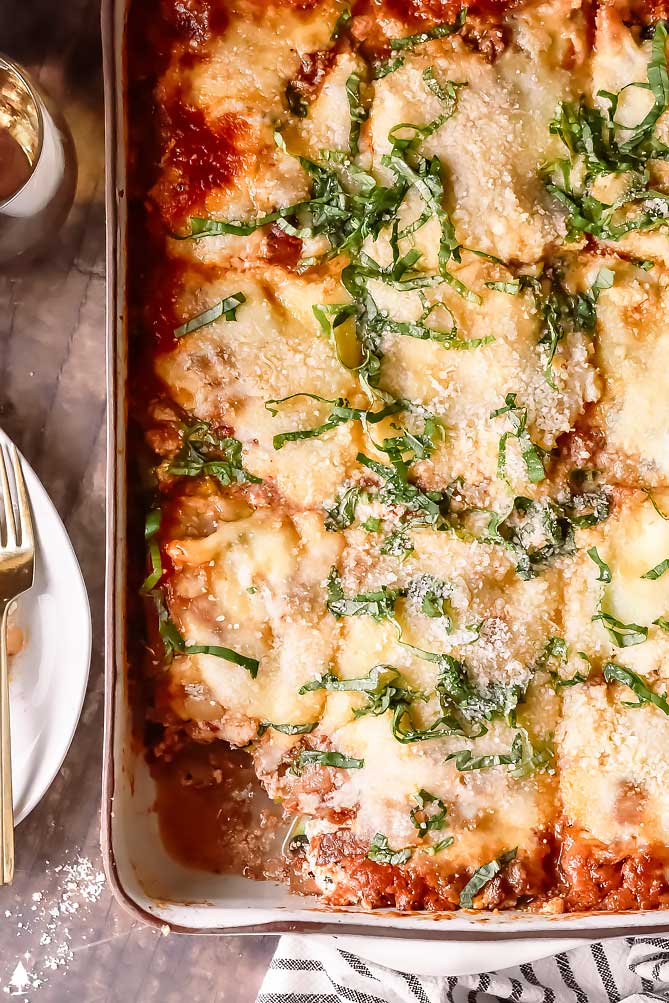
Zucchini lasagna works only if it still feels like lasagna when it hits the table. Rachel Farnsworth’s version from The Stay At Home Chef gets that part right by going pasta-free, building on homemade bolognese, and leaning on ricotta, mozzarella, and parmesan for the kind of richness keto cooks actually miss. The question is not whether it is low carb. The real test is whether it satisfies the comfort-food craving without collapsing into a flimsy vegetable swap.
Why this version earns a place at dinner
This recipe is built as a family-size bake, not a small keto side project. The page lists 12 servings, 45 minutes of prep time, 50 minutes of cook time, and 1 hour 35 minutes total, which tells you exactly what kind of dinner it wants to be: a full casserole that can anchor a table, not a quick lunch bowl. The site also positions it as a lighter version of Farnsworth’s Most Amazing Lasagna, so the comparison is clearly traditional lasagna, not some separate “health food” category.
That matters for keto, because the diet works better in real homes when one person can eat low carb without forcing everyone else onto a second meal. A pasta-free lasagna with meat sauce and a proper cheese build lets the whole pan do the work. It is the kind of dinner that makes ketogenic eating feel like cooking, not deprivation.
What keeps it keto without feeling stripped down
Keto is a high-fat, low-carbohydrate pattern that pushes the body toward ketones by reducing carbs sharply. In common clinical terms, that usually means about 25 to 50 grams of carbohydrates a day, or roughly 5 percent to 10 percent of calories from carbs. In that context, zucchini makes sense as the stand-in because it adds bulk and moisture without pushing the carb count the way pasta does.
That low-carb logic is also why this recipe leans so heavily on sauce and cheese. Homemade bolognese gives the dish its savory backbone, while ricotta, mozzarella, and parmesan supply the richness and structure that keep a low-carb casserole from tasting like a compromise. If the meat sauce is thin or the cheese layer is timid, the whole thing starts to read as “vegetables pretending to be lasagna.” When the sauce is substantial, it reads as dinner.
The broader appeal is that this style of cooking lines up neatly with the Dietary Guidelines for Americans, which emphasize whole, nutritious foods and recommend limiting highly processed foods, added sugars, and refined carbohydrates. Zucchini lasagna lands in that sweet spot where keto, family cooking, and mainstream nutrition advice overlap.
The moisture problem is the whole game
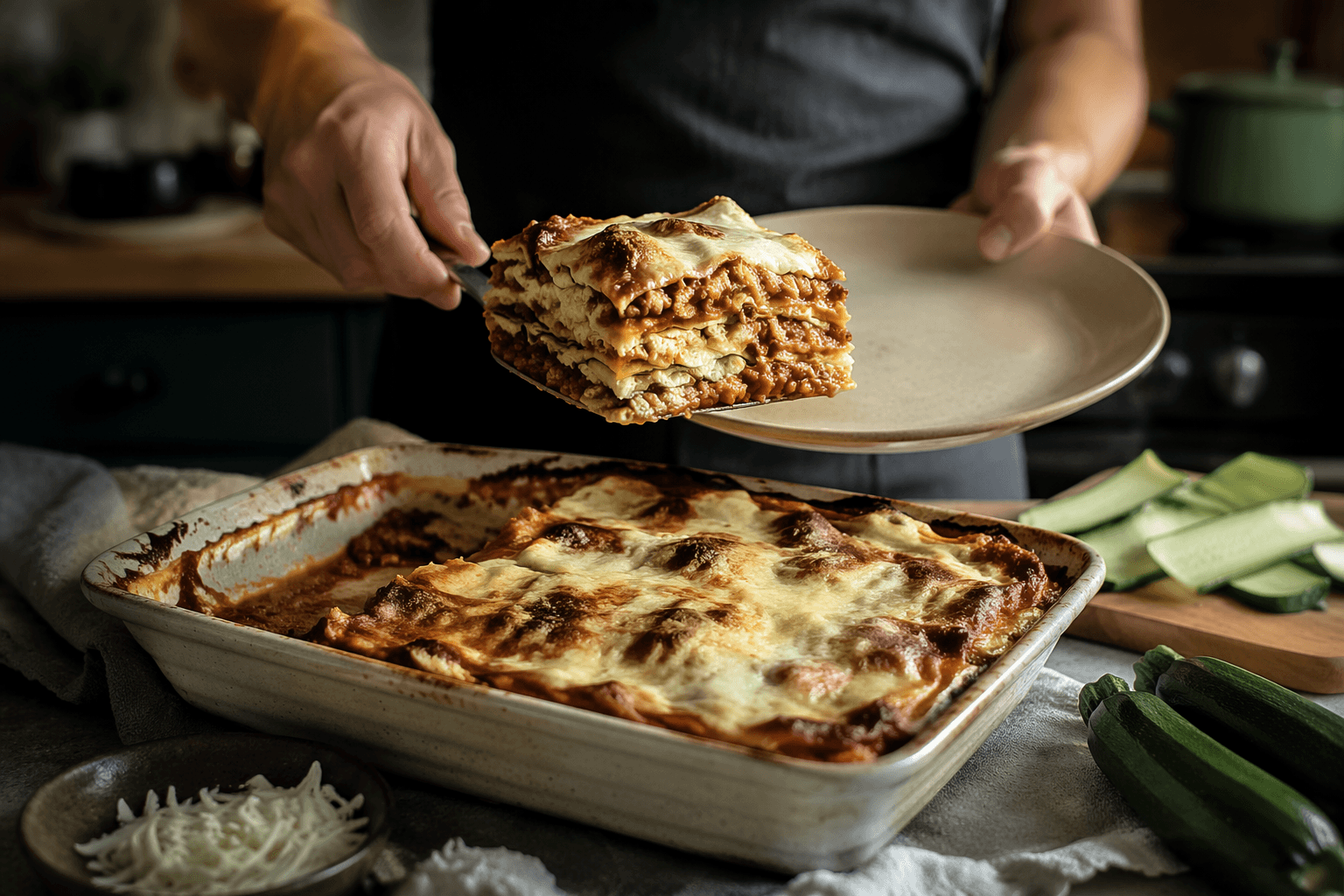
Zucchini lasagna lives or dies on moisture control. Zucchini is a summer squash with a mild taste and texture, and USDA SNAP-Ed says the best ones are small to medium and slender. That is not just a shopping tip. Smaller, slimmer zucchini tend to behave better in a casserole because they give you the vegetable flavor and volume you want without turning the pan into soup.
The key is to treat zucchini like the pasta replacement it is supposed to be, not like a watery side vegetable that can be tossed in casually. The recipe’s approach, slicing zucchini into noodle-like pieces and layering them with bolognese and cheese, works because every part of the pan has a job. Zucchini supplies structure and moisture, the meat sauce supplies body, and the cheeses lock the layers together.
- Choose small to medium, slender zucchini for better flavor and texture.
- Keep the bolognese thick enough to carry the dish, since the sauce is doing structural work.
- Use enough ricotta, mozzarella, and parmesan to help the layers set when baked.
- Cut the zucchini evenly so the layers stack cleanly instead of slipping apart.
A practical keto cook should keep a few rules in mind:
That is the difference between a lasagna that slices and one that slumps. The whole point is not to remove moisture entirely. It is to manage it so the pan still behaves like lasagna at serving time.
Why zucchini keeps showing up in keto comfort food
There is a reason zucchini keeps getting drafted into noodle swaps, casseroles, and low-carb bake-offs. USDA FoodData Central, the official USDA nutrition database, is the standard place people use to verify food nutrition information, and zucchini’s profile explains the appeal: a cup of sliced raw zucchini is very low in calories and carbs while still adding volume and moisture. That combination is exactly what keto cooks need when they are trying to keep a dish hearty without pushing carbohydrates out of range.
It also helps that zucchini is versatile enough to disappear into a recipe without fighting the rest of the plate. You can eat it raw, steamed, grilled, roasted, or sautéed, and in a lasagna it takes on the role of neutral, gentle filler that lets the sauce and cheese stay in charge. That is a big reason this kind of recipe reads as family food instead of diet food.
Keto’s history makes this kind of recipe look less like a fad
The ketogenic diet is not new. Harvard’s Nutrition Source traces medical use back centuries, including epilepsy treatment in children in the 1920s and earlier use for diabetes in the 19th century. The National Cancer Institute defines it as a high-fat, low-carbohydrate diet that causes the body to break down fat into ketones. So when a zucchini lasagna shows up in a modern kitchen, it is part of a long-running nutritional pattern, not just a social media trick.
At the same time, the diet is not carefree. Harvard Health says it is often marketed as a weight-loss wonder, but it is actually a medical diet with serious risks. University of Chicago Medicine calls it extremely strict and difficult to maintain, and recent clinical caution has grown around long-term use, especially for people with heart disease or chronic kidney disease. That is why a recipe like this matters so much: it shows how keto can be translated into something familiar and satisfying, while still carrying the discipline that the diet demands.
The best zucchini lasagna passes the comfort-food test by making you forget you are eating a workaround. When the slices hold, the bolognese tastes deep, and the zucchini stays in the background where it belongs, the pan does what lasagna is supposed to do: feed a table, not a theory.
Every story on Keto Diet Magazine is assembled by an automated editorial system that works from verified research, official records, and credible reporting, then clears automated accuracy and moderation checks before it goes live. The standards that system follows are set and overseen by the people who run the publication. Read our full editorial policy.
Did this article answer your question?