A typical ketogenic pattern allows about 20 to 50 grams of non-fiber carbohydrates a day, and Mayo Clinic’s Healthy Keto plan keeps net carbs around 50 grams while still making room for fiber-rich foods.
Start with the foods that fit best
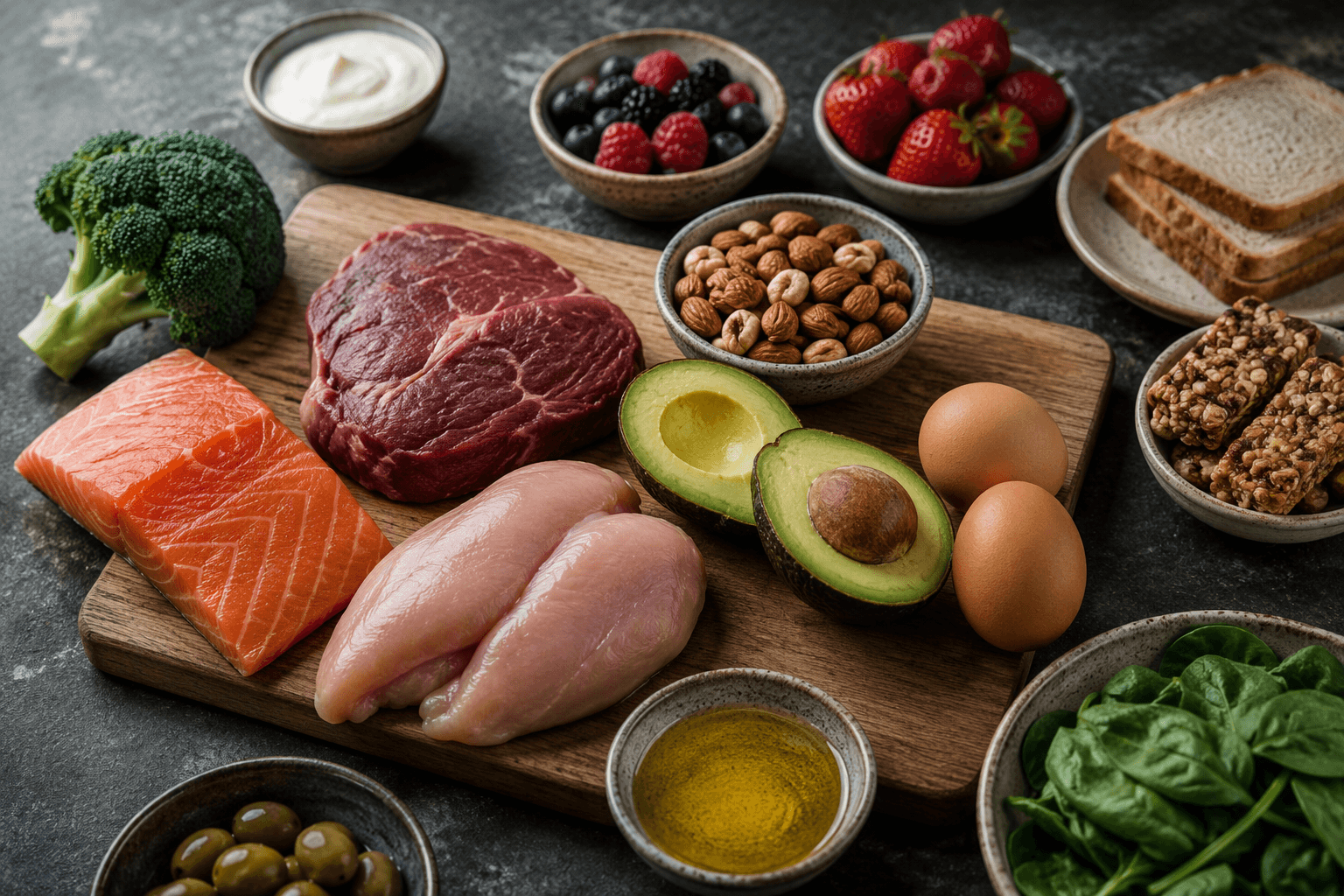
The most reliable keto staples are the foods that naturally bring fat, moderate protein, and very little carbohydrate: meats, poultry, seafood, eggs, butter, olive oil, avocado, cheese, cream, nuts, seeds, and non-starchy vegetables such as leafy greens, cucumbers, zucchini, cauliflower, mushrooms, and broccoli. Those are the items that make ketosis workable because they build meals without crowding out the day’s carb budget. Heart UK classifies ketogenic eating as a very low-carb, high-fat diet that stays under 50 grams of carbohydrate a day or under 10% of total energy from carbohydrates.
If you are filling a keto cart, the center of the plate should usually come from protein plus fat, with vegetables like broccoli or cauliflower doing the heavy lifting where rice or potatoes would normally sit.
Where beginners get tripped up: fruit, dairy, legumes, and grains
Harvard T.H. Chan School of Public Health’s Nutrition Source defines keto as a diet that severely limits carbohydrate intake and generally excludes grains, beans, fruits, and starchy vegetables, which is why these categories cause so much confusion. Fruit is the first gray area for many people: berries can usually fit in small portions, but tropical fruit and fruit juice climb into carb territory much faster.
Dairy can be just as misleading. Butter, cream, and cheese are classic keto foods, but flavored yogurts and sweetened dairy drinks can carry more sugar than their packaging suggests. The cleaner choice is plain, unsweetened dairy, especially when a recipe or snack is already bringing in carbs from somewhere else.
Legumes and grains are nutritious in many eating patterns, but keto is not one of them. Beans, bread, rice, pasta, cereal, and most grain-based foods are usually too carb-heavy for a strict ketogenic framework, which is why a meal built around a grain bowl or a bean-heavy chili can use up a whole day’s allowance before dinner even starts. In practice, these foods belong on the “avoid” side for most beginners, unless a measured portion is being counted carefully against the carb target.
The hidden-carb traps in keto’s lookalike foods
The biggest beginner mistake is often not a single obvious carb bomb, but a string of foods that look keto-adjacent and quietly add up. Sauces, dressings, flavored yogurts, packaged drinks, and “health” bars can all hide enough carbohydrate to matter when the target is only 20 to 50 grams of non-fiber carbs a day. A food can be marketed as convenient or even keto-friendly and still be easy to overeat, especially if it comes in a bar, bottle, or tub.
Processed keto substitutes deserve skepticism. They may help in a pinch, but they are not automatically better than whole foods, and they often work best as occasional backup rather than daily staples. A more dependable swap is still the simplest one: use olive oil instead of sugary dressings, cauliflower instead of potatoes, and plain yogurt or cheese instead of the sweetened versions that make a snack feel “light” while quietly pushing carbs higher.
A quick store rule helps make the decision easier:
- Buy more of the foods that already fit keto naturally, especially eggs, seafood, cheese, avocado, nuts, seeds, and non-starchy vegetables.
- Limit foods that bring carbs in a less obvious form, such as berries, plain dairy, beans, and small servings of fruit.
- Avoid or tightly count foods built on starch or sugar, including bread, rice, pasta, potatoes, cereal, sweets, and most packaged drinks.
- Treat keto-branded snacks as conveniences, not as the backbone of the diet.
Why the carb count matters beyond weight loss
In April 2023, the American Heart Association warned that popular diets including keto may adversely affect heart health. In March 2023, the American College of Cardiology said a keto-like diet may be linked to higher LDL cholesterol and a higher risk of heart disease and cardiac events. Mayo Clinic’s 2022 explainer calls keto very high-fat and very-low-carbohydrate and raises questions about whether it is healthy long term.
A keto plate built from whole foods looks very different from a cart full of packaged substitutes, and the distinction shows up quickly in how easy the diet is to follow. Mayo Clinic’s Healthy Keto plan still emphasizes fiber-rich foods.
Keto has a long history, even if the shopping rules feel new
Mayo Clinic says the term “ketogenic diet” was first coined there over a century ago. In 2018, Mayo Clinic Radio put keto at the top of its list of trending health-related question searches. A 2025 Metabolic Mind video also announced a Mayo Clinic pilot study returning ketogenic therapy to that institution, this time as a possible treatment for bipolar disorder.
Every story on Keto Diet Magazine is assembled by an automated editorial system that works from verified research, official records, and credible reporting, then clears automated accuracy and moderation checks before it goes live. The standards that system follows are set and overseen by the people who run the publication. Read our full editorial policy.
Did this article answer your question?