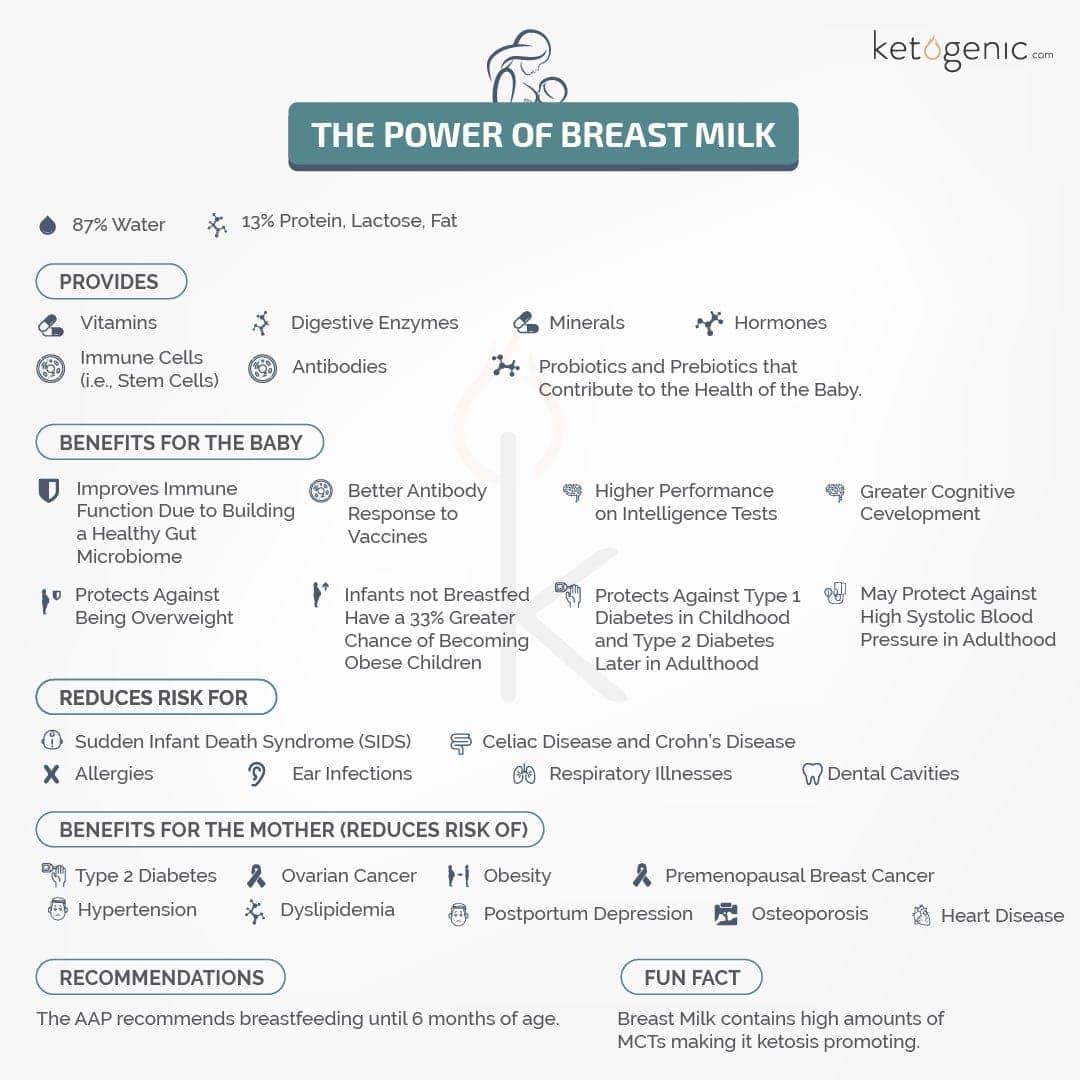
Breastfeeding raises both energy and glucose demand, which changes the risk math if you are thinking about keto. The medical literature draws a sharper line between ordinary weight-loss keto and medically supervised ketogenic diet therapy. The real question is less about ketosis itself and more about how hard you push carb restriction, fasting, dehydration, and rapid weight loss.
Keto is not one thing
The strongest evidence in this area comes from epilepsy care, not from influencer-style weight-loss plans. A 2024 PubMed-indexed clinical practice guideline states that human milk and breastfeeding can be incorporated into ketogenic diet therapy when expert guidance is in place, which is very different from a blanket ban. Some families are using ketogenic therapy as a medical treatment for epilepsy, not as a trend diet.
The earlier literature points in the same direction. A 2019 PubMed paper found feasibility, safety, and effectiveness for a ketogenic diet that included breast milk in infants with severe childhood epilepsy, and a 2019 case report described starting ketogenic therapy in infants with treatment-refractory epilepsy while maintaining a breast milk diet. A 2022 PubMed paper showed that medicalized ketogenic therapy can be used to treat seizures in breastfeeding infants with epilepsy through careful management of human milk fat content.
The most recent epilepsy data are also hard to square with a simple “breastfeeding and keto never mix” rule. In a 2024 PubMed study of ketogenic dietary therapy for drug-resistant epilepsy, among breastfeeding participants, 73.7% had a greater than 50% response at 1 month, 37% achieved greater than 75% seizure reduction, and 10.5% became seizure free.
Where the danger actually lives
The main hazard is not normal nutritional ketosis. It is lactation ketoacidosis, a rare but serious condition that can develop when lactation is stacked with too little food, too few carbs, dehydration, illness, or prolonged fasting. A 2024 systematic review on carbohydrate restriction during lactation treats breastfeeding as a physiologically demanding state where low-carb dieting can carry special risks.
Lactation ketoacidosis can be easy to miss at first because the symptoms are not exotic. The warning signs include:
- nausea
- vomiting
- abdominal pain
- rapid breathing
- unusual or severe fatigue
- suddenly feeling very unwell
If those show up while you are breastfeeding and running very low carbs, skipping meals, or trying to drop weight fast, that is not the moment to “push through.” It is a reason to get urgent medical care, because the distinction between benign ketosis and true ketoacidosis is clinical.
Breastfeeding changes the math
The broader breastfeeding guidance shows why aggressive dieting can backfire. The American Academy of Pediatrics recommends exclusive breastfeeding for about 6 months, with continuation for 1 year or longer as mutually desired by mother and infant. An AAP nutrition source cited in the literature puts energy needs in the first 6 months of lactation at an additional 500 kcal per day above the usual diet appropriate for a woman’s age.
Hydration matters too. Guidelines cited in a review indexed in PMC recommend about 2,700 mL per day for breastfeeding women, compared with 2,000 mL per day for mixed and non-breastfeeding individuals. CDC and National Institute of Child Health and Human Development breastfeeding guidance also treat lactation as a period with special nutrition and hydration considerations, which is why the usual internet advice to “just do strict keto and power through” is a bad fit here.
That does not mean you need to fear every carbohydrate drop while nursing. It does mean the margin for error is smaller, because milk production is already asking your body for more fuel and more fluid. If the plan also includes aggressive fasting, a large calorie deficit, or a rush to lose weight, the risk rises.
The practical bottom line
If you are breastfeeding and considering keto for weight loss, this is not the place for extreme carb cuts or prolonged fasting without professional supervision. A controlled, moderate approach is one thing; stacking restriction on top of lactation’s baseline demands is where people get into trouble. Ketones can exist during breastfeeding. The practical question is whether you are creating the conditions that can tip normal ketosis into ketoacidosis.
If ketogenic diet therapy is being used for a medical reason, like epilepsy, it belongs with a clinician who understands both ketogenic protocols and lactation. If you are doing lifestyle keto, the safest reading of the literature is simple: do not confuse “breastfeeding and keto can coexist” with “aggressive fasting and rapid weight loss are fine.”
Every story on Keto Diet Magazine is assembled by an automated editorial system that works from verified research, official records, and credible reporting, then clears automated accuracy and moderation checks before it goes live. The standards that system follows are set and overseen by the people who run the publication. Read our full editorial policy.
Did this article answer your question?