Why walnut pesto earns a spot in your keto rotation
This is the kind of keto recipe that pays rent all week. The April 15 update from Allrecipes keeps the familiar pesto base of basil, olive oil, garlic, and lemon juice, then swaps pine nuts for walnuts, which makes the sauce cheaper, deeper, and a little more interesting than the usual version.
That swap matters because keto meals get dull fast when every plate leans on plain protein and roasted vegetables. A good pesto changes the whole equation. It can turn leftovers into dinner, add richness to cauliflower rice, coat grilled fish, or rescue a bowl of zucchini noodles that would otherwise taste like a side dish pretending to be a meal.
What makes this version different
Pesto, as Allrecipes explains, comes from the Italian word *pestare*, meaning “to crush,” and the sauce was traditionally made with a mortar and pestle in Genoa, Italy. The modern walnut version keeps that heritage intact while making the recipe more practical for everyday cooking, especially when pine nuts are expensive or hard to find.
The flavor shift is real, not just a budget workaround. Allrecipes notes that its culinary producer recommends toasted walnuts for a deeper, richer pesto flavor, and one reviewer comment highlighted exactly that point, saying the walnuts make the taste deeper than regular pesto. If you want a brighter, sharper finish, Parmesan can be added, but the core formula works without it, which makes the sauce easy to adapt for different keto meals.
The other reason this recipe earns repeat status is speed. The method is simple: add the ingredients to a food processor and blend until the mixture turns into a paste-like pesto. With just 10 minutes of total time and a small batch yield, it is built for weeknights when you need a sauce, not a project.
How to make it without overthinking dinner
1. Add basil leaves, walnuts, garlic, lemon juice, and olive oil to a food processor.
2. Blend until the mixture becomes a thick, spoonable pesto.
3. If you want a more savory finish, stir in Parmesan.
4. For the best depth, toast the walnuts first before blending.
That toasted-walnut step is worth the extra minute. It gives the sauce a rounder, warmer flavor and makes the walnut note feel intentional instead of merely substituted. On a keto plate, that kind of detail is what keeps the food from tasting like diet food.
How to use walnut pesto across a keto week
On eggs and breakfast plates
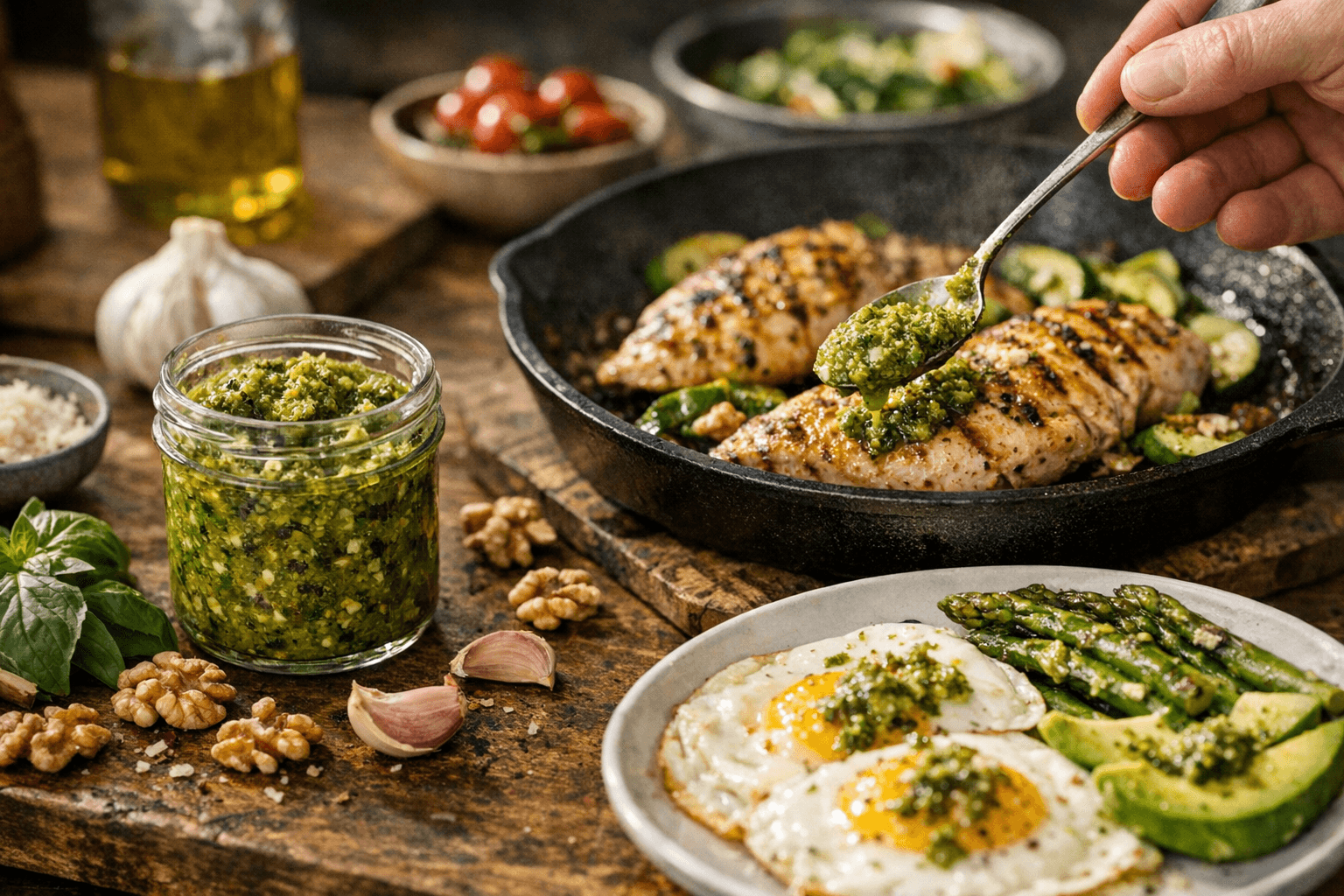
Walnut pesto is strong enough to wake up a morning meal. Spoon it over fried or scrambled eggs, or swipe a little across a breakfast bowl built around avocado, eggs, and leftover chicken. Because the sauce already carries fat from olive oil and walnuts, it adds instant richness without forcing you to pile on cheese.
It also works as a shortcut when breakfast needs to behave like lunch. A few spoonfuls can make simple eggs feel composed, especially when you are trying to keep carbs low without repeating the same skillet routine every morning.
With chicken, fish, and fast dinners
Allrecipes says pesto works with chicken, and that is where walnut pesto really starts earning its keep. Brush it onto grilled chicken breasts, tuck it under baked thighs, or use it as a finishing sauce for pan-seared fish. The sauce clings well, so a little goes a long way.
It is equally useful as a quick marinade or post-cook dressing. Since the recipe already comes together in about 10 minutes, it fits the way most keto dinners actually happen, which is fast and slightly improvised. When the main protein is cooked and the vegetables are bland, this sauce is the difference between eating because you have to and eating because the plate tastes finished.
On zucchini noodles, cauliflower rice, and lunch bowls
This is where walnut pesto becomes more than a sauce and starts acting like a keto flavor multiplier. Toss it with zucchini noodles, fold it into cauliflower rice, or spread it under a bowl built with shredded chicken, greens, cucumber, and olives. It gives low-carb food the kind of richness that usually comes from starch.
Allrecipes also points out that pesto can work as a sauce, sandwich spread, pizza topping, and lasagna filling. On keto, that translates neatly into lunch bowls, stuffed vegetables, or layered casseroles where a spoonful of pesto adds the same payoff that marinara or cream sauce would bring in a higher-carb kitchen.
Why walnuts fit the nutrition side of keto
The nutrition profile helps explain why this recipe feels so natural in keto meal planning. The recipe’s own nutrition information lists 455 calories, 47 grams of fat, 7 grams of carbs, and 6 grams of protein per serving. That is exactly the sort of fat-forward profile keto cooks look for when they want flavor without a carb load.
Walnuts bring more than just fat. Harvard Health says they contain healthy unsaturated fats, protein, fiber, folate, vitamin E, and alpha-linolenic acid, or ALA, an omega-3 fatty acid. Harvard’s nuts-and-seeds guide lists one ounce of walnuts at about 185 calories and 16 grams of unsaturated fat, while the California Walnut Board says that same ounce provides 2.5 grams of ALA, 4 grams of protein, 2 grams of fiber, and 45 mg of magnesium.
The California Walnut Board also says walnuts carry the American Heart Association’s Heart-Check mark, which is useful context for anyone trying to build a keto kitchen that does not feel reckless. Keto is not just about stripping carbs; it is also about choosing fats that make meals satisfying and sustainable.
A 2024 PubMed review adds another layer to that picture, noting that ketogenic diets may lower body mass, triglycerides, HbA1c, and blood pressure in the short term, while long-term benefits are less clear and cardiovascular implications remain controversial. That is exactly why a sauce like this matters. It gives keto cooks a way to use fats strategically, with flavor and variety instead of just more butter.
Harvard Health’s coverage of the Walnuts and Healthy Aging study reinforces that point. The trial followed 708 adults ages 63 to 79 in Loma Linda, California, and Barcelona, Spain, over two years. Participants ate about a quarter-cup to a half-cup of walnuts daily, and the walnut group showed modestly lower LDL cholesterol and lower levels of smaller, denser LDL particles, without gaining extra weight.
That does not make walnut pesto a health cure. It does make it a smart, evidence-informed way to keep keto meals from going stale. In a diet that lives or dies on repetition, a sauce like this is not a side note. It is the difference between forcing another plain plate and actually wanting to eat what is in front of you.
Every story on Keto Diet Magazine is assembled by an automated editorial system that works from verified research, official records, and credible reporting, then clears automated accuracy and moderation checks before it goes live. The standards that system follows are set and overseen by the people who run the publication. Read our full editorial policy.
Did this article answer your question?