A keto lunch that feels like home
This Vietnamese lunch makes a strong case for keto as everyday cooking, not a glossy Western trend. Built around stir-fried beef and an anchovy omelet, it keeps the plate full, savory, and familiar while leaving out rice, noodles, potatoes, and other starch-heavy sides.
Cookpad frames the recipe through its global home-cooking community, and that matters here. A Vietnamese recipe translated for a U.S. audience shows how keto ideas can travel without losing their domestic character, landing as a practical family meal rather than a packaged substitute or a diet display piece.
What’s on the plate
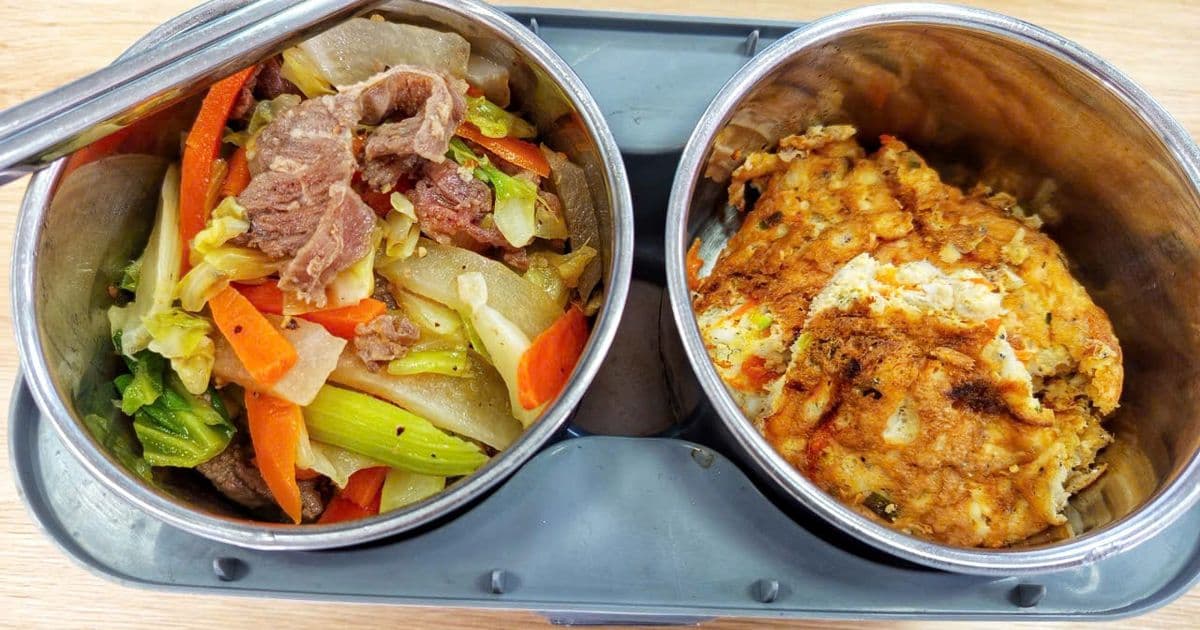
The meal is structured as two dishes that work together as a no-starch lunch. The first is a three-color stir-fried beef dish made with about 200 grams, or 7 ounces, of beef plus celery, cabbage, carrot, and daikon radish. The second is an egg-and-anchovy omelet made with about 200 grams, or 7 ounces, of dried anchovies and 4 large eggs.
That combination gives the lunch its strength: protein from beef, eggs, and anchovies, plus vegetables for texture and volume. The recipe’s listed cooking time is 1 hour, and it serves 3, which makes it easy to read as a real household meal rather than a special-occasion keto project.
How the beef dish builds flavor without starch
The stir-fried beef follows a straightforward home-cooking rhythm. Thinly sliced beef is marinated, garlic is sautéed, the vegetables are cooked, and the beef goes back into the pan so everything finishes together. That sequence matters because it layers flavor without depending on sugar, flour, or thick sauces.
Celery, cabbage, carrot, and daikon radish do more than fill space. They bring crunch, softness, and color to the pan, helping the dish feel complete even though the starch centerpiece is gone. For keto readers, that is the real lesson: you can keep the stir-fry format you already know and simply shift the structure toward vegetables and protein.
Why the omelet works so well in a low-carb lunch
The anchovy omelet shows the same logic in a different form. Dried anchovies, eggs, chopped carrot, green onions, black pepper, fish sauce, and seasoning granules are mixed together, poured into a pan, then cooked under a lid before being flipped to brown. It is plain in the best sense of the word: direct, fast-moving, and built from pantry ingredients.
Anchovies may not be the first food many keto newcomers think of, but they make sense here. Seafood is widely recognized as an important source of protein and other nutrients, and anchovies bring intensity that helps a simple egg dish feel substantial. In a low-carb frame, that kind of concentrated flavor is valuable because it keeps the meal satisfying without relying on breading, grains, or heavy sauces.
Why this counts as a real keto adaptation
The recipe fits keto because it removes the starch base while preserving the shape of a traditional lunch. There is no rice bowl, no noodle soup, and no potato side trying to imitate comfort food from a distance. Instead, the meal stays close to the way many families already cook: meat in a pan, vegetables in the wok, eggs set with fish sauce and aromatics.
That is what makes it useful to the keto community. It proves that low-carb eating does not have to look polished, international, or visibly “diet” at all. It can be built from familiar ingredients, cooked from scratch, and plated in a way that feels normal at the family table.
The cultural context matters
This lunch also stands out against the usual structure of Vietnamese eating. The Food and Agriculture Organization of the United Nations places cereals and tubers at the bottom of Viet Nam’s food-based dietary guidelines, followed by vegetables, fruits, and protein-rich foods. A no-starch lunch like this sits outside that ordinary pyramid structure, which is exactly why it reads as an adaptation rather than a standard template.
The World Health Organization adds another important layer: the make-up of a healthy diet varies with age, gender, lifestyle, physical activity, cultural context, locally available foods, and dietary customs. That view helps explain why keto can look different from place to place. In this case, the diet is not being imported as a rigid package; it is being translated into a Vietnamese home kitchen.
What the recipe says about keto itself
In the medical literature, ketogenic diets are described as very low-carbohydrate diets used to induce nutritional ketosis. They have a long medical history, with early use in epilepsy dating back to the early 20th century, and later attention in relation to obesity, diabetes, and liver disease. That background helps explain why keto keeps resurfacing in new forms, from clinical settings to everyday meal planning.
This recipe belongs to the everyday side of that story. It does not try to sell keto as a miracle or a lifestyle brand; it simply shows how a family lunch can be rebuilt around protein, vegetables, and seasoning. For readers who already understand keto, the appeal is obvious: the food is recognizable, the carb count stays low, and the meal still feels satisfying enough to serve without apology.
A practical template for cooking the same way at home
The value of this lunch is not just in the ingredients list. It offers a repeatable pattern for anyone who wants to stay low-carb without abandoning the cooking habits they already trust. Start with a protein, add vegetables that can take heat, season boldly, and keep the meal anchored in familiar textures.
- Thin-sliced beef works well because it cooks fast and absorbs seasoning easily.
- Celery, cabbage, carrot, and daikon create volume and color without leaning on starch.
- Anchovies and eggs deliver a strong savory base that holds up to fish sauce and black pepper.
- Cooking the omelet under a lid before flipping gives it structure and helps it brown cleanly.
That is the real strength of the dish. It shows that keto can be local, home-style, and culturally rooted, while still fitting the logic of very low-carb eating. In Vietnamese hands, the result is not a diet imitation but a meal that knows exactly what it is: simple, filling, and built to be eaten at home.
Every story on Keto Diet Magazine is assembled by an automated editorial system that works from verified research, official records, and credible reporting, then clears automated accuracy and moderation checks before it goes live. The standards that system follows are set and overseen by the people who run the publication. Read our full editorial policy.
Did this article answer your question?