
A 16-day controlled-feeding trial found ketosis could hold at carbohydrate intakes far above the familiar 50-gram rule, averaging about 93 grams a day for women and 105 grams for men. The study followed 22 participants, all of Chinese heritage, while continuous ketone monitoring tracked when they slipped in and out of ketosis as carbs climbed in measured steps.
The paper, “Determining the Minimum Dietary Carbohydrate Requirement in Apparently Healthy Adults: Findings from a 16-Day Controlled Feeding Trial,” was published in The Journal of Nutrition in July 2026. The trial established the minimum carbohydrate requirement to avoid significant fat mobilization in healthy Chinese adults and validated a novel ex vivo method for dynamic metabolic monitoring.
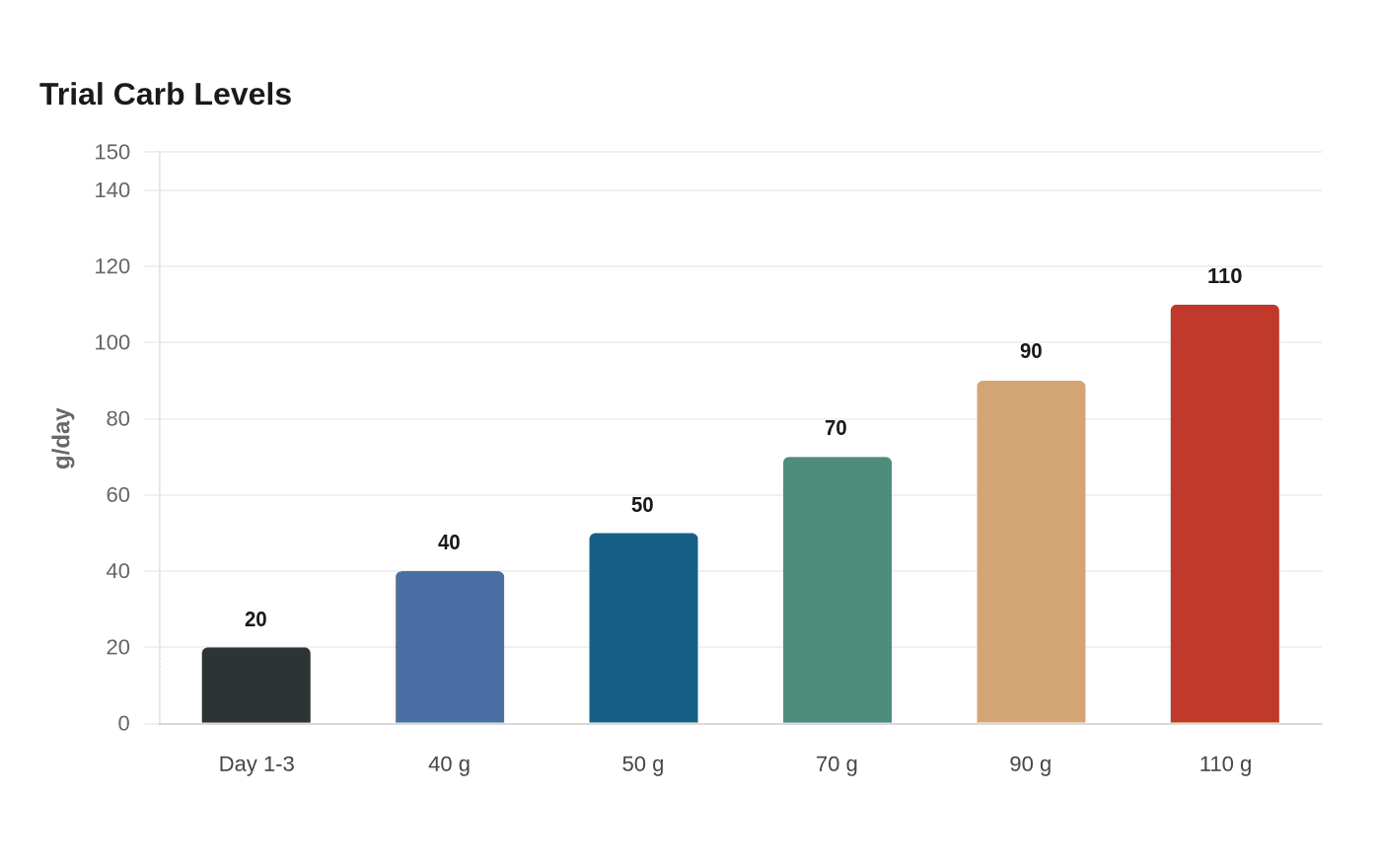
The feeding protocol started with three days at about 20 grams of carbohydrates a day to push participants into ketosis. After that, the diet moved through 40, 50, 70, 90 and 110 grams a day, while protein and fat stayed steady. That setup let researchers see not just whether ketosis held, but where the threshold shifted for each participant as intake rose.
Resting metabolic rate did not change even as the body shifted toward burning more fat and less carbohydrate.
Standard ketogenic plans are often pegged at about 5% to 10% of calories from carbs. Continuous ketone monitoring drew more attention in 2026, especially in diabetes care and other research settings. The sample was small, the trial was short, and all 22 participants were Chinese.
Every story on Keto Diet Magazine is assembled by an automated editorial system that works from verified research, official records, and credible reporting, then clears automated accuracy and moderation checks before it goes live. The standards that system follows are set and overseen by the people who run the publication. Read our full editorial policy.
Did this article answer your question?