Why this plan lands in India
A vegetarian keto plan makes sense in a country where meat is already a minority preference and low-carb eating usually gets framed the wrong way. Pew Research Center found that 39% of Indian adults consider themselves vegetarian and 81% say they limit meat in their diets, which explains why a meat-first keto pitch can feel disconnected from daily eating habits. With India’s population at 1,438,069,596 in 2023, even a narrow dietary shift has enormous reach, and this plan meets people where they already are.
That is the real strength of this approach: it does not try to import a Western keto plate and call it universal. Instead, it treats paneer, tofu, nuts, coconut milk, almond milk, cauliflower rice, and non-starchy vegetables as the backbone of the week, which is exactly the kind of adaptation that makes a low-carb plan feel usable instead of performative.
What keto is actually asking your body to do
The basic idea is simple. Cleveland Clinic defines ketosis as a metabolic state in which the body burns fat for energy instead of glucose, and that happens when carbs drop and fat intake rises. JAMA Network also notes that ketogenic diets were first used in the 1920s to treat diabetes before insulin was discovered, which is a reminder that keto is not just a social media trend dressed up as a lifestyle.
There is also a realistic upside here. Mayo Clinic says low-carb diets may help with weight loss and may help lower the risk of type 2 diabetes or metabolic syndrome, but the model is not consequence-free. JAMA Network lists common short-term side effects such as fatigue, poor mental energy, increased hunger, sleep disturbance, muscle cramps, constipation, nausea, and stomach discomfort, so the first week needs to be built for stability, not bravado.
The ingredient list that makes vegetarian keto work
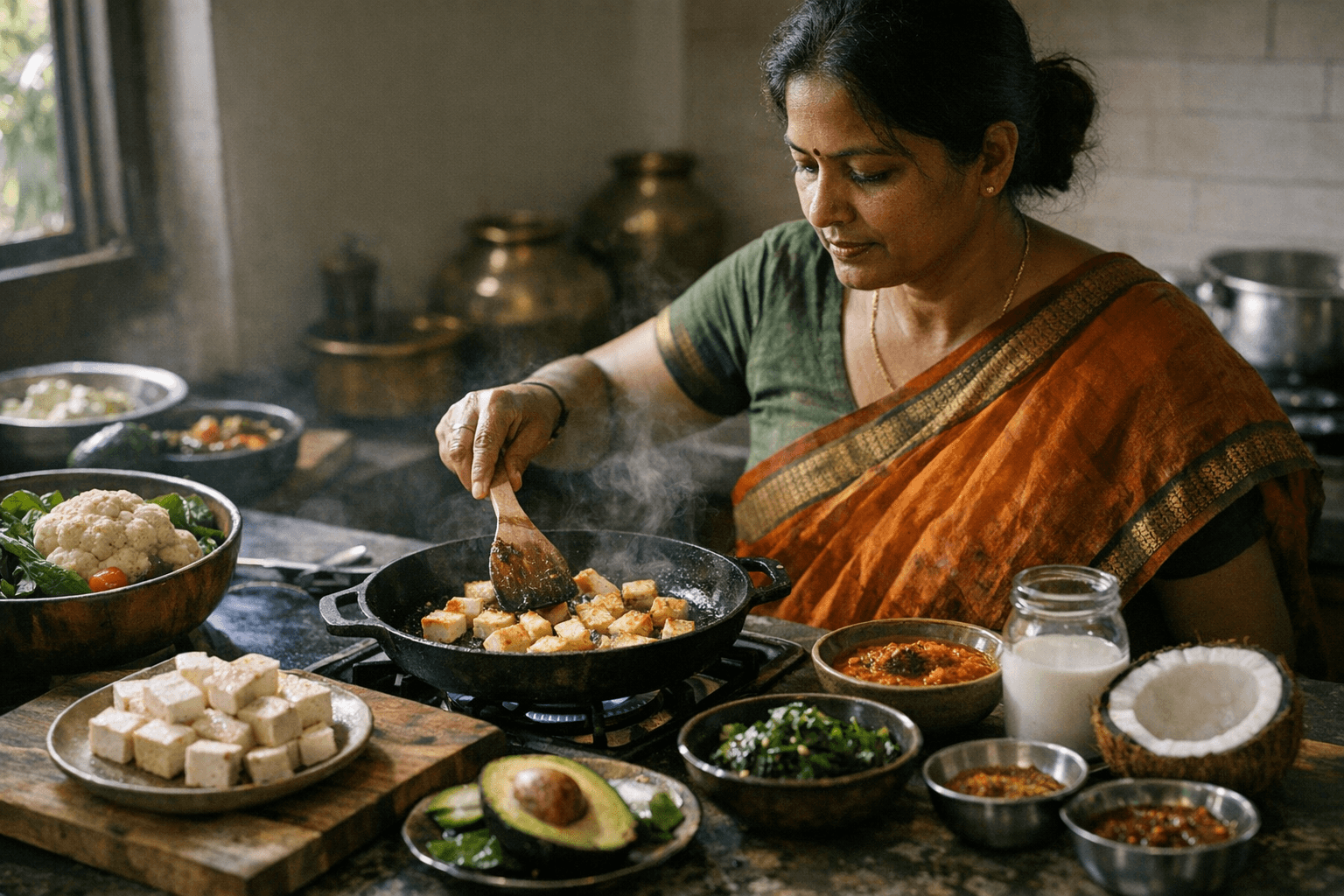
This plan succeeds or fails on the ingredients, and the list is practical in a way many keto plans are not. Paneer gives you a sturdy protein-and-fat anchor, tofu takes over when you want something softer and more flexible, and coconut milk adds richness without pushing carbs up. Almond milk, cauliflower rice, and non-starchy vegetables do the heavy lifting on volume, while nuts, especially roasted almonds, keep snacks from turning into carb traps.
The smartest part is the way these foods solve the central vegetarian keto problem: how to get enough protein, fat, and fiber without drifting back toward bread, grains, or fruit-heavy meals. The menu examples, from sautéed spinach to broccoli with cheese, stay close to foods that are easy to repeat, which matters far more than one flashy recipe that looks good once and never makes it back into your kitchen.
The seven-day rotation that stays repeatable
Day 1
The opening day keeps things light but structured, with sautéed spinach and almond milk tea setting a low-carb tone early. That kind of breakfast matters because it gives you a fast, familiar start without the sugar crash that makes the rest of the day harder to control.
Day 2
Paneer and vegetable stir-fry with cauliflower rice is the kind of lunch that makes vegetarian keto feel like a real meal instead of a compromise. It is filling, it has enough texture to feel complete, and cauliflower rice does the one job keto needs from a grain substitute: it carries the sauce without adding much carbohydrate.
Day 3
Cucumber raita shows up as a useful cooling side, especially in a plan that leans hard on richer foods. When the week starts to feel heavy, a high-fat diet without something fresh and crisp gets tiring fast, and this is one of the easiest ways to keep the plan from feeling monotonous.
Day 4
Tofu curry in coconut milk is the sort of dinner that earns a permanent place in a vegetarian keto rotation. The coconut milk gives you the fat base keto wants, while tofu supplies a cleaner protein lane than many carb-heavy vegetarian mains.
Day 5
Chia pudding gives the week a dessert-style breakfast or snack that still behaves like keto food. It is especially useful for anyone who wants a sweet note without blowing up the carb count, and it is one of the more repeatable options in the whole plan because it can be made ahead and pulled from the fridge.
Day 6
Grilled paneer and vegetable stew are the steady, workhorse meals in the lineup. They are not flashy, but they solve the real problem of vegetarian keto, which is staying satisfied long enough to make the plan feel normal instead of punitive.
Day 7
Broccoli with cheese and a small portion of dark chocolate close the week on the right note: savory first, controlled sweetness second. That last detail matters because portion control is where a lot of keto plans quietly fail, especially when dessert is treated as a reward instead of part of the macro plan.
Where the week can fall short nutritionally
The biggest watch-outs are not mysterious. NHS guidance says a healthy vegetarian diet can meet nutritional needs, but vegetarians should pay attention to iron, vitamin B12, and omega-3, and clinical review sources also warn that vegetarian or vegan diets may be low in vitamin B12, iron, calcium, zinc, and vitamin D if they are not carefully planned. Keto can sharpen that problem if it crowds out the very foods that usually help vegetarian eaters cover their bases.
That is why this plan needs more than calorie discipline. Long-term very low-carb eating can make it harder to get enough antioxidant-rich fruits and vegetables, and that is a real tradeoff for anyone trying to stay low-carb for more than a few days. If you want this to work beyond the novelty phase, you need the menu to be aggressive about vegetables, not just generous with fat.
How to prep so the plan actually happens
The most realistic version of this week starts before the first meal. Batch-cook cauliflower rice, keep paneer and tofu ready to pan-fry, and make sure coconut milk, almond milk, roasted almonds, chia seeds, broccoli, spinach, and cucumbers are already in the fridge or pantry. If the ingredients are not visible and ready, the plan will collapse into convenience food the first time you are hungry and tired.
The other useful habit is portioning. Dark chocolate works here only in controlled amounts, and nuts can quietly turn from support food into a calorie flood if you eat them by feel instead of by plan. The same goes for fat-rich curries and cheese-heavy dishes, which are fine in keto terms but easy to overbuild if you are chasing richness without checking the rest of the plate.
The verdict on sustainability
This seven-day vegetarian keto plan feels less like a one-off challenge and more like a workable template for everyday cooking, which is why it has legs. It respects India’s vegetarian reality, uses familiar ingredients, and gives you enough repeatable meals, paneer stir-fry, tofu curry, chia pudding, broccoli with cheese, to survive the week without needing a new recipe every night.
The catch is that sustainability depends on discipline, not just menu design. For vegetarian keto to stay practical, you have to keep protein steady, protect fiber with non-starchy vegetables, and pay attention to the micronutrients that vegetarian eaters can miss, especially B12, iron, calcium, zinc, vitamin D, and omega-3. That is the difference between a plan that looks clever and one that actually earns a place in the kitchen.
Every story on Keto Diet Magazine is assembled by an automated editorial system that works from verified research, official records, and credible reporting, then clears automated accuracy and moderation checks before it goes live. The standards that system follows are set and overseen by the people who run the publication. Read our full editorial policy.
Did this article answer your question?