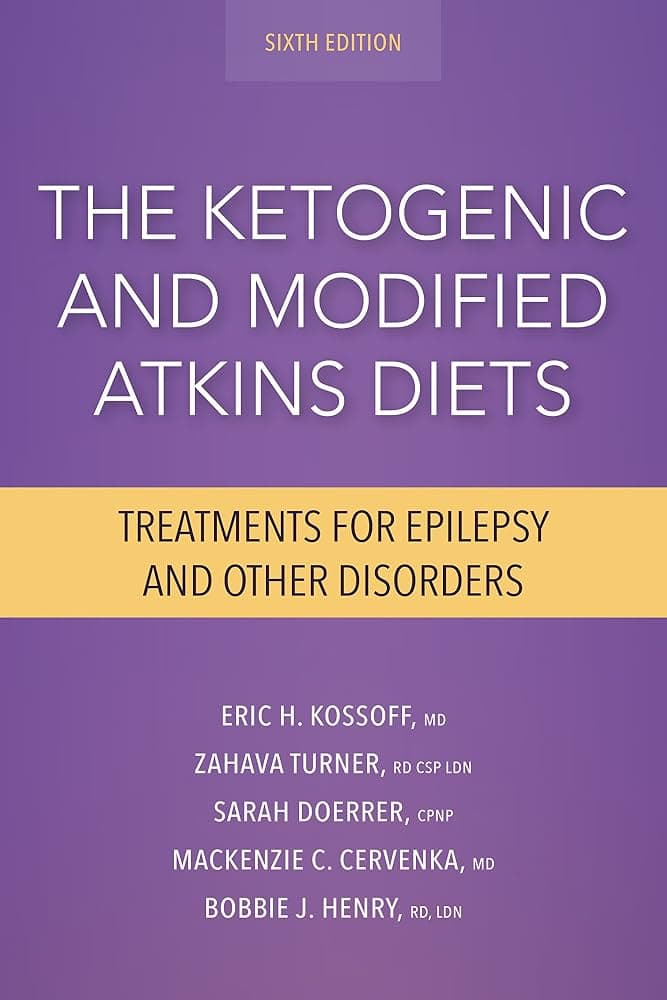
Biology is not the same as benefit
Keto has a compelling story in Alzheimer’s circles: change the fuel, calm the brain. A new review by Guilherme Mengue Christimann, José Augusto Gasparotto Sattler, and João Paulo Fabi puts that story under a harder light, arguing that the field is rich in metabolic logic but still short on clinical proof. That distinction matters because families facing memory loss deserve more than a plausible theory.
The review walks through the disease machinery that makes diet such a tempting target. It points to beta-amyloid plaques, tau tangles, chronic neuroinflammation, and blood-brain barrier disruption, all of which help explain why nutrition researchers keep coming back to the same question: can what you eat change the course of neurodegeneration? The authors also note that saturated fatty acids can amplify inflammatory signaling, a reminder that not every high-fat pattern is the same thing as a brain-protective strategy.
What keto is trying to do, and why that sounds so appealing
In theory, ketogenic eating could influence amyloid deposition, tau pathology, and cognitive decline by shifting peripheral inflammation, oxidative stress, and energy metabolism. The review also connects the gut microbiota to brain health, highlighting short-chain fatty acids such as butyrate and propionate as possible mediators that may help preserve blood-brain barrier integrity and alter microglial inflammatory state. That is the kind of mechanism-rich argument that makes keto feel tailor-made for a condition like Alzheimer’s.
But mechanistic coherence is not the same as patient benefit. The review is careful to say that interest in ketogenic diets for Alzheimer’s is growing, while robust clinical evidence is still lacking. For readers in the keto community, that is the key reality check: a diet can look elegant on paper and still fail to deliver a reliable human outcome.
Where the human evidence stands right now
The clinical literature is still small, and the strongest takeaway is uncertainty. A 2024 systematic review and meta-analysis of randomized controlled trials concluded that the clinical effect of ketogenic diets in Alzheimer’s remains uncertain, even though the search included randomized trials through October 2023. A separate 2023 critical appraisal found only 10 therapeutic ketogenic trials in Alzheimer’s disease, 3 in mild cognitive impairment, and 5 in Parkinson’s disease.
That is not a large body of evidence for a field attracting serious claims. The newer Frontiers review lands in the same place as the trial literature: promising biology, limited human proof, and not enough to justify calling keto a treatment for Alzheimer’s disease. The safest reading is that the field remains hypothesis-generating.
What the small studies can and cannot tell us
There are real signals worth watching, especially in small, carefully designed studies. A 2024 randomized feasibility trial tested the modified Atkins diet in older adults with mild cognitive impairment due to early Alzheimer’s disease, focusing on whether dietary ketone production could improve memory and help explore mechanisms. Another study from the same research group used a crossover design in pre-diabetic adults with mild cognitive impairment or normal cognition, comparing a modified Mediterranean ketogenic diet with an American Heart Association diet in 6-week periods separated by a 6-week washout.
That kind of work is useful because it shows how researchers are moving beyond simple yes-or-no questions and into mechanism testing. Still, feasibility trials and crossover experiments are not the same as large, definitive outcome studies. They can suggest direction, but they cannot settle the question of whether keto changes the trajectory of Alzheimer’s in the real world.
Why Mediterranean and MIND keep coming out ahead
If the question is which eating pattern has the strongest support for brain health today, the answer is not keto. It is the Mediterranean pattern and the MIND diet, both of which have a longer and broader evidence base. A 2024 meta-analysis found that adherence to the Mediterranean diet was associated with a lower risk of dementia in older adults, giving it a stronger prevention case than ketogenic therapy.
The MIND diet has an especially important place in this conversation because it was designed at Rush University Chicago by Martha Clare Morris and colleagues to capture foods linked with cognitive resilience. The original 2015 cohort study reported that the difference between top and bottom adherence tertiles was equivalent to being 7.5 years younger in the rate of cognitive decline. Later Alzheimer’s Association materials summarized observational findings showing a 53% lower Alzheimer’s risk with strict adherence and a 35% lower risk with moderate adherence.
Those numbers are observational, not proof of treatment effect, but they still matter because they come from a broader and more mature prevention literature than keto currently has. When a diet has been studied across large cohorts and keeps showing up in brain-health guidance, that deserves more weight than a handful of small ketogenic trials.
What major brain-health guidance emphasizes
The public-facing message from the Alzheimer’s Association is also telling. Its brain-health guidance stresses that a heart-healthy diet is a brain-healthy diet, and it highlights the MIND diet rather than ketogenic dieting. It also points to the U.S. POINTER lifestyle trial, which combines exercise, nutrition, cognitive engagement, and health monitoring as a multi-part strategy to protect brain health.
That approach reflects a broader prevention philosophy: Alzheimer’s risk is not likely to be solved by one macronutrient trick alone. The same organization also emphasizes that proper nutrition matters for people already living with Alzheimer’s or dementia, especially because poor intake can worsen weight loss and behavioral symptoms. In other words, the goal is not just theoretical neuroprotection, but practical support for real patients.
The right takeaway for keto families
The excitement around ketogenic diets in Alzheimer’s makes sense. The brain’s energy problems, the role of inflammation, and the appeal of measurable ketone production all give keto a clean narrative. But the current evidence does not support overpromising ketogenic interventions as a proven way to prevent or treat Alzheimer’s disease in humans.
A better way to read the field is this: keto remains an interesting experimental lane, while Mediterranean and MIND patterns are the more established brain-health roads. That matters because even modest delays in Alzheimer’s onset could have population-level impact, with modeling suggesting a 6-month delay could reduce prevalence by 5 percent and a 12-month delay by 10 percent. Those stakes raise the bar, not lower it. Until larger trials show real patient benefit, keto should be treated as an intriguing hypothesis, not a finished answer.
Every story on Keto Diet Magazine is assembled by an automated editorial system that works from verified research, official records, and credible reporting, then clears automated accuracy and moderation checks before it goes live. The standards that system follows are set and overseen by the people who run the publication. Read our full editorial policy.
Did this article answer your question?