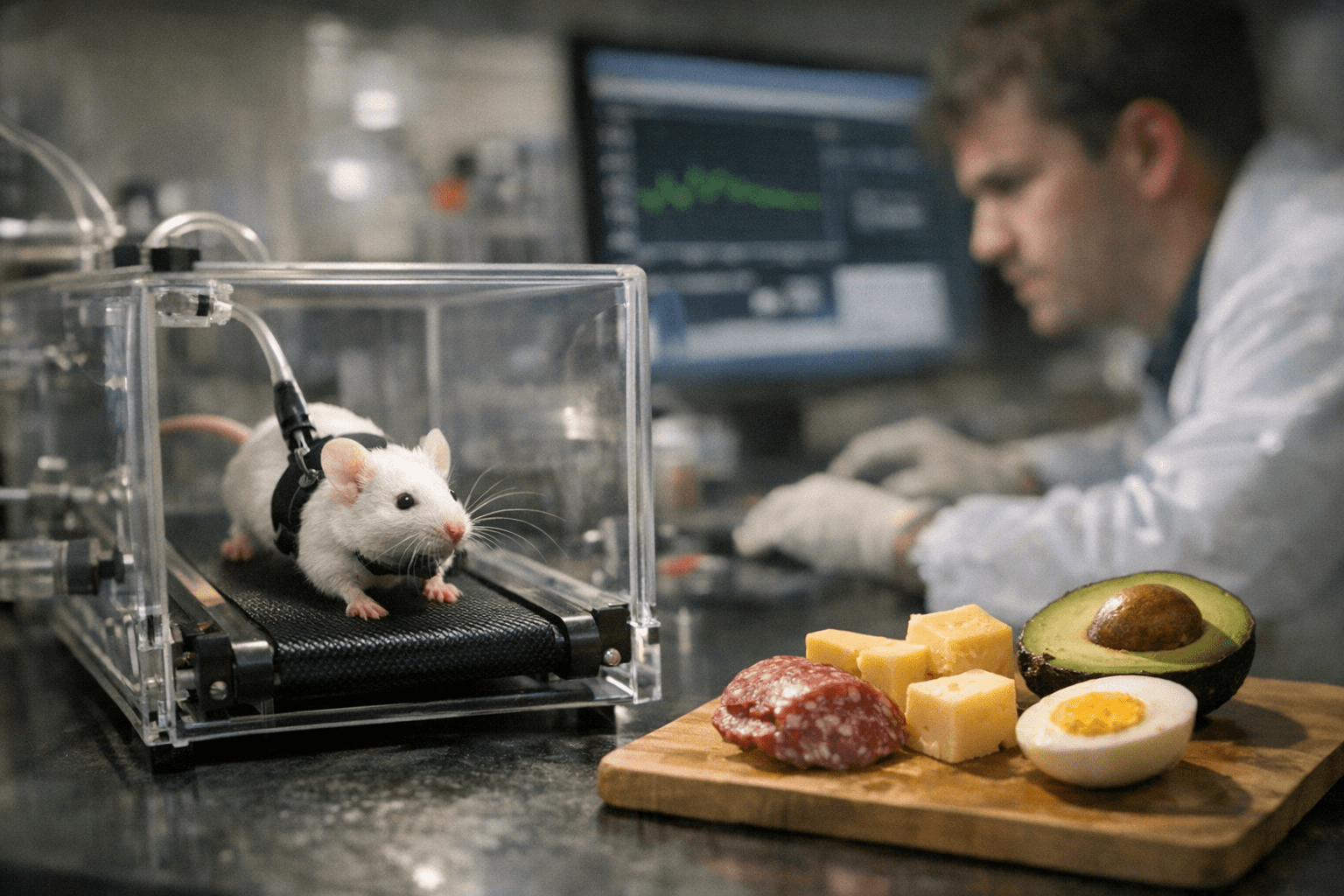
Keto may do more than move the scale. In a paper published Feb. 25 in Nature Communications, Sarah J. Lessard and colleagues at Virginia Tech found that a ketogenic diet normalized blood glucose in hyperglycemic male mice and helped restore the aerobic gains that were blunted on standard chow.
The study used male mice with hyperglycemia and compared a regular high-carbohydrate chow group with a ketogenic-diet group. After aerobic training, VO2 peak improvements were muted in the chow-fed hyperglycemic mice, but they returned in the keto-fed mice. The muscles also looked different: the ketogenic diet was linked to a more oxidative fiber type, higher capillary density, greater fatty-acid oxidation, and lower glucose metabolism.
Lessard said the mice’s blood sugar was “completely normal” after one week on the ketogenic diet, and Virginia Tech said the muscle changes developed over time in a way that could improve the body’s response to aerobic exercise. That is the real story here. The result is not just that keto lowered glucose in a lab animal; it suggests the diet shifted how skeletal muscle handled fuel under training stress.
For everyday keto followers, the practical takeaway is narrower than the headline might sound. This was a hyperglycemic male-mouse study, not a human trial, and it does not prove that keto will boost endurance, recovery, or oxygen use in people who are already keto-adapted. It does, however, push the conversation beyond the usual keto talking points about appetite, fat loss, or seizure control. Virginia Tech noted that people with high blood sugar often do not get the same oxygen-use benefits from exercise, and this study suggests lowering glucose may help unlock some of that response.
The diet’s history also matters. Virginia Tech pointed out that keto was used in the 1920s to manage diabetes before insulin was discovered, which is part of why the diet still draws both enthusiasm and skepticism. The old low-fat versus high-fat argument is not settled by one mouse paper, but the new data add a more specific idea: keto may change the machinery inside muscle itself.
There is another reason to keep the result in perspective. A 2023 Diabetes conference abstract had already suggested that ketogenic feeding could improve VO2 peak in hyperglycemic mice, with sex-specific effects that may matter in follow-up work. That makes the 2026 paper feel less like a one-off and more like the next step in a longer research program. For now, the cleanest read is simple: in hyperglycemic mice, keto did not just lower sugar, it reshaped muscle in ways that made aerobic training work better.
Every story on Keto Diet Magazine is assembled by an automated editorial system that works from verified research, official records, and credible reporting, then clears automated accuracy and moderation checks before it goes live. The standards that system follows are set and overseen by the people who run the publication. Read our full editorial policy.
Did this article answer your question?