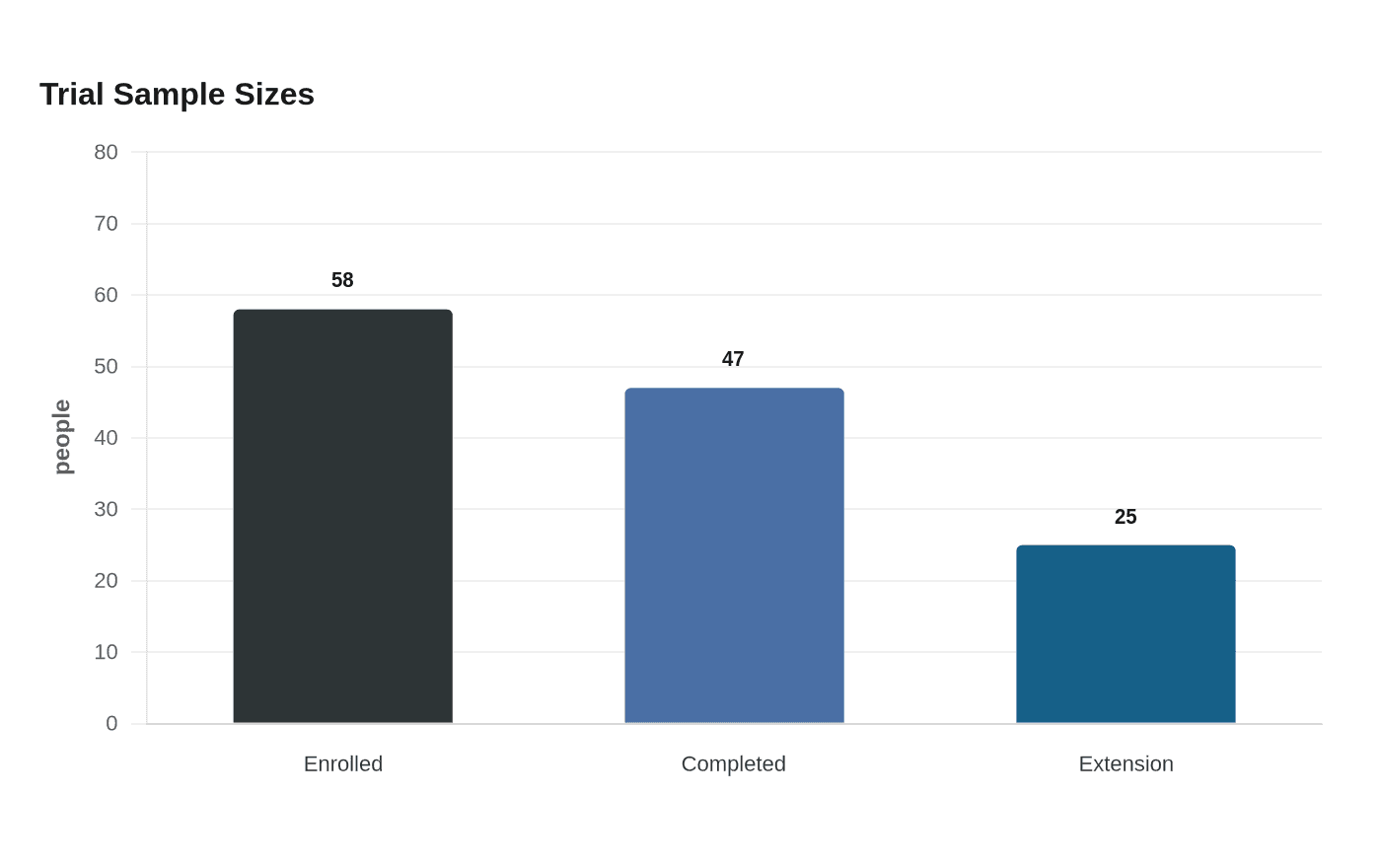
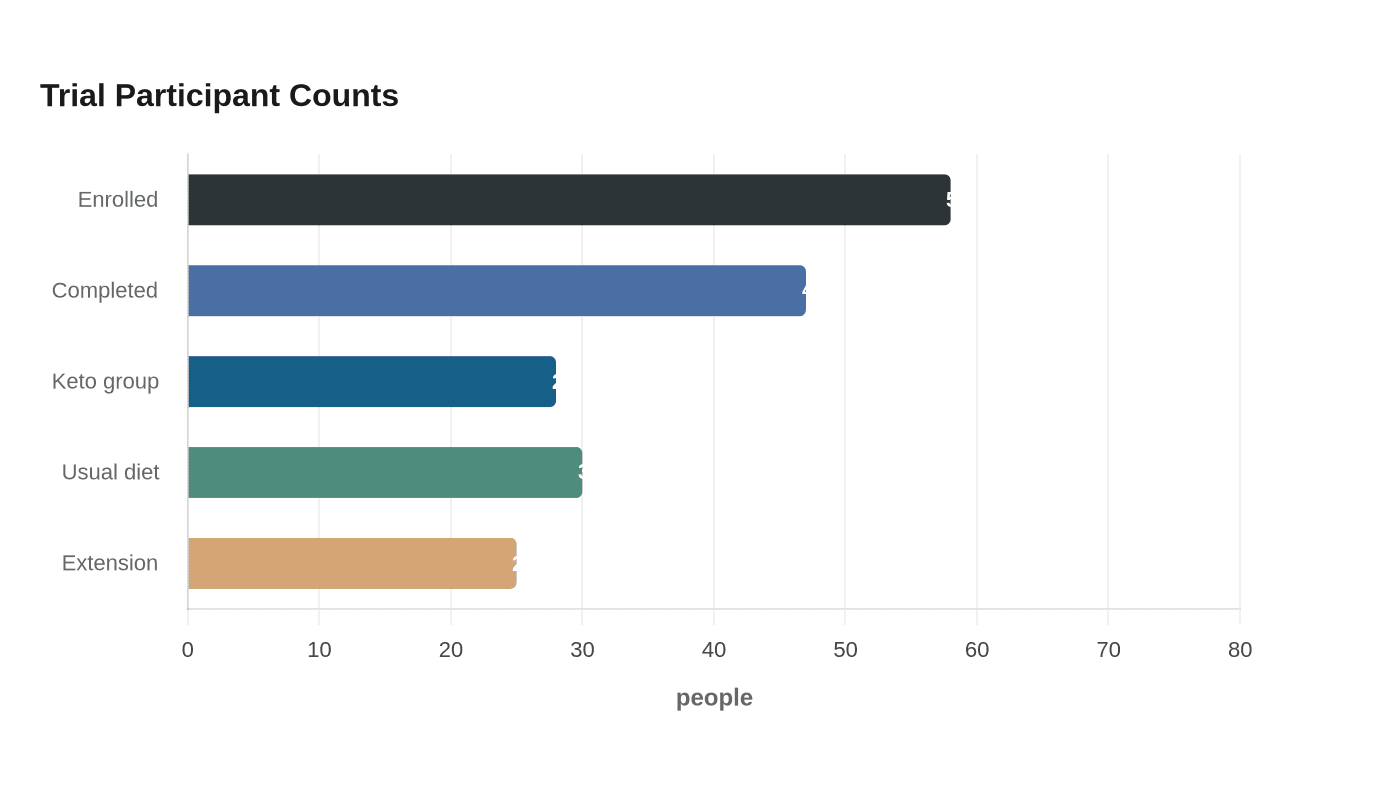
UCSF researchers have pushed keto into new territory with the first randomized controlled trial in schizophrenia-spectrum disorders and bipolar I disorder with psychosis, and the results showed both metabolic improvement and symptom change. The study, published July 8, 2026 in Schizophrenia Bulletin, enrolled 58 people and found that 47 completed the initial one-month comparison, with the ketogenic group reaching the usual ketosis threshold.
The trial randomized participants to ketogenic diet, 28 people, or diet-as-usual, 30 people, for a month, then let 25 continue into a four-month ketogenic extension. Relative to diet-as-usual, the keto group had significant drops in weight, HbA1c, and insulin resistance. The team also found that higher blood ketone levels tracked with better pre-diabetic markers and lower depressive symptoms, even after accounting for weight loss, which matters because the paper’s own conclusion was that the depressive symptom gain lined up with ketosis rather than the scale.

That distinction is the heart of the story for keto readers. This was not a simple weight-loss study dressed up as psychiatry. After four months on the ketogenic diet, positive symptoms, negative symptoms, depressive symptoms, and cognitive performance all improved. The authors also said the diet was feasible in outpatients with schizophrenia and bipolar I disorder, an important practical hurdle in a population where adherence can be hard and standard antipsychotics often leave depression, cognition, and metabolic health untouched.
The new data do not make keto a standard psychiatric treatment yet, and the UCSF paper does not pretend otherwise. The sample was small, the randomization window was short, and the extension was open enough to leave bigger questions for larger trials. But it does move the field beyond pilot work and case reports. Stanford Medicine had already published a 2024 pilot following 21 adults with schizophrenia or bipolar disorder for four months and used metabolic psychiatry as the lens for that work. UCSF has now added the first controlled comparison, and it landed on the same basic signal: ketosis may be doing more than trimming waistlines, with metabolic gains and symptom relief moving together rather than separately.
Every story on Keto Diet Magazine is assembled by an automated editorial system that works from verified research, official records, and credible reporting, then clears automated accuracy and moderation checks before it goes live. The standards that system follows are set and overseen by the people who run the publication. Read our full editorial policy.
Did this article answer your question?