Ketogenic diet may affect reproduction, metabolism and oxidative stress in fruit flies
A fruit-fly keto study is probing much more than seizures, but it is still a model-organism step, not proof for people. The real clue is how timing may shape metabolism and oxidative stress.
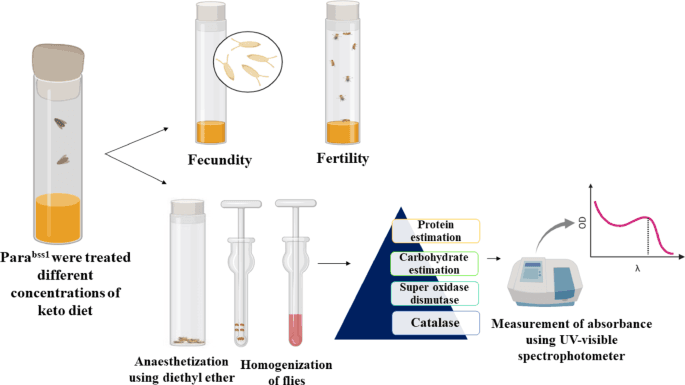
This is a fruit fly study, not evidence that keto treats epilepsy in people. Still, it lands in a part of ketogenic research that matters a lot: researchers are using a familiar seizure model to see what happens to reproduction, metabolism, and oxidative stress when ketogenic exposure happens before adulthood and after it.
Why fruit flies keep showing up in keto epilepsy research
Epilepsy is still a huge unmet-need condition. The World Health Organization estimates that around 50 million people worldwide live with epilepsy, nearly 80% of them in low- and middle-income countries, and up to 70% could live seizure-free with proper diagnosis and treatment. Even so, around one-third of patients remain drug-resistant despite polytherapy, which is exactly why alternative approaches like the ketogenic diet keep drawing scientific attention.
That search for alternatives has a long history. The International League Against Epilepsy says the classic ketogenic diet has been used continuously since 1921, fell out of favor in the 1940s, and resurged in the 1990s. In the past decade, ketogenic diet therapies have grown rapidly around the world, not just in pediatric neurology but in broader epilepsy care as well.
Fly models matter because they let researchers ask mechanistic questions quickly. In Drosophila, bang-sensitive mutants have long been used to model seizure susceptibility, and the para^bss mutant is described as the most severe of that group. Earlier fly work has already shown that ketogenic or ketone-body supplementation can reduce seizure-like activity in these models, including cases where lipid-rich ketogenic formulations eliminated seizure-like behavior altogether. That makes the new study less of a novelty and more of a next step in a well-established experimental pipeline.
What this study is really testing
The paper focuses on Drosophila melanogaster para^bss mutants, an established epilepsy model, and it does something especially interesting: it separates pre-adult exposure from post-adult exposure. That design tells you the authors are not only asking whether ketogenic feeding has an effect, but when that effect matters most.
The endpoints are just as revealing. Instead of staying narrowly on seizure behavior, the study looks at reproduction, metabolism, and oxidative stress. That broadens the question from “does keto change excitability?” to “what else shifts when an organism runs on this metabolic pattern?” For keto readers, that is a familiar tension: the diet is never just one thing. It can change fuel handling, cellular stress, and possibly developmental outcomes all at once.
Timing is the key issue here. A diet that appears helpful later in life can still carry costs during development, especially if fertility, growth, or redox balance are affected. By comparing pre-adult and post-adult exposure, the study is trying to map those tradeoffs instead of assuming that one life stage tells the whole story.
The pathway this work may be pointing toward
The title points strongly toward metabolism and oxidative stress as the biological pathways under the microscope. That is where a ketogenic diet often exerts its deepest effects in model systems, because ketosis changes how cells use fuel and how they manage oxidative pressure.
In practical terms, that means the study may be exploring whether ketone-driven metabolism changes cellular energy balance, redox homeostasis, or stress responses that sit downstream of seizure susceptibility. That is an inference from the study design, but it is a reasonable one: when a paper pairs ketogenic exposure with oxidative stress measurements, it is usually trying to trace a mechanistic bridge between diet and neuronal stability.
The reproductive angle matters too. If ketosis alters reproductive output in a fly model, that does not translate directly to people, but it does signal that the diet may be reaching into endocrine or developmental biology, not only seizure pathways. For a community that often thinks about keto in terms of macros and seizure control, that is a reminder that the biology is broader and less tidy than the meal plan.
Where this fits in real ketogenic epilepsy care
Clinical ketogenic therapy is not new, and it is not confined to one format. The 2018 International Ketogenic Diet Study Group recommends ketogenic diets in children after two anti-seizure drugs have failed, and sometimes earlier for certain syndromes. The major therapies now in use include the classic ketogenic diet, the modified Atkins diet, the medium-chain triglyceride diet, and low glycemic index treatment.
Adult use has also grown. Later expert work, including surveys spanning more than 2,000 adult patients across 20 medical institutions, helped push ketogenic therapy further into adult epilepsy practice. That matters because the questions clinicians ask in adults are not identical to those in children, and the field has had to keep refining how long to continue therapy, how to start it, and how to stop it safely.
The most important watchpoint for readers is simple: a fruit fly result is a mechanistic clue, not a treatment promise. Human epilepsy care still depends on diagnosis, syndrome matching, medication response, and careful supervision, especially in drug-resistant cases. The value of this study is that it may help explain what ketogenic therapy is doing under the hood, and which tradeoffs appear when exposure happens at different stages of life.
That is why a fly paper can still matter to keto and epilepsy readers. It does not hand over a cure, but it helps sketch the wiring diagram that future human studies will need if they are going to turn metabolic hope into something real.
Every story on Keto Diet Magazine is assembled by an automated editorial system that works from verified research, official records, and credible reporting, then clears automated accuracy and moderation checks before it goes live. The standards that system follows are set and overseen by the people who run the publication. Read our full editorial policy.
Did this article answer your question?