The split between food and supplement
A ketogenic diet and ketone salts both pushed fasting glucose down in obese rats, but that is where the overlap ended. In this study, the food-based keto pattern changed body weight, mesenteric fat, and the gut microbiome in ways the ketone supplement did not, which makes the comparison feel less like a simple keto win and more like a reminder that nutrition and supplementation are not interchangeable tools.

Why this rat model matters
The experiment used ZSF1 obese rats, a widely used model for metabolic syndrome because it captures several features at once, not just one isolated trait. That matters because metabolic syndrome is not a niche problem, it is a cluster of obesity, hypertension, dyslipidemia, and diabetes-related dysfunction, and global prevalence has been estimated at about 25%. The authors also frame the backdrop in public-health terms: noncommunicable diseases account for 74% of deaths worldwide each year.
That makes the model especially useful for asking a practical keto question: when a diet lowers glucose, is it doing so through ketones alone, or through the broader package of food restriction, nutrient shifts, and microbial changes that come with nutritional ketosis? The ZSF1 setup gives that question real weight because it mirrors the messy, multi-system nature of metabolic disease.
What changed in metabolism
Both the ketogenic diet and ketone salts lowered fasting glucose in the rats, which is the headline result most keto readers will recognize immediately. On the surface, that looks like shared metabolic ground, since both approaches raise ketone availability and both appear to support glucose control in this preclinical setting.
The story gets more interesting once body composition enters the frame. The ad libitum ketogenic diet increased body weight and mesenteric fat in these rats, a finding that cuts against the usual human keto narrative, where the diet is often associated with weight loss. Ketone salts did not raise adiposity in the same way, which suggests the supplement and the diet are not just different delivery systems for the same effect. They are acting through different biological channels, at least in this model.
The gut microbiome is part of the mechanism
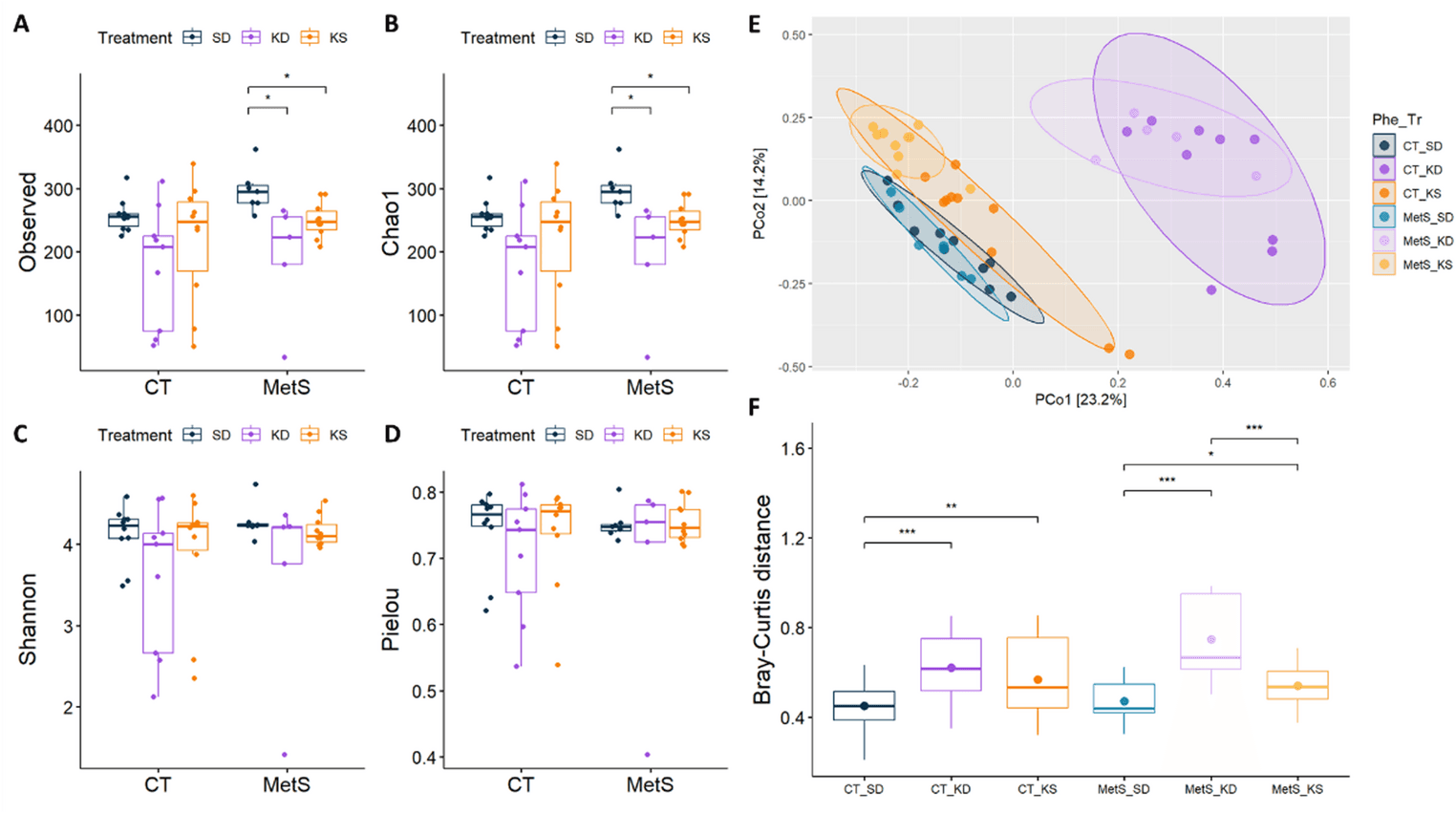
The gut data may be the most revealing part of the whole picture. Ketogenic feeding reduced microbial richness and shifted community composition, including a lower Bacillota/Bacteroidota ratio and higher Akkermansia levels. That kind of shift matters because keto is no longer being viewed only as a fuel-switching strategy, but as a dietary pattern that can rewrite the ecosystem living in the gut.
Ketone salts told a different microbial story. Their gut microbiota profile looked more like the control rats, which suggests the supplement did not recreate the same ecological pressure that came from the full ketogenic diet. A 2024 Nature Metabolism commentary on keto and gut microbes fits neatly here, because it argued that microbiome changes may help explain some of the diet’s metabolic effects. This rat study adds another layer: some of those effects may depend on the food pattern itself, not just on ketones in circulation.
Food vs supplement, not one and the same
This is the cleanest way to read the study: nutritional ketosis and exogenous ketone salts both raise ketones, but they are not the same metabolic intervention. The ketogenic diet comes bundled with carbohydrate restriction, altered nutrient intake, and microbiome remodeling. Ketone salts try to imitate part of the signal without requiring the same level of dietary adherence, and in these rats they produced a profile that looked closer to control than to keto.
That difference matters for anyone writing about keto with precision. If the goal is glucose control, both interventions deserve attention. If the goal is body composition, microbial shifts, or the full metabolic phenotype of ketogenic eating, the food pattern appears to do more than the supplement alone. The temptation is to collapse all of these effects into one easy label, but this study argues against that shortcut.
What the broader supplement literature adds
A 2022 review of exogenous ketone supplements already pointed in this direction. It described ketone salts and esters as tools for manipulating metabolism and noted that human studies have shown lower blood glucose, with some hints of cognitive benefit as well. At the same time, the review stressed that the long-term effects on cardiovascular health and lipid profiles still need study, which is a useful reality check for anyone eager to treat ketone drinks or salts as a finished answer.
That caution lines up with the current rat data. The supplement may offer a more favorable profile for certain metabolic-syndrome questions because it did not raise adiposity the way the ketogenic diet did, but that is not the same thing as proof of superiority in humans. It is a sign that the mechanism deserves more attention, not a license to turn a preclinical result into a ready-made recommendation.
What to carry forward from this study
The strongest takeaway is not that keto failed or that ketone salts won. It is that the biological effects of a ketogenic diet may come from the diet itself, the nutrient restriction, and the microbiome changes that follow, while ketone salts may only partially imitate that state. The Porto, Portugal research team, led by Alexandre Pereira-Rodrigues and including Alexandre Gonçalves, Inês N. Alves, Cláudia Sousa Mendes, Carolina Silva, Joana Campos, Benedita Sampaio-Maia, Inês Falcão-Pires, and Ricardo Araujo, adds a useful piece to a growing conversation about how different ketogenic tools should be judged on different terms.
For the keto community, that means separating intriguing mechanism from human-ready advice. The rat data are compelling because they show that glucose control, microbiome shifts, and body-fat outcomes do not always travel together. That is exactly why food and supplement should not be treated as synonyms, even when they both raise ketones.
Every story on Keto Diet Magazine is assembled by an automated editorial system that works from verified research, official records, and credible reporting, then clears automated accuracy and moderation checks before it goes live. The standards that system follows are set and overseen by the people who run the publication. Read our full editorial policy.
Did this article answer your question?