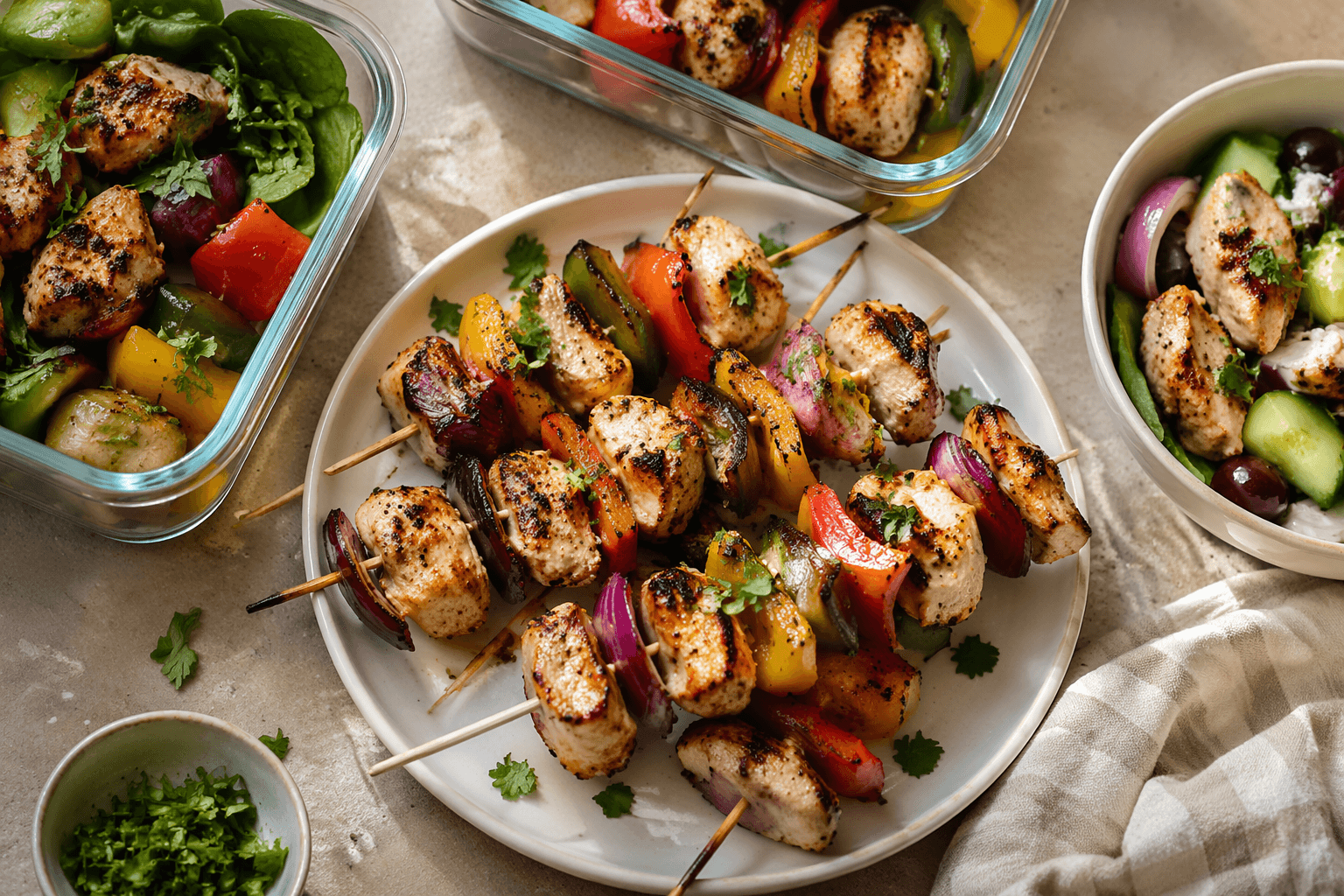
Chicken kebabs solve the keto weeknight problem
Chicken kebabs are one of those low-carb moves that looks simple until you actually live with it for a week. Then the appeal becomes obvious: one protein, one skewer, and suddenly dinner stops feeling like a fresh decision every night. Amanda C. Hughes leans hard into that idea in her WickedStuffed post, using chicken kebabs as a reminder that keto does not have to mean repetitive plates of plain meat and vegetables.
That’s the real value here. Hughes is not pitching a single “best” kebab. She is showing how a skewer turns the same chicken base into a different meal depending on the sauce, the marinade, and the sides you pack with it. In keto terms, that is a major quality-of-life win. It cuts decision fatigue, keeps grilled food interesting, and gives you something that works just as well as a Tuesday-night dinner as it does a next-day lunch.
Why kebabs fit the keto playbook
Keto, as Harvard T.H. Chan School of Public Health describes it, is a low-carbohydrate, fat-rich way of eating that has been used for centuries for specific medical conditions. Cleveland Clinic defines ketosis as the metabolic state where your body burns fat for energy instead of glucose. In practical keto kitchen terms, that usually means living inside a fairly tight daily carb budget, often somewhere around 20 to 50 grams depending on the person and approach.
That is exactly why kebabs make so much sense. A skewer keeps the protein front and center, and it is easy to steer the carbs down by choosing the right marinade and sides. Carb Manager lists one chicken-breast kabob at 3 grams total carbs, 15 grams protein, and 90 calories, which is the kind of math that makes keto meal planning less stressful. You get a meal that feels substantial without having to spend your carb budget on filler.
A format with real culinary history
Kebabs are not a novelty invented for low-carb cooks. Encyclopaedia Britannica describes kebab as a dish of Middle Eastern or Central Asian origin, usually grilled on skewers with vegetables and commonly marinated in olive oil, lemon juice, and spices. Chicken is one of the meats used, and the tradition stretches across regions including the Balkans and the Caucasus.
That history matters because it explains why the format works so well. Skewers are built for flexibility: meat, fat, acid, spice, heat, all in one tidy package. Hughes is taking a time-tested cooking method and adapting it for a modern keto audience that needs meals to be portable, repeatable, and still worth looking forward to.
The flavor formulas that keep dinner from getting boring
Hughes’s smartest move is not the chicken itself. It is the way she turns one protein template into multiple dinner personalities. Some versions are classic and hearty, the kind of thing that lands on a plate and immediately feels like real food. Bacon on the skewers with ranch for dipping is pure comfort, and it fits the keto mindset without trying to dress itself up.
Other combinations push the kebab into more of an appetizer or restaurant-style lane. Pesto with tomatoes brings the bright, rich flavor you want when you are tired of plain grilled chicken. Lemon pepper chicken with tomatoes and mozzarella reads like a caprese-adjacent dinner that still stays low carb. The buffalo version, served with carrots, celery, and bleu cheese, is especially useful because it gives the plate structure instead of leaving you with a lonely skewer and not much else.
The marinade ideas are where Hughes really earns her keep. She does not lock you into one formula, which is exactly what makes the post useful for actual keto life. Instead, she offers flavor directions you can rotate through depending on what is already in the fridge:
- feta brine with rosemary
- olive oil with lime and chili powder
- olive oil with lemon, garlic, and oregano
- peanut butter with soy sauce and curry powder
- Dijon with rosemary
- Old Bay with apple cider vinegar
- dill with lemon
That list does a lot of work. It gives you salty, herby, citrusy, spicy, and savory options without forcing you into a single flavor lane. It also keeps the meal from turning into the same bland grilled chicken every time you fire up the pan or the grill.
Why this works for both dinner and lunch
The lunch angle is what makes chicken kebabs especially useful. Dinner can be a little more flexible, but lunch has to survive the reality of leftovers, containers, and whatever you can eat quickly between meetings, errands, or a packed day. A kebab is easy to portion, easy to reheat, and easy to pair with something simple like a salad or extra vegetables without changing the whole meal plan.
That portability is a big part of the appeal on keto, where people often get burned out by meals that require too much assembly or too much thinking. Hughes’s approach is practical in the best sense: one template, multiple flavor paths, minimal drama. You can grill a batch, change the marinade profile next time, and never feel like you are eating the same dinner on repeat.
WickedStuffed’s broader identity helps explain why this idea lands so well. Hughes has been developing ketogenic recipes since 2010 and has written multiple keto cookbooks, including Wicked Good Ketogenic Diet Cookbook, Keto Life, Keto All the Way, and the 21-Day Ketogenic Diet Weight-Loss Challenge. That long runway shows in the post. It is not chasing novelty for its own sake. It is solving the everyday problem of how to keep low-carb meals satisfying enough to stick with.
Chicken kebabs work because they collapse a lot of keto problems at once: carb control, meal prep, lunch portability, and boredom. Hughes’s post gets that right. One skewer, handled well, can carry dinner and tomorrow’s lunch without making either one feel like a compromise.
Every story on Keto Diet Magazine is assembled by an automated editorial system that works from verified research, official records, and credible reporting, then clears automated accuracy and moderation checks before it goes live. The standards that system follows are set and overseen by the people who run the publication. Read our full editorial policy.
Did this article answer your question?