
Fifteen percent of U.S. adults have tried a GLP-1 drug for weight loss, Gallup found. The choice between GLP-1 drugs and keto is often framed as a knockout, but each approach works through a different route.
Why this debate is suddenly everywhere
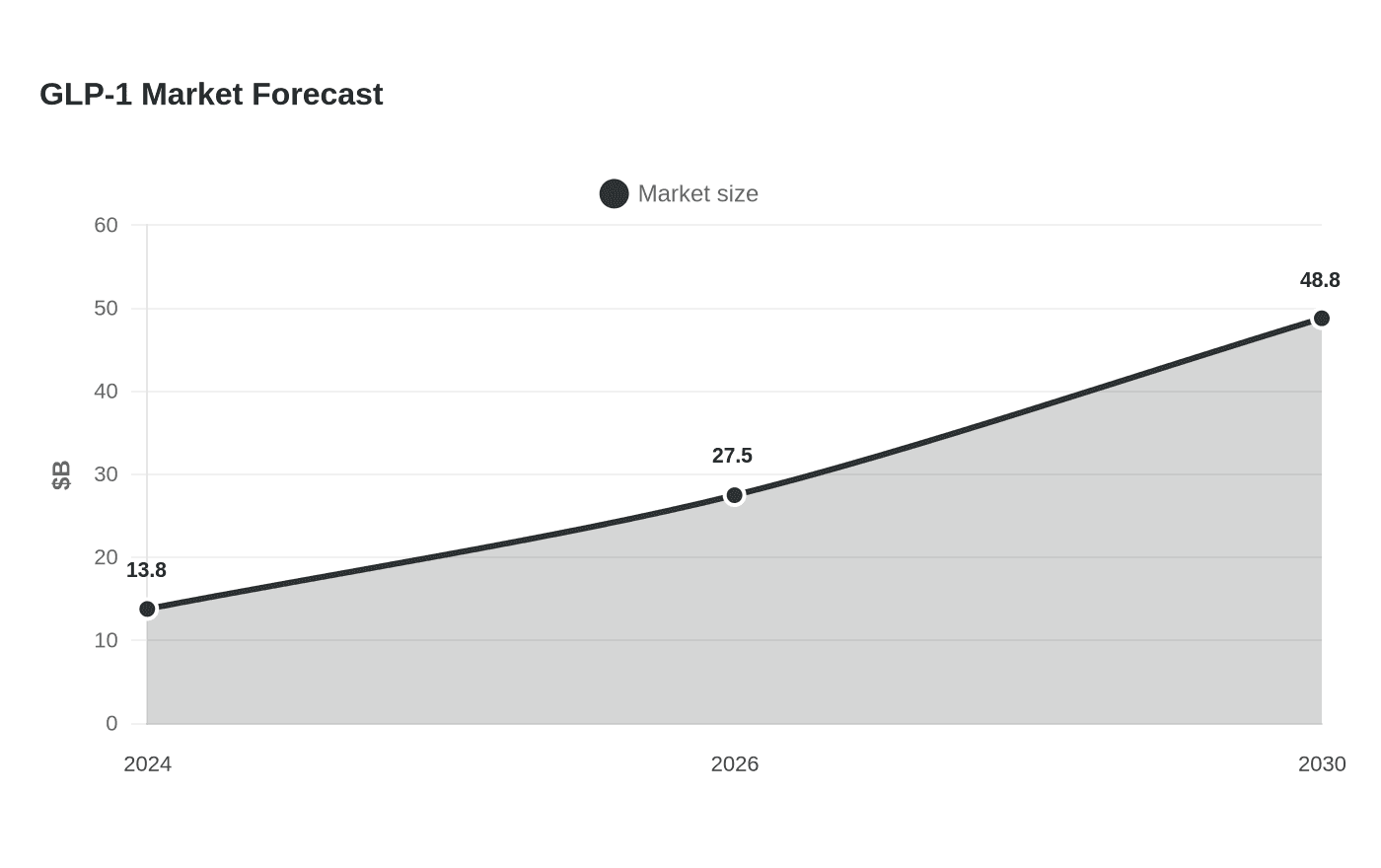
GLP-1 medications have moved from niche treatment to mainstream weight-loss conversation fast. Prescriptions for weight loss are up 700%. The global GLP-1 weight-loss drug market is expected to rise from $13.8 billion in 2024 to $27.5 billion in 2026 and $48.8 billion by 2030.
Keto has not disappeared. A food-based low-carb or ketogenic plan still appeals to people who want to change how they eat, not just what they inject.
What GLP-1s do well, and where keto still has a lane
GLP-1s and keto are often lumped together because both can reduce weight, but they are solving different pieces of the same puzzle. GLP-1 therapy has become central to obesity treatment, especially for appetite control, while keto remains a structured eating pattern that can support blood-sugar management and steady carbohydrate restriction.
A 2025 joint advisory on nutritional priorities for people using GLP-1 therapy makes that overlap explicit. Ketogenic or very-low-carbohydrate diets can be a practical approach to weight loss and glycemic control for some people, while others find long-term adherence difficult.

Blood sugar is where low-carb still has a unique edge
The new 2025-2030 Dietary Guidelines for Americans do not crown a single best diet. The final version emphasizes limits on added sugar and saturated fat while still promoting broader healthy eating patterns.
Low-carb eating still has a defined place inside diabetes and metabolic care. The American Diabetes Association’s 2025 Standards of Care continue to include low-carb and very-low-carb eating patterns as nutrition options, even as they incorporate GLP-1 receptor agonists into standard care for people with certain cardiovascular, kidney, heart failure, or multiple CVD risk factors. Diabetes Canada also has a position statement on low-carbohydrate diets for adults with diabetes.
Side effects and safety are part of the decision
The tradeoffs are not symmetrical. The same 2025 GLP-1 nutrition advisory warns that for people with diabetes, combining a ketogenic diet with GLP-1 therapy could raise the risk of diabetic ketoacidosis and hypoglycemia.
Diet planning for people using GLP-1s should focus on ensuring nutrient adequacy in an often substantially lower-calorie diet. Keto can help some people eat less without feeling constantly hungry, but layering it on top of GLP-1 treatment could raise the risk of diabetic ketoacidosis and hypoglycemia for people with diabetes.
Cost and sustainability are where the choice often gets made
GLP-1 drugs can be powerful, but they are still medication-dependent, while keto is built from ordinary food choices and daily adherence. The real-world comparison is not just clinical efficacy, but access, coverage, routine, beliefs about food and how much structure you want to keep over time.
Keto’s main advantage is that it can be started without a prescription and scaled to the person using it. Its main challenge is sustainability, because long-term adherence is hard for some people even when it works well in the short term. GLP-1s, by contrast, can make appetite control easier, but they do not replace the need for a workable eating pattern, especially if the goal is maintenance after weight loss.
What the new guidance really changes
The ADA continues to include low-carb options, the GLP-1 advisory recognizes that keto can be practical for some people, and the 2025-2030 guidelines emphasize overall eating patterns rather than one perfect plan.
Every story on Keto Diet Magazine is assembled by an automated editorial system that works from verified research, official records, and credible reporting, then clears automated accuracy and moderation checks before it goes live. The standards that system follows are set and overseen by the people who run the publication. Read our full editorial policy.
Did this article answer your question?