Why this bowl works
Chef Emily’s spaghetti squash pesto chicken is the kind of dinner that earns a permanent spot in a low-carb rotation because it delivers the comfort of a pasta bowl without asking you to give up freshness. The recipe is explicitly framed as paleo, keto, and Whole30-friendly, and that combination matters: it gives you a one-pan style dinner that feels satisfying, looks bright on the plate, and still stays inside a tighter carb budget.
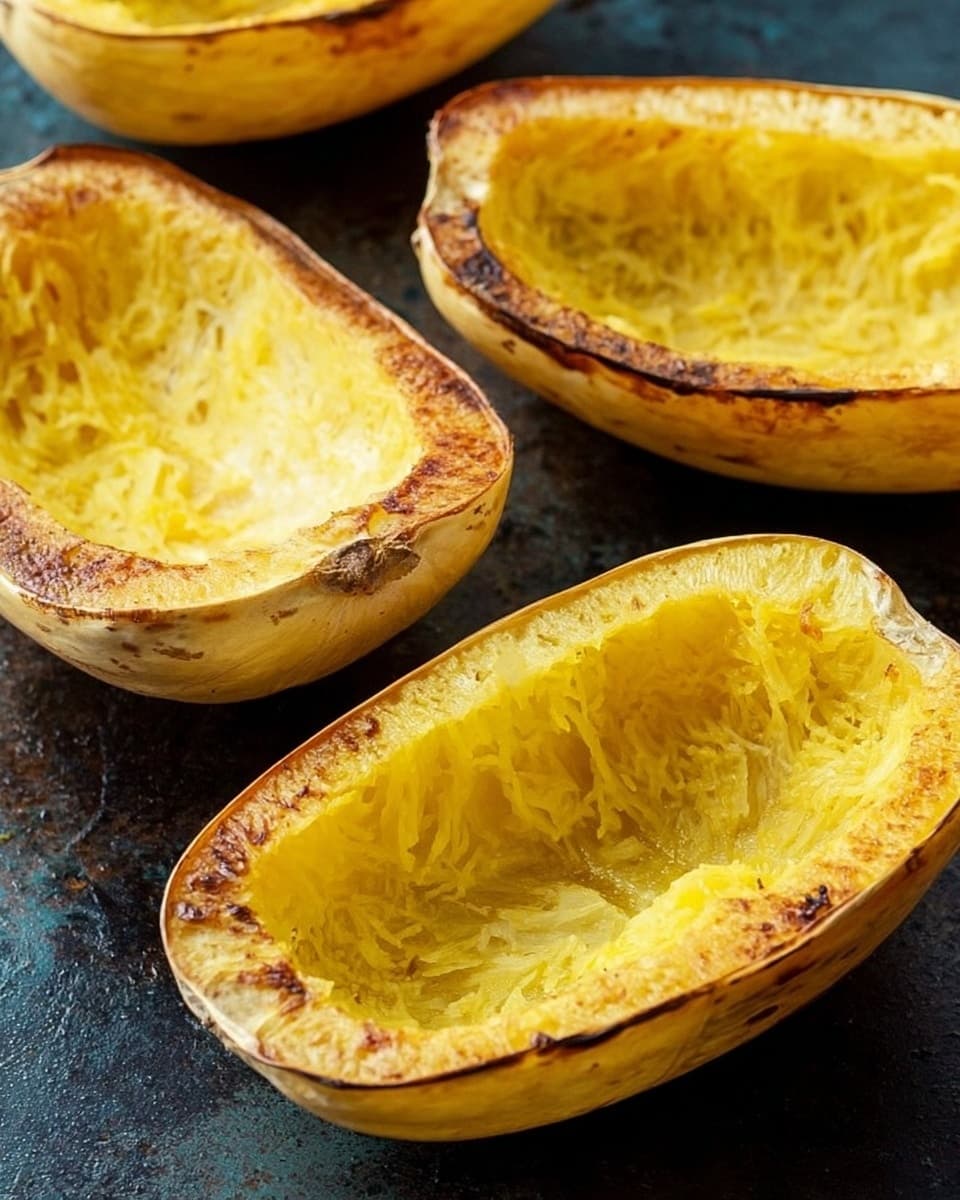
The real trick is the spaghetti squash itself. Roasted until tender at 400 degrees Fahrenheit, it turns into long, stringy strands that behave like pasta in all the ways that matter at dinnertime. It has enough structure to carry pesto, enough bite to keep the bowl from feeling soggy, and enough volume to make the meal feel substantial, which is exactly why it works so well for keto eaters who want satiety without noodles.
How spaghetti squash fits a keto plate
Spaghetti squash is popular in low-carb cooking for a reason: it does more than impersonate pasta visually. One cup of cooked spaghetti squash, about 155 grams, has roughly 42 calories, 10 grams of carbohydrate, and 2.2 grams of fiber, according to USDA-linked nutrition data. That gives it a light carb load compared with grain-based pasta, while still contributing the kind of texture that makes a sauce-driven dinner feel complete.
That matters for keto, where the carb ceiling is often the whole game. Harvard Health Publishing describes ketogenic eating as a low-carbohydrate, fat-rich approach that has been used in medical settings for centuries, and Mayo Clinic notes that keto plans typically keep carbohydrates below about 50 grams per day. In that context, a bowl built around spaghetti squash, chicken thighs, and pesto is a smart way to spend carbs on something that still feels like real dinner, not a compromise.
What goes into Chef Emily’s version
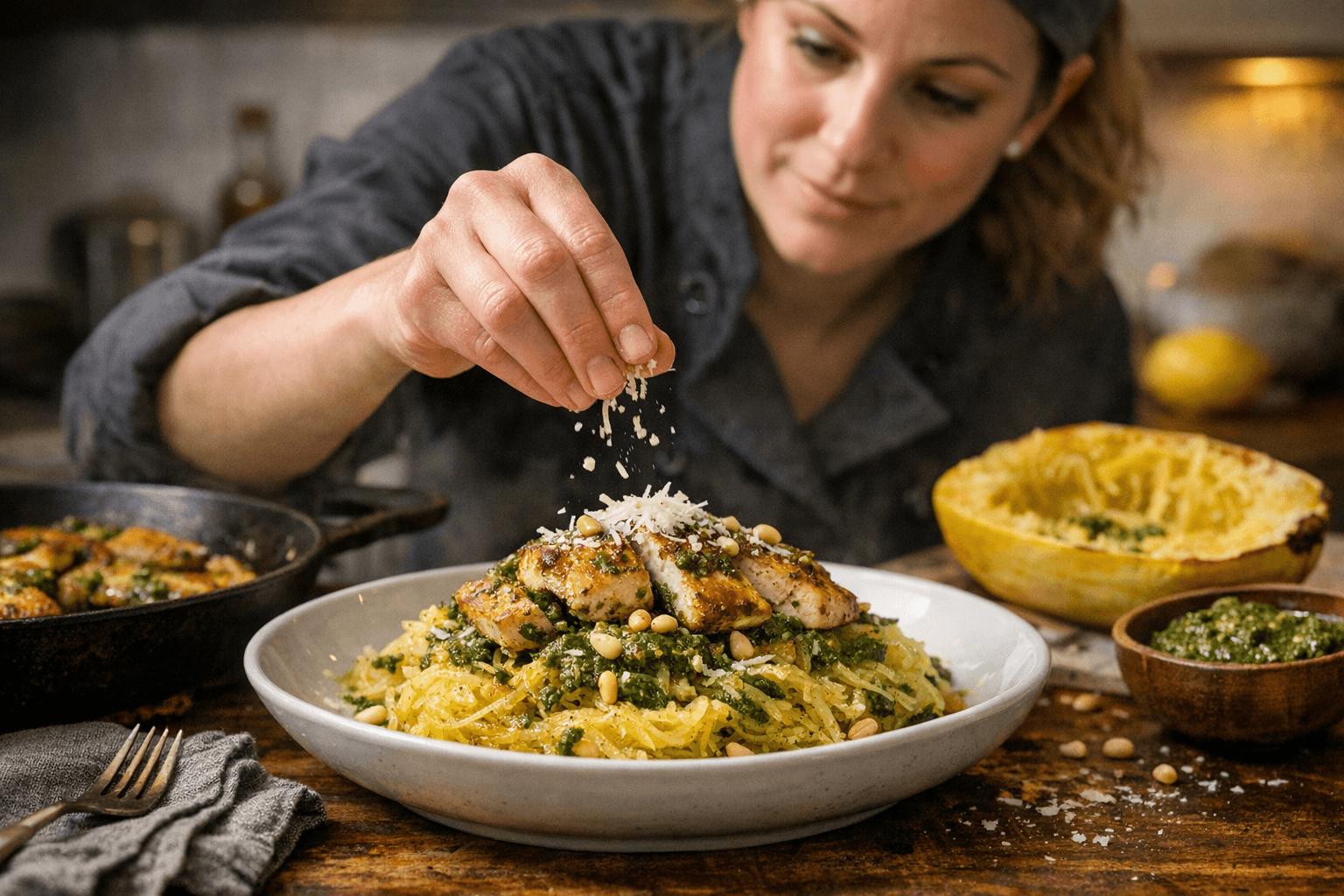
The recipe keeps the ingredient list simple, which is part of its appeal. Roasted spaghetti squash forms the base, then chopped chicken thighs bring the richness and staying power. The pesto is homemade and built from basil, garlic, avocado oil, pumpkin seeds, and optional Parmesan, which gives the sauce both brightness and enough body to coat every strand of squash.
That combination is practical, not precious. Chicken thighs are juicier and more forgiving than leaner cuts, so they hold up well when tossed with warm squash and pesto. The basil keeps the flavor fresh, the avocado oil gives the sauce a smooth finish, and the pumpkin seeds stand in for pine nuts in a way that broadens the recipe’s usefulness for anyone avoiding tree nuts or simply looking for a different flavor profile.
A pesto that plays well with restrictions
The pumpkin seed swap is more than a budget trick. Pumpkin seeds are a recognized alternative to pine nuts in pesto, and in this recipe they make the sauce more adaptable for allergy-aware cooking without losing the bold, grassy flavor pesto fans want. That matters in real kitchens, where one family member may be avoiding nuts, another may be watching dairy, and everyone still wants a dinner that tastes like something you’d actually order again.
The optional Parmesan is equally important. Whole30’s official guidance emphasizes that ingredient compliance depends on careful label reading and program rules, and the Original Whole30 excludes dairy. That means the cheese can stay in if you are making the recipe for keto or paleo, but it needs to come out if you are keeping it Whole30-compliant. The recipe’s flexibility is what makes it useful, not just the fact that it happens to be low-carb.
How to make it without overthinking it
The method is straightforward enough for a weeknight, which is a big part of the appeal. First, the spaghetti squash roasts at 400 degrees Fahrenheit until it is tender and shreds easily into strands. While that is happening, the pesto comes together in a food processor, so the sauce is fresh without requiring much effort. Then the chicken is seasoned with paprika, garlic powder, salt, and avocado oil before it is cooked and tossed with the squash and pesto.
The simple sequence
1. Roast the spaghetti squash until the flesh turns soft and stringy. 2. Blend the basil pesto with garlic, avocado oil, pumpkin seeds, and optional Parmesan. 3. Season the chopped chicken thighs with paprika, garlic powder, salt, and avocado oil. 4. Cook the chicken, then combine it with the squash and pesto. 5. Serve while warm so the sauce clings to the strands instead of pooling at the bottom of the bowl.
That last detail matters more than it sounds like. Spaghetti squash is at its best when it is still a little firm and the pesto can settle into the strands. If you overcook it, the texture gets watery and the whole bowl loses the pasta-like effect that makes the dish feel so satisfying.
Why readers are already responding to it
The recipe page’s 4.1 rating from 278 reviews says a lot. That is not the kind of score that happens when a recipe only looks good in theory. It suggests this is already landing with readers who want a low-carb dinner that feels complete, not just compliant.
For keto readers, the appeal is broader than the numbers. You can make it richer with extra pesto, keep it as written for a clean weeknight meal, or remove the Parmesan and still have a Whole30-friendly dinner that tastes fresh instead of stripped down. The sauce carries well, the squash brings the pasta feel, and the chicken thighs make it filling enough to stand on its own.
The bottom line
Chef Emily’s spaghetti squash pesto chicken works because it understands what people actually want from a keto dinner: comfort, freshness, and enough substance to feel like a real meal. The squash gives you the pasta shape and sauce-carrying texture, the chicken thighs bring the savory depth, and the basil pesto ties it together without leaning on heavy cream or noodles. For anyone cooking across keto, paleo, and Whole30 lines, this is the kind of recipe that makes low-carb eating feel like dinner, not deprivation.
Every story on Keto Diet Magazine is assembled by an automated editorial system that works from verified research, official records, and credible reporting, then clears automated accuracy and moderation checks before it goes live. The standards that system follows are set and overseen by the people who run the publication. Read our full editorial policy.
Did this article answer your question?