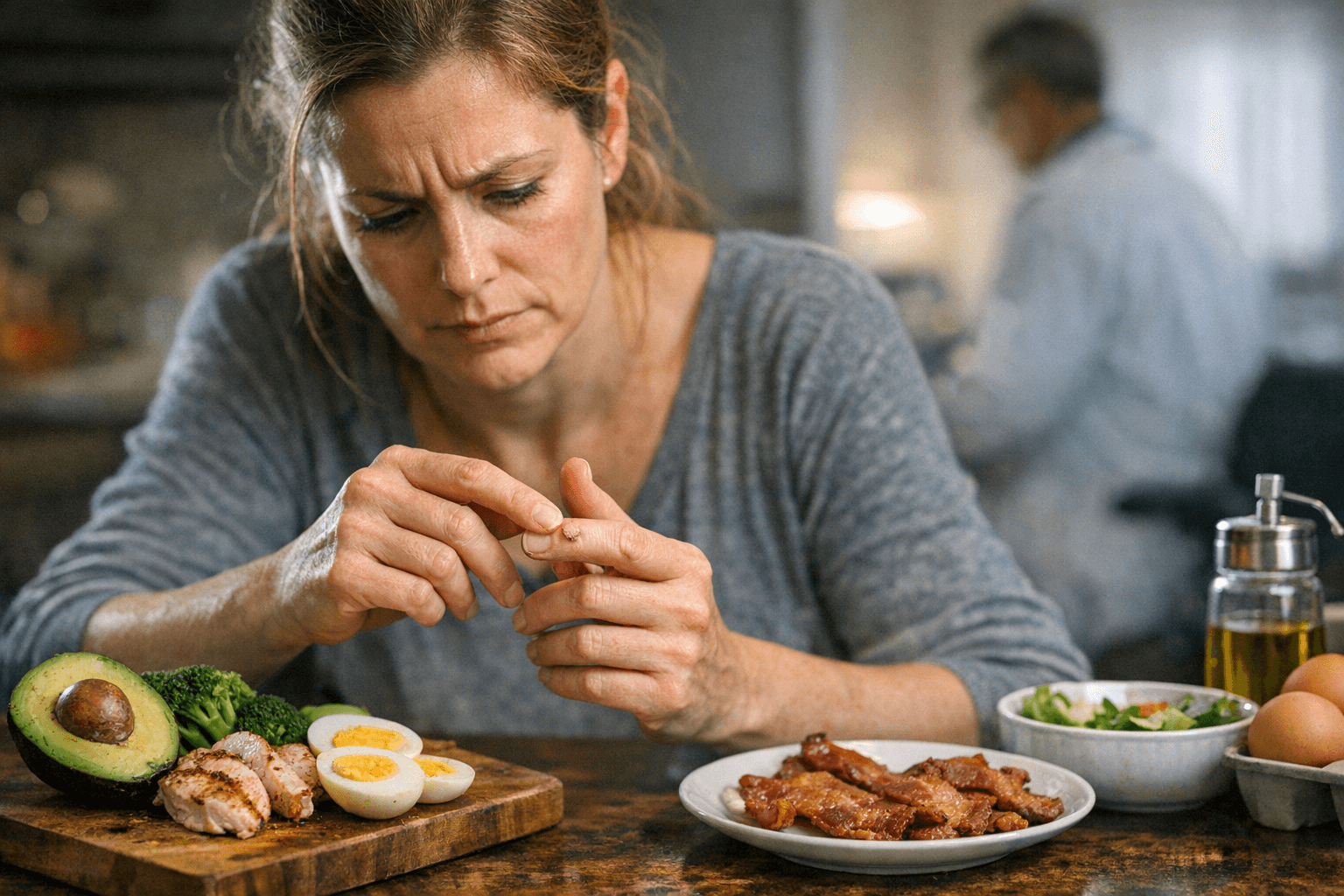
Keto and warts: the short answer
Keto is not a proven treatment for warts. The appeal is easy to understand, though: if a ketogenic diet can shift blood sugar, inflammation, and immune signaling, maybe it could help the body do a better job against a virus-driven skin problem. That idea has some biological plausibility, but it is still speculation, not a wart therapy.
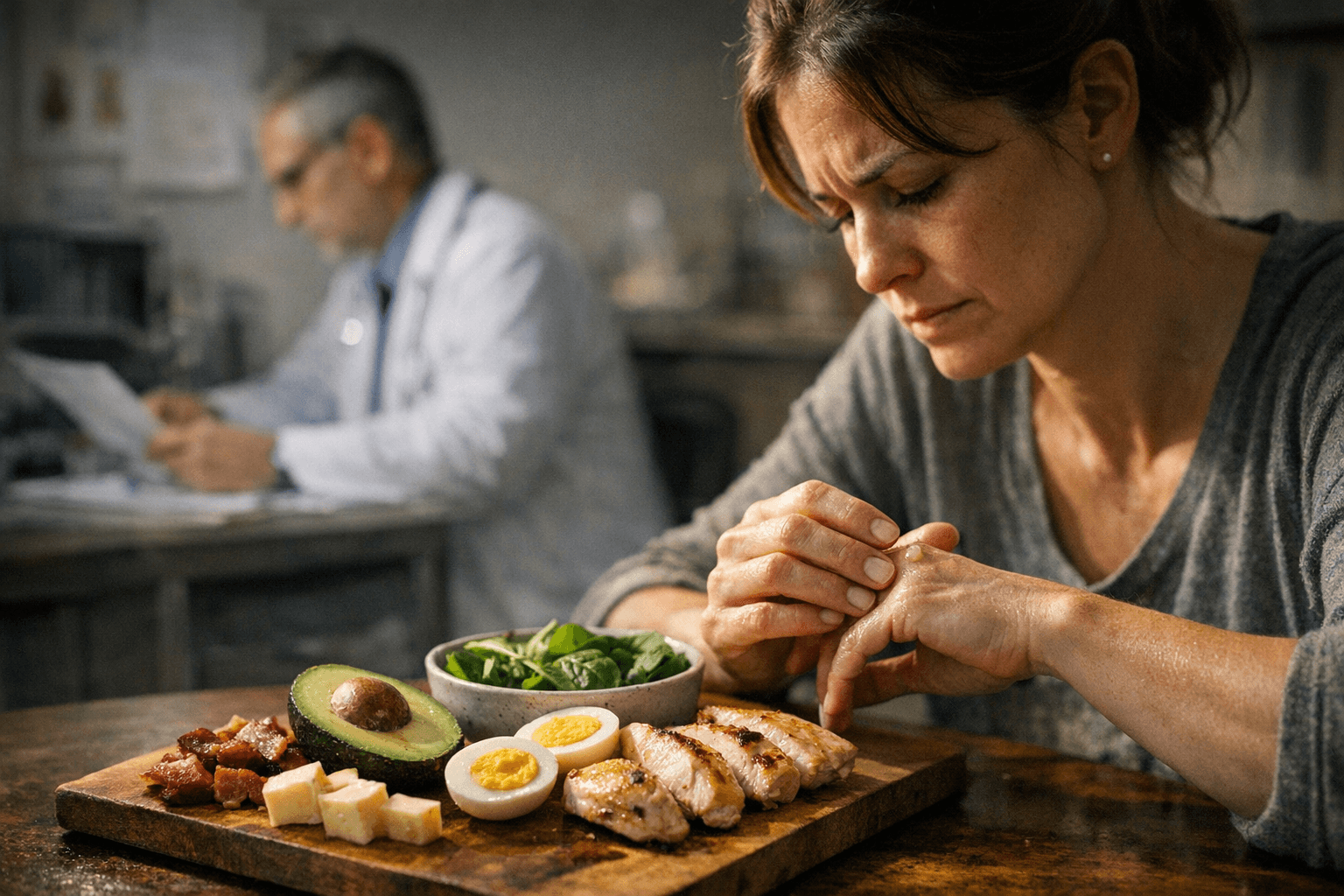
Warts are common, non-cancerous skin growths caused by human papillomavirus, and they can linger for months or years without treatment. The better-supported path is still wart-specific care, not hoping diet alone will make them disappear.
Why this question keeps coming up
The keto conversation shows up because people on a ketogenic diet often talk about feeling steadier energy, lower blood sugar, and less inflammation. Those changes can make the diet feel powerful in a broad wellness sense, and that creates a tempting leap: if keto changes the body’s internal environment, maybe it can help with warts too.
There is a kernel of scientific interest here. A 2025 review says ketogenic diets can affect immune pathways and may promote adaptive immunity signatures in recent human research. Other reviews report anti-inflammatory effects in some populations, especially in people with obesity or type 2 diabetes. That is enough to keep the idea alive in hobbyist and wellness circles, but not enough to call keto a wart treatment.
The difference matters. A diet that may support general metabolic health is not the same thing as a therapy that clears HPV-related skin growths.
What warts actually are
Warts are caused by human papillomavirus, or HPV. The Centers for Disease Control and Prevention says HPV is spread through intimate, skin-to-skin contact, and it is the most common sexually transmitted infection in the United States. For everyday cutaneous warts, the virus typically enters through small cuts or breaks in the skin, which is why warts can appear after minor skin trauma.
These growths are usually benign, but they are not always quick to leave. The American Academy of Dermatology notes that without treatment, warts can last months or years. That is one reason people look for shortcuts, whether that means over-the-counter products, clinic procedures, or a diet they already want to follow for other reasons.
Where the myth gets ahead of the evidence
The most generous reading of the keto claim is that it could, in theory, support the immune system indirectly. Lower inflammation and improved metabolic control might help the body respond better overall, and that is the basis for the “maybe” in the headline.
But that is where the evidence stops. Nothing in the current picture shows that keto reliably clears warts, shrinks them faster, or replaces standard treatment. Anecdotes can be persuasive in keto communities because they are vivid and personal, but a few success stories do not prove cause and effect. Warts also sometimes go away on their own, which makes diet experiments especially easy to misread.
If a wart improves while someone is eating keto, that does not mean keto caused the change. It could reflect the natural course of the infection, another treatment, or simply timing.
What actually works for common warts
For non-genital warts, dermatologists commonly recommend salicylic acid at home. It is one of the most familiar evidence-based options, and the American Academy of Dermatology says treatment can help clear warts faster and reduce spread. Cryotherapy is another standard option, using cold to destroy the wart tissue.
Even here, the evidence is not perfect. Cochrane has noted that the evidence base for many wart treatments beyond salicylic acid and cryotherapy is limited and often low quality. Cryotherapy remains widely used, but it is not clearly superior to salicylic acid in many cases.
That is the practical point for keto readers: if you want to support your health with food, fine. If you want to remove a wart, you still need a wart treatment.
Genital warts are a different conversation
Not every wart is the same, and this is where self-treatment can get risky. The CDC says treatment for anogenital warts removes the warts themselves but does not eliminate the virus. Untreated lesions may resolve, stay the same, or increase in size or number. That variability is one reason medical guidance matters so much more than diet hacks.
Before HPV vaccines were introduced, the CDC estimated about 355,000 new cases of anogenital warts per year in the United States. Today, HPV vaccines protect against HPV types 6 and 11, which cause most anogenital warts. That vaccine protection is a far more direct prevention tool than any eating pattern could be.
When diet is not enough
Keto may fit into a broader wellness routine, and that can matter for people trying to manage inflammation, blood sugar, or overall health. But wart care depends on much more specific details: the type of wart, where it is located, how long it has been present, and the person’s overall health.
A clinician visit is especially important if warts are spreading, painful, persistent, or in a sensitive location. The American Academy of Dermatology also advises people with diabetes, neuropathy, or poor circulation to talk with a dermatologist before using salicylic acid at home. That advice is practical, not alarmist. Skin treatments that seem simple can become complicated when sensation or circulation is reduced.
The bottom line for keto and wart treatment
Keto may have indirect effects on inflammation and immune function, and that is enough to make the idea interesting. It is not enough to make it a wart cure. The most honest answer is still a qualified maybe about overall immune support, and a clear no when the question is whether keto can replace proven wart care.
If a wart is on your skin, the evidence points back to salicylic acid, cryotherapy, and medical guidance when needed. If the wart is genital, persistent, or changing, that is a clinician question, not a dietary experiment. In the end, the strongest move is not chasing a miracle through macros, but matching the treatment to the wart itself.
This article was produced by Prism’s automated news system from verified source data, official records, and press releases, then run through automated quality and moderation checks before publishing. The system is built and supervised by the people who set the standards it runs under. Read our full AI policy.
Know something we missed? Have a correction or additional information?
Submit a Tip%3Amax_bytes(150000)%3Astrip_icc()%2F1036682-d776599ed42a484b88430e2a23025ed2.jpg&w=1920&q=75)
%3Amax_bytes(150000)%3Astrip_icc()%2F6437804-roasted-spaghetti-squash-with-ground-turkey-and-vegetables-Melisa-4x3-1-f4cc4cc0164b47a4b2032b8be8ad7252.jpg&w=1920&q=75)