Homemade keto mayonnaise lives or dies by one ingredient choice: the oil. Mayo already fits keto eating because it is built on fat, and that makes it useful in tuna salad, lettuce wraps, sub-style sandwiches, and other low-carb meals where you want richness without carbs.
The ingredient that does the heavy lifting
The basic formula is simple, but the chemistry matters. Federal U.S. standards define mayonnaise as an emulsified semisolid food made from vegetable oil, acidifying ingredients, and egg-yolk-containing ingredients. In other words, mayo is not just “eggs and oil mixed together” so much as a stable system where the oil and egg yolk create the body, while acid and seasoning sharpen the flavor.
That is why the oil is the most important decision in homemade keto mayo. The oil does not just add fat, it drives texture, mouthfeel, and how well the emulsion holds together. If the oil tastes harsh or behaves poorly, the whole batch suffers, even if the carb count is perfect.
Why avocado oil comes out ahead
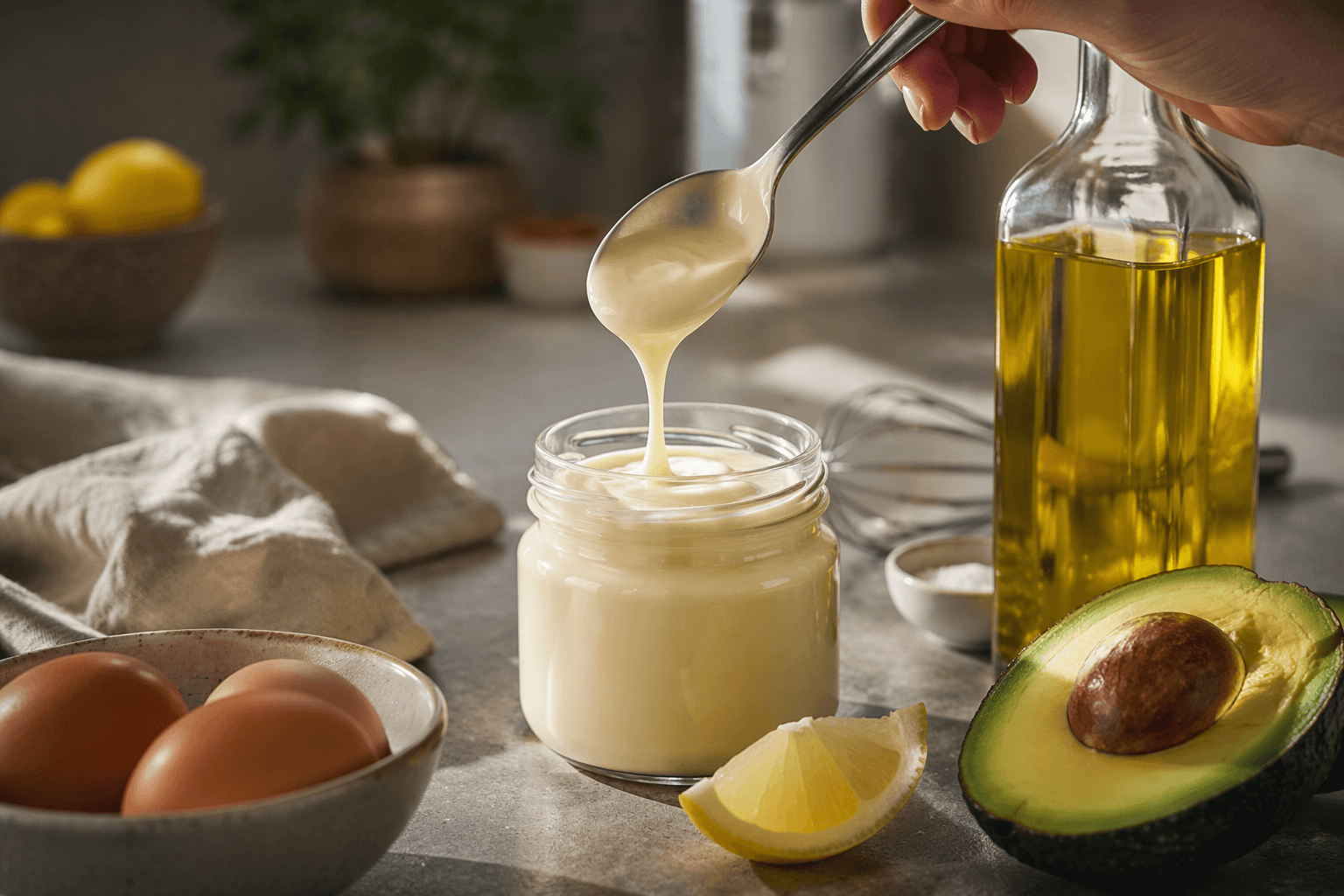
Avocado oil is the best fit for homemade keto mayonnaise because it brings a mild flavor and a fat profile that works with the rest of the ingredients instead of fighting them. Harvard Health describes avocado oil as high in monounsaturated fat, and the American Heart Association recommends monounsaturated and polyunsaturated fats in place of saturated and trans fats. That makes avocado oil a strong match for keto cooks who care about both texture and ingredient quality.
The American Heart Association also advises choosing nontropical liquid vegetable oils over solid fats and tropical oils like coconut oil. That guidance lines up neatly with what makes avocado oil appealing in the jar: it stays neutral enough to let the acid, salt, and mustard do their job while still creating a creamy, stable mayo. In practical terms, that means a spoonable condiment that disappears into a salad instead of announcing itself with every bite.
Why some oils create more problems than others
Coconut oil and olive oil can both work in homemade mayo, but they can also push the flavor in directions many keto cooks do not want. Coconut oil carries a stronger tropical note and is a tropical oil, which is one reason it stands apart from the nontropical liquid oils favored in heart-health guidance. Olive oil can be excellent in many recipes, but in mayonnaise its more assertive taste can dominate the final result.
That matters because homemade mayo is often used as a neutral base, not a flavor statement. If you are making a batch for chicken salad, egg salad, or a quick dip, you usually want the condiment to disappear into the meal and carry the other ingredients, not compete with them. Avocado oil is the rare choice that supports the emulsion without taking over the palate.
The sourcing question behind soybean and canola oil
Soybean and canola oils are common in commercial mayonnaise, but they raise a different set of concerns for keto cooks who pay close attention to ingredient quality. The issue is less about carbs and more about sourcing, processing, and whether you want a bottle tied to highly refined oils or genetically engineered crops.
That is where U.S. labeling rules matter. USDA’s bioengineered-food disclosure standard requires disclosure when a retail food contains bioengineered food or bioengineered food ingredients as defined by the rule. FDA guidance also explains that manufacturers may voluntarily label plant-derived foods with information about whether they were produced using genetic engineering. The practical takeaway is straightforward: in the U.S., GMO labeling is a disclosure and sourcing issue, not an automatic safety verdict, but it still influences how keto shoppers judge a bottle of oil.
Why homemade avocado mayo keeps showing up in keto kitchens
This advice has lasted because it works in real life. Homemade avocado-oil mayo recipes have circulated in keto communities for years, often with the same selling points: the oil tastes neutral, emulsifies easily, and produces a creamy result that feels close to the commercial version without the carb baggage. For people using mayo as a meal shortcut, that reliability matters more than kitchen bragging rights.
The cost angle helps, too. Store-bought specialty mayo can run several dollars per jar, which makes homemade versions appealing for anyone who wants a cleaner fat source without paying premium prices every week. If you already keep eggs, mustard, acid, and a good oil on hand, the recipe becomes less of a project and more of a pantry move.
The real keto payoff
The best homemade keto mayo is not just low in carbs. It is the one that tastes balanced, holds together, and fits the way you actually eat, whether that means scooping it into tuna salad or spreading it on a lettuce wrap. Avocado oil wins because it solves the three problems that matter most: flavor, stability, and fat quality.
That is the real lesson buried inside a simple condiment tip. In keto cooking, the fat source is the recipe, and avocado oil makes mayonnaise work the way it should: creamy, neutral, and worth making at home.
Every story on Keto Diet Magazine is assembled by an automated editorial system that works from verified research, official records, and credible reporting, then clears automated accuracy and moderation checks before it goes live. The standards that system follows are set and overseen by the people who run the publication. Read our full editorial policy.
Did this article answer your question?