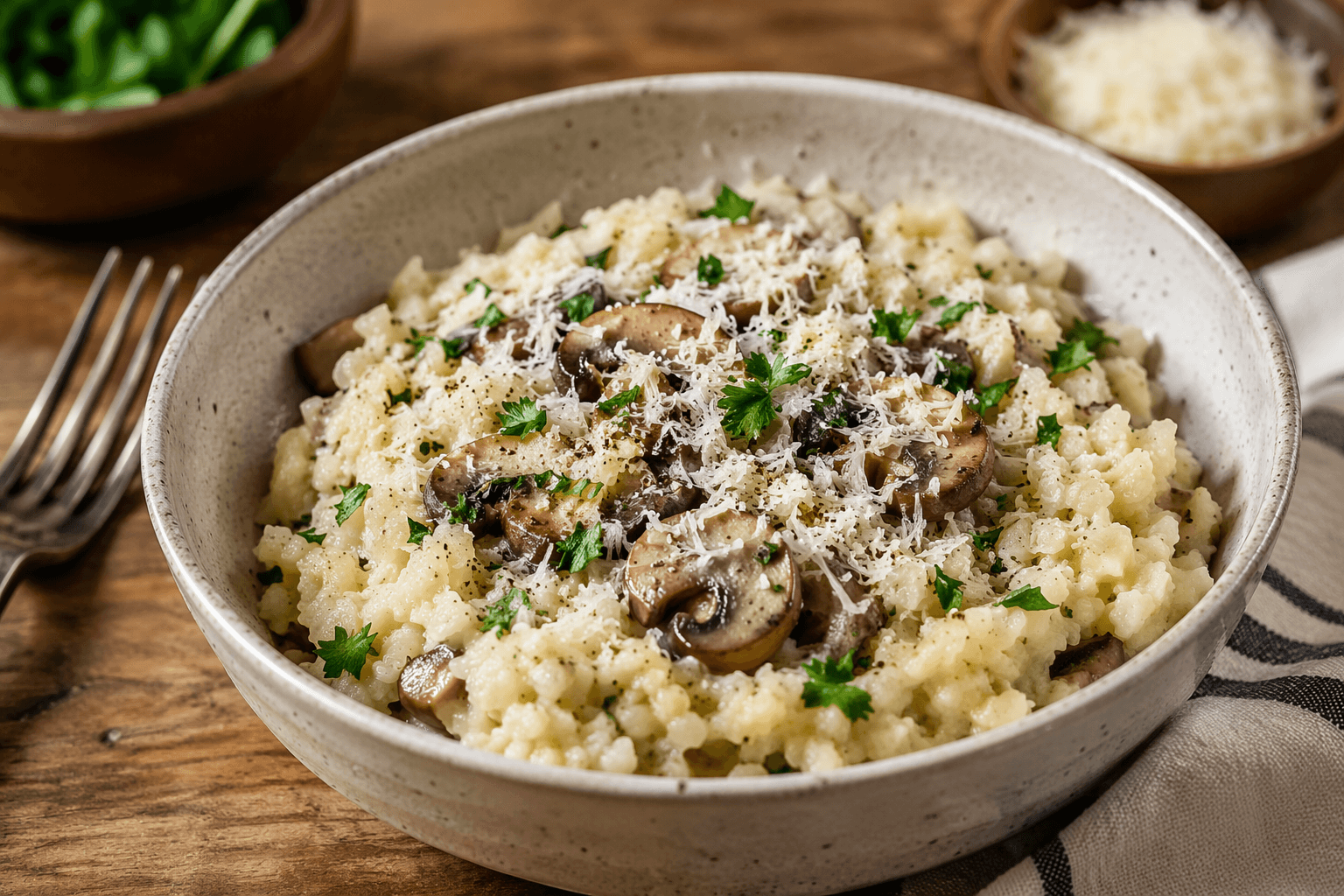
Allrecipes’ Creamy Keto Cauliflower Risotto is aimed squarely at the keto problem that never really goes away: how to make dinner feel like comfort food without leaning on rice or another starch-heavy base. The updated recipe, submitted by Fioa, swaps in grated cauliflower and still aims for the same glossy, spoonable finish people expect from risotto. It is listed as both a side dish and a main course, which is exactly the kind of flexibility that makes a low-carb skillet worth keeping in rotation.
What’s actually in the pan
This version keeps the ingredient list tight and familiar. The flavor base starts with ghee, onion, and garlic, then moves to grated cauliflower, sliced mushrooms, Parmesan cheese, heavy whipping cream, salt, pepper, and a small amount of nutmeg. That combination matters because it mimics risotto’s usual richness without pretending cauliflower is rice, and it gives the dish enough fat and savory depth to stand on its own.
The method is just as practical as the ingredient list. The onion and garlic are softened in ghee, the cauliflower is stirred in and cooked briefly, the mushrooms go in next, and then the Parmesan, cream, and seasonings are folded through until everything turns glossy and creamy. The recipe’s appeal is not that it is complicated enough to impress a dinner guest; it is that it delivers a comfort-food texture without turning the stove into a project.
Why cauliflower works as the shortcut
The keto logic here is easy to see in the numbers. Allrecipes lists each serving at 350 calories, 30 grams of fat, 12 grams of carbohydrates, and 12 grams of protein, which makes it a sturdy low-carb option when you want dinner to feel substantial rather than merely “diet-friendly.” The timing helps too: 15 minutes of prep, 15 minutes of cooking, and about 30 minutes total. That is weeknight territory, not a special-occasion detour.
The substitution also holds up nutritionally. USDA FoodData Central based data show that 1 cup of chopped raw cauliflower has about 5.3 grams of total carbohydrate, 2.1 grams of fiber, 27 calories, and 2.1 grams of protein. By contrast, a 0.25-cup serving of Arborio rice comes in at 41 grams of carbohydrate, which explains why rice-based risotto is such a tough fit for ketogenic eating. When you want the creamy format of risotto without the carb load, cauliflower does the job better than almost any other vegetable.
The texture trick is the whole game
Cauliflower risotto lives or dies on texture, and this one gets the assignment mostly right by staying focused on fat, heat, and timing. The brief cook on the cauliflower keeps it from collapsing into a watery mash, while the Parmesan and cream build body at the end instead of thinning out the pan. The mushrooms add a savory, earthy note, and the nutmeg gives the finished dish a subtle warmth that keeps it from tasting flat.
That is the real difference between a convincing keto comfort dish and a sad vegetable bowl. If the cauliflower is overcooked, it goes limp and starts to read as pure substitute. If it is handled the way this recipe handles it, the result is creamy enough to feel like risotto while still keeping the spoonable bite that makes the original so satisfying.
One home cook on the page, Hazel Kokborg, summed up the payoff with a line that captures the point of the recipe perfectly: it was “better than the traditional” version and “not heavy in the belly.” That is the kind of feedback cauliflower-based comfort food needs to earn, because the best keto swap is the one that leaves you satisfied instead of counting down to the next snack.
How it fits into a keto dinner routine
Risotto has deep roots in northern Italy, especially Lombardy and the Po River Valley, and the classic version usually relies on Arborio rice, butter, onion, white wine, and Parmesan. It is traditionally cooked with broth until it reaches a creamy consistency, which is why cauliflower versions are clearly modern adaptations rather than stand-ins for the original. The point is not to recreate Italy by the book; it is to keep the sensory cues of risotto while moving the carb count into keto territory.
That broader keto context matters too. Harvard T.H. Chan School of Public Health describes the ketogenic diet as a low-carbohydrate, fat-rich eating plan, and notes that it has been used for centuries in specific medical settings, including 19th-century diabetes management and pediatric epilepsy treatment beginning in 1920. In that framework, a dish like this is more than a trendy substitution. It is a practical way to keep the diet livable when you want dinner to feel like dinner.
Allrecipes has also pushed the idea in other directions. A separate keto risotto recipe on the site uses cauliflower rice with spinach, mushrooms, and tomatoes, which shows how easily the format can shift from rich and creamy to a slightly brighter skillet meal. Other low-carb roundups make the same case: cauliflower can mimic risotto’s texture while cutting both cooking time and carbs, and some versions are ready in 15 to 20 minutes instead of demanding the constant stirring traditional risotto usually takes. That is why this recipe works as both a side and a main course. It gives keto cooks a familiar bowl of comfort that fits into an ordinary Tuesday, and it does so without asking anyone to miss the rice.
Every story on Keto Diet Magazine is assembled by an automated editorial system that works from verified research, official records, and credible reporting, then clears automated accuracy and moderation checks before it goes live. The standards that system follows are set and overseen by the people who run the publication. Read our full editorial policy.
Did this article answer your question?