Where ketogenic therapy fits, and where the hype stops
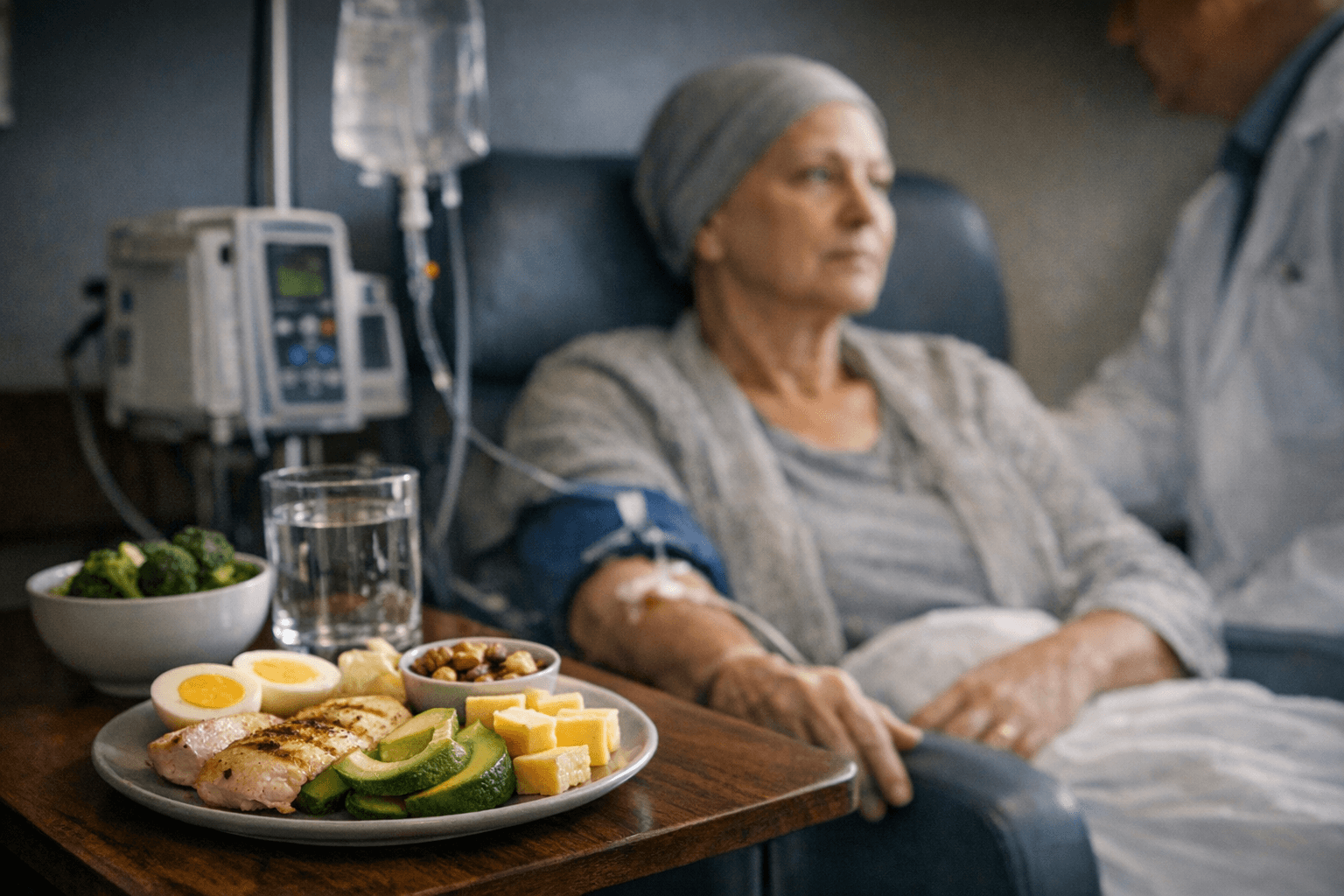
The real question is not whether keto can help every cancer patient. It is where ketogenic therapy belongs in oncology, and where the enthusiasm runs ahead of the evidence. In metastatic pancreatic ductal adenocarcinoma, that boundary is becoming clearer: a medically supervised ketogenic diet looks intriguing as an adjunct to chemotherapy, but it is still a research strategy, not a stand-alone answer.
That distinction matters because pancreatic ductal adenocarcinoma remains one of the hardest cancers to treat. The disease is the third leading cause of cancer-related death, and more than 80 percent of patients present with locally advanced or metastatic disease. Against that backdrop, even a modest signal can justify a deeper look, especially when the treatment backbone is already intensive and the outlook remains poor.
What this study actually tested
The study behind the headlines was a randomized phase II screening trial, NCT04631445, designed to compare chemotherapy plus ketogenic diet support against the same chemotherapy paired with a usual diet. It enrolled 32 patients total, all of whom were evaluable, and it was run across six U.S. locations in Arizona, California, Connecticut, Tennessee, and Texas, including HonorHealth in Scottsdale, USC/Norris Comprehensive Cancer Center in Los Angeles, Nuvance Health-Danbury Hospital and Nuvance Health in Norwalk, Tennessee Oncology in Nashville, and South Texas Accelerated Research Therapeutics in San Antonio.
Both arms received the same chemotherapy combination: gemcitabine, nab-paclitaxel, and cisplatin. The ketogenic arm was not a casual internet-style diet experiment. It was remotely guided, monitored with daily beta-hydroxybutyrate checks, and aimed for a ketone range of 0.5 to 3.0 mM. That setup makes the study especially relevant for readers who care about practical keto implementation, because it shows what a real oncology-grade nutritional intervention looks like when it is built for safety and compliance.
The nutritional side of the protocol also went beyond simple weight loss or carb counting. The clinical record says the trial assessed serum metabolites and quality of life, which is important because keto in cancer care is often discussed as if ketosis alone is the whole story. Here, the investigators were looking at a broader metabolic picture.
Ketosis was achievable, and that is part of the story
One of the clearest findings was feasibility. Fifteen of 16 evaluable patients in the ketogenic arm reached nutritional ketosis, and the group spent a median of 39.4 percent of treatment days in ketosis. That is a meaningful detail for the keto community because it shows adherence was not theoretical. Under supervised conditions, patients with advanced pancreatic cancer were able to maintain ketosis for a substantial share of treatment time.
The support structure mattered. TD2 Oncology said it served as the sponsor and had full operational responsibility for the study, working with Translational Genomics Research Institute and Virta Health. According to TD2, Virta provided the remote ketogenic diet platform, daily monitoring, and nutritional coaching. In other words, this was not just “eat keto and hope for the best.” It was an organized, monitored intervention built around a cancer treatment plan.
The efficacy signals are encouraging, but not practice-changing
On the outcome side, the numbers point in the right direction without crossing the line into proof. Median progression-free survival was 8.5 months in the ketogenic arm versus 6.2 months in the usual-diet arm. Median overall survival was 13.7 months versus 10.2 months. The hazard ratios trended in the same direction, but the one-sided p values did not establish statistical significance, so the result remains hypothesis-generating rather than definitive.
That matters because the control group did reasonably well on its own with intensive triplet chemotherapy. A median overall survival of 10.2 months and progression-free survival of 6.2 months is not a trivial benchmark. The keto-supported arm improved both measures numerically, but the confidence intervals were wide enough that no one should call this a settled win.
TD2’s announcement also reported a higher partial response rate in the ketogenic arm, 68.8 percent versus 31.2 percent in control. That adds to the sense that the diet may be doing something biologically meaningful, but it still belongs in the same early-stage bucket as the survival data: interesting, promising, and far from a green light for routine use.
Safety looked reassuring, and quality of life did not fall
For readers who worry that keto might make a difficult chemotherapy course even harder, the safety readout is one of the most useful parts of the story. All diet-related adverse events were grade 1 to 2, and there were no significant differences in grade 3 or higher chemotherapy-related adverse events between groups. The paper also reports that quality of life did not decline in the ketogenic arm.
That combination is important. In a high-risk population with metastatic disease, any supportive intervention has to clear a basic bar: it cannot make treatment less tolerable just to chase a theoretical metabolic benefit. So far, this supervised approach appears to have stayed on the safe side of that line.
The microbiome signal adds another layer, not a conclusion
The exploratory biology findings are another reason researchers will keep looking. The paper reports significant enrichment of beneficial taxa in the microbiome in the medically supervised ketogenic diet arm. That does not prove mechanism, and it does not tell you how to build a personal keto plan at home. It does suggest that the metabolic effects of a structured ketogenic intervention may reach beyond blood ketones alone.
For the keto community, that is the most interesting and the most dangerous part of the story. It is interesting because it hints that a carefully controlled ketogenic therapy may interact with chemotherapy in ways worth studying further. It is dangerous because microbiome shifts, response rates, and survival curves can be turned into overblown claims very quickly if the setting gets blurred.
What this can and cannot justify for keto outside the clinic
This study supports a narrow, serious takeaway: a medically supervised ketogenic diet may be worth testing as an adjunct to chemotherapy in advanced pancreatic cancer. It does not justify treating keto as a general cancer cure, and it does not make self-directed cancer keto protocols evidence-based.
What the data can support right now is a larger trial, a closer look at metabolic markers, and more discussion between oncologists, dietitians, and patients about whether a supervised ketogenic approach can fit into future pancreatic cancer care. What it cannot support is the leap from encouraging signal to routine recommendation.
For now, the message is clear. In pancreatic cancer, ketogenic therapy belongs under clinical supervision, alongside chemotherapy, in a tightly monitored research setting. Outside that frame, the evidence still belongs to the hopeful but unfinished stage, where promise is real and certainty is not.
This article was produced by Prism’s automated news system from verified source data, official records, and press releases, then run through automated quality and moderation checks before publishing. The system is built and supervised by the people who set the standards it runs under. Read our full AI policy.
Know something we missed? Have a correction or additional information?
Submit a Tip