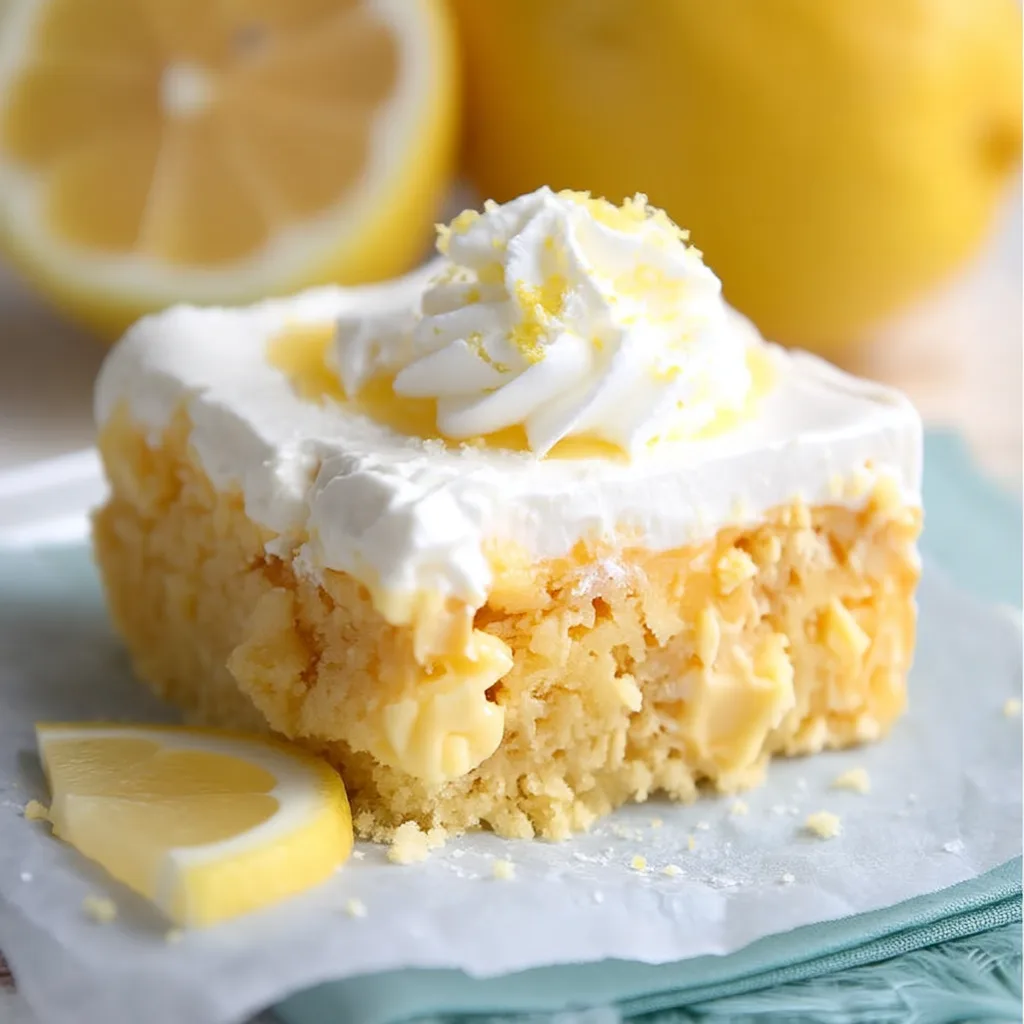
Why this cake matters
Keto dessert baking has reached the point where it is no longer just about replacing sugar. This lemon poke cake shows a more ambitious goal: deliver the kind of moist, bright, crowd-pleasing slice that feels at home on a spring table. Built with almond flour, coconut flour, eggs, melted butter, unsweetened almond milk, lemon zest, and lemon juice, it is designed to taste like a real cake first and a keto workaround second.
The appeal is immediate for anyone who has missed the soft crumb and sunny flavor of a classic citrus cake. Sweetened with erythritol or monk fruit, it keeps carbs under control without leaning on a dry, protein-bar style texture. The result is a dessert that aims to prove low-carb baking can still be festive, rich, and worth serving beyond the usual “I need something sweet right now” moment.
What sets the texture apart
The poke-cake method is the heart of this recipe, and that is what separates it from a standard keto layer cake. After baking, holes are poked into the cake so a lemon glaze can seep deep into the crumb. That step matters because keto cakes often struggle with the one thing people miss most when sugar disappears: moisture that stays in the slice instead of vanishing after the first bite.
Here, the glaze is made from powdered keto sweetener, lemon juice, and heavy cream, which gives the cake a richer finish than a thin citrus drizzle would. The soaked crumb is the selling point. Instead of settling for a dense or crumbly alternative, this recipe pushes for a texture that feels lush and bakery-like, which is exactly why the poke-cake format works so well in keto dessert engineering.
Sweetness and citrus balance
The flavor profile is intentionally bright rather than heavy. Lemon zest and lemon juice give the cake a sharp, refreshing edge, while erythritol or monk fruit keep the sweetness in a controlled range. That balance matters because keto desserts can easily go too far in one direction, either tasting flat from under-sweetening or artificial from pushing the sweetener too hard.
This cake avoids that trap by using citrus as the lead note and sweetener as support. The heavy cream in the glaze softens the lemon’s bite, so the finished dessert reads as creamy and lively instead of tart and thin. The effect is especially good for readers who want something that feels more like spring baking than a diet-friendly compromise.
Ingredients that keep it practical
One of the strongest points in this recipe is how accessible the ingredient list is. Almond flour and coconut flour are pantry staples in a lot of keto kitchens, and the rest of the base relies on familiar baking ingredients: eggs, butter, almond milk, lemon, and a keto sweetener. There is no need for specialized equipment or a complicated setup, which makes the cake feel realistic for home bakers instead of reserved for people with a fully stocked low-carb test kitchen.

That practicality is important because many keto desserts can become specialty-project baking. This one stays grounded in a standard pan and a normal oven, which lowers the barrier to actually making it. For a community that often weighs effort against payoff, that is a real advantage.
Optional finishes that make it feel celebratory
The recipe also leaves room for additions like blueberries, whipped cream, or cream cheese frosting. Those options matter because they move the cake further away from the idea of a strict substitute and closer to a dessert that belongs at an actual celebration. Blueberries add a natural pairing with lemon, while whipped cream or cream cheese frosting can make the final presentation feel more polished and occasion-worthy.
That flexibility is part of a bigger shift in keto baking culture. The goal is no longer simply to get through a sugar craving without breaking macros. It is to make something that looks and tastes like a dessert people would willingly choose, even if they are not thinking about carbs first.
Best uses: celebration cake versus daily craving
This is the kind of keto dessert that earns its place when you want more than a quick snack. The moist crumb, lemon glaze, and optional toppings make it a strong fit for birthdays, brunches, spring gatherings, or any table where you want dessert to feel complete. It has enough richness and visual appeal to stand in for a conventional poke cake, which is a meaningful bar for a keto recipe to clear.
For everyday cravings, though, the appeal shifts. The cake is still useful because it delivers a familiar cake-like experience with controlled carbs, but it is more involved than grabbing a simple fat bomb or a handful of berries. Its best everyday role may be as a make-ahead treat that lives in the fridge and brings a little lift to the week, not as the fastest possible sweet fix.
Why it signals where keto baking is headed
What makes this lemon poke cake interesting is not only that it works, but that it shows how far the category has moved. The recipe reads like reassurance for keto bakers who are tired of choosing between staying low-carb and enjoying real dessert texture. It says those two things do not have to be in conflict.
That is why the cake feels bigger than a single recipe. It reflects a version of keto baking that is increasingly confident, more festive, and more willing to chase the qualities that make dessert memorable in the first place. Moisture, brightness, richness, and presentation all matter here, and this cake is built to deliver them without giving up the low-carb framework that makes it useful in the first place.
Every story on Keto Diet Magazine is assembled by an automated editorial system that works from verified research, official records, and credible reporting, then clears automated accuracy and moderation checks before it goes live. The standards that system follows are set and overseen by the people who run the publication. Read our full editorial policy.
Did this article answer your question?