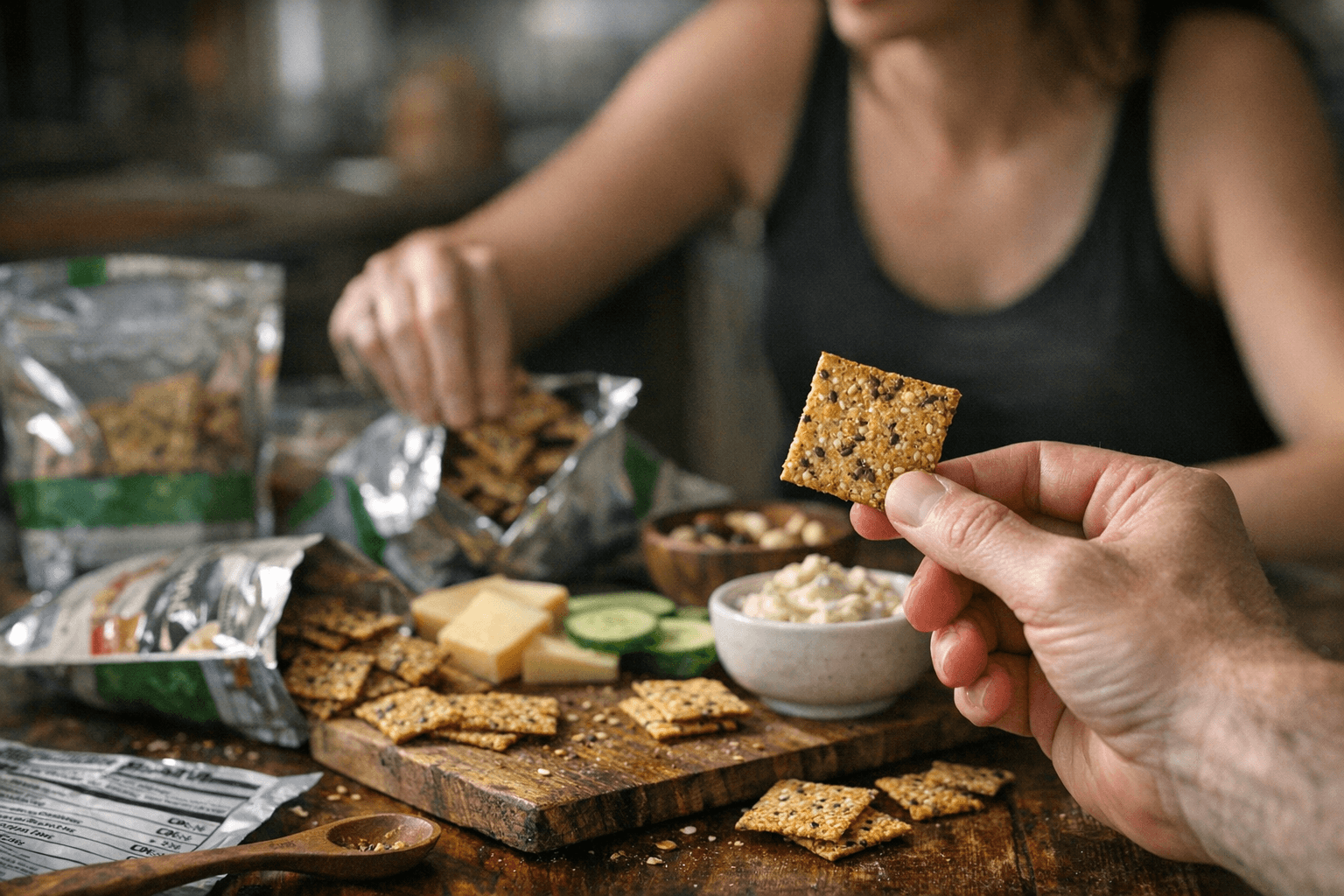
Keto crackers have become the new panic purchase for low-carb eaters who miss crunch, and the timing is not subtle. A short-form consumer video titled “Keto crackers: Why everyone is switching to this snack” ran April 11, 2026 on MSN, landing right in the April 5–12 stretch when snack roundups and new product drops tend to flood feeds.
The appeal is easy to understand if you have ever tried to turn a desk lunch into something that does not feel like punishment. The category sells a familiar cracker experience with very low net carbs per serving compared with conventional wheat crackers, then leans hard on convenience: shelf-stable, portable, open-and-eat. The formulations get there with alternative flours and fiber-heavy binders that show up again and again on labels, including almond flour, coconut flour, psyllium, and oat fiber substitutes, built to mimic that brittle snap people miss when they cut bread and chips.
What is driving the surge now is less about “discovering” keto and more about adherence friction. Crackers are a plug-and-play crunch replacement that pairs cleanly with high-fat and higher-protein staples that already fit the pattern, especially cheese and thick spreads. The packaging and positioning also reflect a shift from niche kitchen experiments to mainstream snack aisles: the April 11 segment pointed to both larger snack brands and smaller direct-to-consumer companies expanding options, responding to steady demand for keto-friendly packaged goods that reduce prep time.
The tradeoffs show up where keto veterans always look: the nutrition panel and the serving size. The same coverage stressed label-reading for a reason: serving sizes can be tuned to make carbs look smaller, sugar alcohols and non-nutritive sweeteners can complicate tracking, and sodium can climb fast in anything engineered to taste like a “real” cracker. Ingredient lists matter, too, because “keto” does not automatically mean minimally processed, and the most convenient crackers can lean on industrial fats and stabilizers to stay crisp on a shelf.
The simplest way to decide if a box belongs in your rotation is to run four checks before you get hypnotized by “net carbs.” Start with net carbs per serving, then immediately sanity-check the serving size against how many crackers you will actually eat. Look at the fat sources and overall ingredient list for how processed the crunch is. Then check fiber and protein density, because a cracker that eats like air tends to come back as cravings. Finally, do the boring math on value: if the bag is light, the price-per-gram can quietly turn “convenience” into the most expensive part of your keto day.
The April 11 spotlight captured the category’s momentum, but it also surfaced the core tension that never goes away in keto: packaged fixes can make adherence easier, yet they can also crowd out cheaper, more nutrient-dense whole foods if the snack becomes the meal.
Every story on Keto Diet Magazine is assembled by an automated editorial system that works from verified research, official records, and credible reporting, then clears automated accuracy and moderation checks before it goes live. The standards that system follows are set and overseen by the people who run the publication. Read our full editorial policy.
Did this article answer your question?