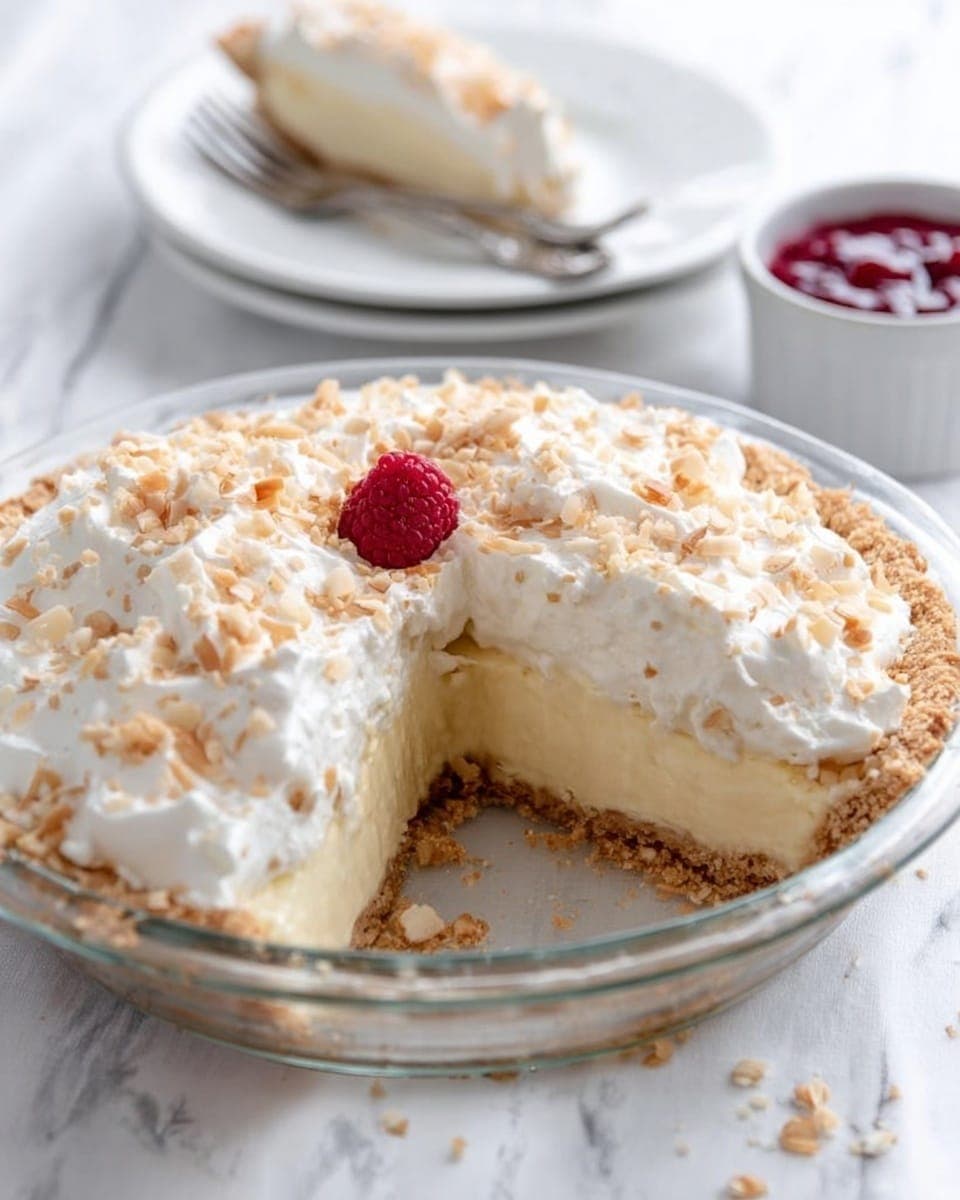
Keto coconut cream pie works when it tastes like the pie you remember, not like a compromise dressed up in whipped cream. The best versions lean into three things that matter most in a cream pie: a crisp crust, a silky custard, and coconut flavor that tastes unmistakably coconut, not vaguely sweet.
Why this pie feels like the real thing
This recipe gets the logic of dessert right. It does not try to be light, sparse, or apologetic; it uses rich ingredients to recreate the lush feel of a classic bakery slice while keeping flour and sugar out of the equation. Heavy cream, coconut cream, eggs, an extra egg yolk, powdered Swerve sweetener, butter, coconut extract, vanilla extract, xanthan gum, and shredded unsweetened coconut build a filling that reads creamy first and keto second.
That balance matters because coconut cream pie is all about contrast. You want the filling to be dense enough to slice, soft enough to melt on the tongue, and fully flavored enough that the coconut comes through without needing sugar to carry it. The recipe understands that the goal is not to make dessert smaller, but to keep dessert recognizable.
Where keto coconut pie usually fails
The most common problem in keto pies is texture drift. A crust that goes soggy under custard can make the whole dessert feel limp, while a filling that turns too firm, grainy, or eggy loses the dessert’s nostalgic pull. This recipe avoids both traps by treating the crust and filling as separate jobs that need different kinds of care.
The almond flour crust is pre-baked, which is exactly the kind of step that keeps a low-carb pie from collapsing into a damp bottom layer. Pre-baking gives the shell structure before the custard goes in, so the pie keeps that familiar cream-pie snap instead of turning pasty. For keto bakers, that is often the difference between a pie that slices cleanly and one that slouches on the plate.
The filling has its own risk point. Custard-based desserts can scramble fast if the eggs meet heat too aggressively, and that is where many keto recipes go wrong. If the filling tastes overly eggy, the whole coconut profile gets buried. If it breaks, the texture turns from silky to curdled in a hurry.
The custard technique that keeps it smooth
This pie uses tempering, and that detail is doing a lot of work. The hot cream is slowly whisked into the eggs so the mixture warms gradually instead of shocking the yolks into curds. That is the move that preserves the silky, bakery-style finish and keeps the custard from turning grainy.
The method also asks for constant whisking, which helps the xanthan gum do its job without clumping and keeps the filling even as it thickens. The pie is baked until the edges are set but the center still jiggles slightly, a classic cue that the custard will finish setting as it cools rather than overbaking in the oven. That little wobble is the difference between creamy and rubbery.
What to watch for
• Warm the creams gently so the custard base stays smooth. • Whisk the eggs and sweetener well before tempering. • Bake just until the edges set and the center still has a slight jiggle. • Let the pie cool fully before adding the topping, so the filling holds its shape.
Why the coconut flavor lands
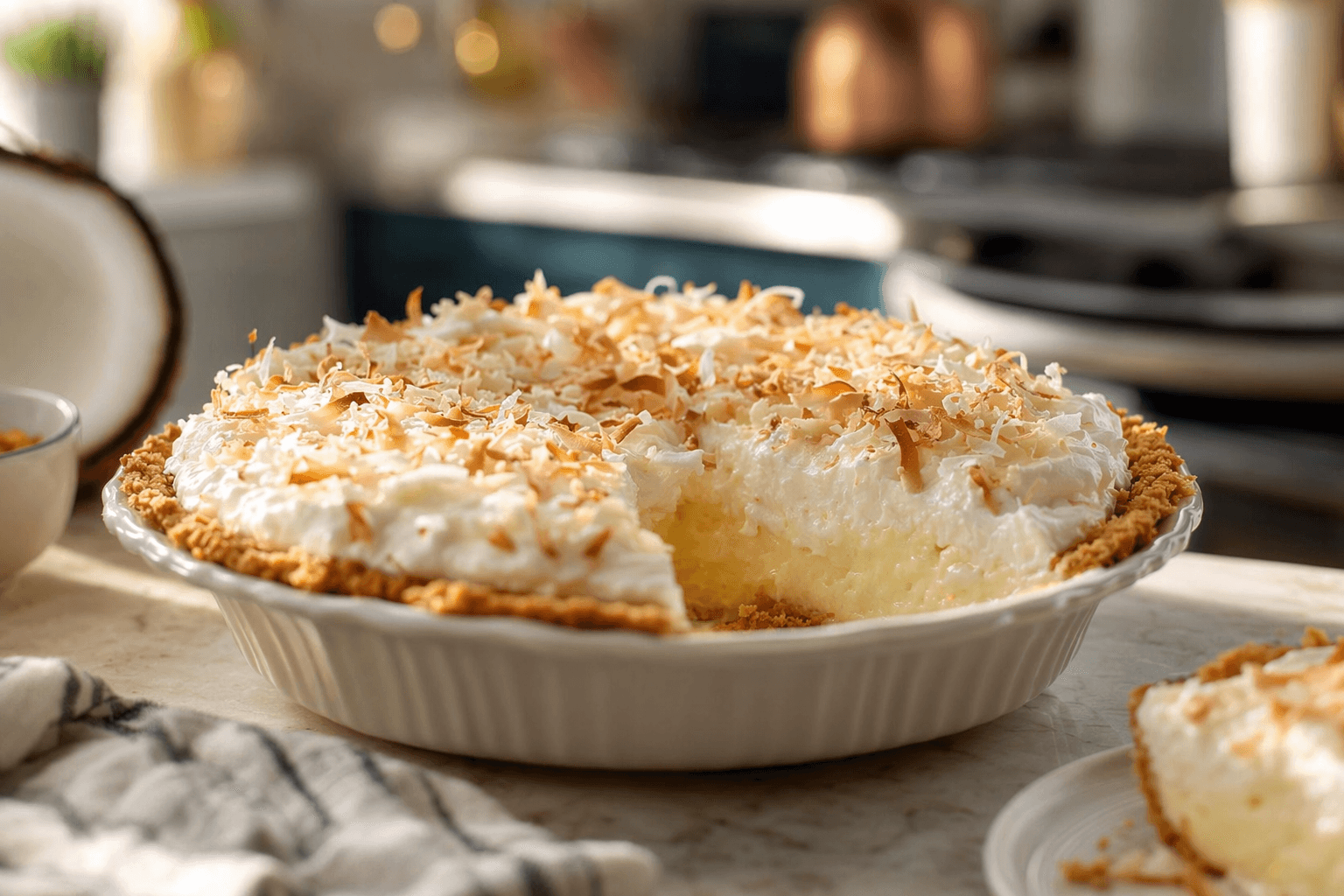
True coconut flavor is not just a garnish here. It comes from a combination of coconut cream, coconut extract, and shredded unsweetened coconut inside the filling, then toasted coconut flakes on top. That layered approach makes the pie taste like coconut from the first bite to the last, instead of relying on a single note that disappears once the whipped cream hits.
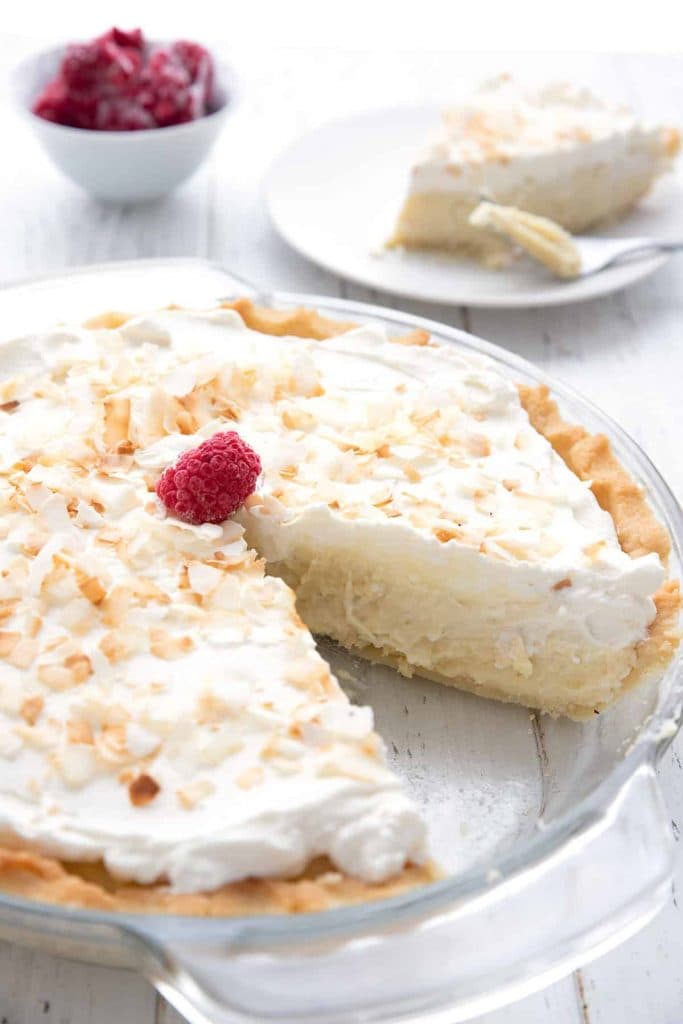
The topping matters just as much as the filling. Whipped cream sweetened with Swerve brings back the airy finish that makes cream pie feel celebratory, while toasted coconut flakes add contrast and a bakery case look. That final texture change is not decoration for decoration’s sake. It keeps the pie from feeling flat, and it gives each slice the crisp-and-creamy rhythm that makes classic dessert recipes memorable.
How this fits into the wider keto and diabetes conversation
This pie also reflects a broader shift in how dessert gets talked about in low-carb and diabetes-aware eating. The American Diabetes Association says sweet treats can fit into a healthy eating plan with smart swaps, moderation, and portion size in mind. The organization also identifies low-carbohydrate and very-low-carbohydrate eating patterns as options that can improve outcomes in adults with type 2 diabetes, and it describes a 28-page guide for health care providers on those approaches.
The CDC adds the same practical reality: many people assume dessert is off-limits with diabetes, but that is not true. With a few considerations, dessert can still have a place on the plate, even though carbohydrate-heavy desserts can spike blood sugar. Mayo Clinic guidance points in the same direction, framing a diabetes diet as a healthy-eating plan that helps manage blood sugar through meal planning and carbohydrate counting.
That is why a dessert like this feels so relevant to keto cooks right now. It is not about pretending sugar does not matter. It is about showing that ingredient choice, portion size, and total carb load can turn a once-forbidden pie into something that still feels indulgent and still fits the plan.
The real payoff
What makes this coconut cream pie stand out is not that it is low carb. It is that it still tastes like a celebration. The almond flour crust gives you structure, the custard stays creamy instead of eggy, and the coconut flavor stays present from filling to topping. That is the kind of keto baking that earns a permanent place in the dessert rotation, because it delivers the full pie experience without asking anyone to settle for less.
Every story on Keto Diet Magazine is assembled by an automated editorial system that works from verified research, official records, and credible reporting, then clears automated accuracy and moderation checks before it goes live. The standards that system follows are set and overseen by the people who run the publication. Read our full editorial policy.
Know something we missed? Have a correction or additional information?
Submit a Tip