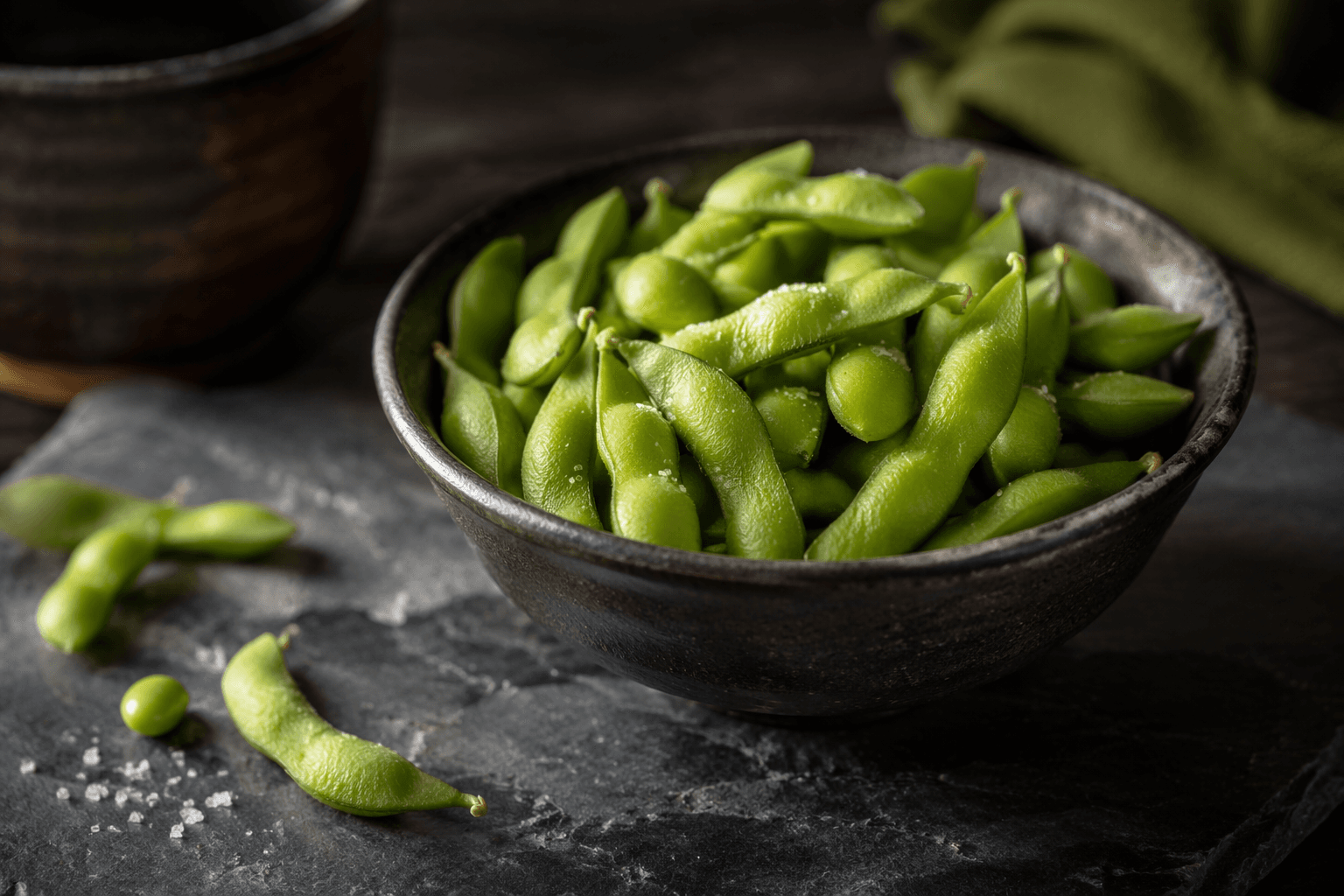
About half a cup of shelled edamame comes in at roughly 5 grams of net carbs in Amanda C. Hughes’s WickedStuffed garlic-parmesan recipe. That puts it in one of keto’s most practical gray areas: not free food, not forbidden, but often worth the carb spend. In Hughes’s recipe, it is a moderation play rather than a loophole. For beginners trying to decide whether a food is “technically keto enough,” edamame is a useful test case because the portion size, the net carb math, and the satiety all have to work together.
The keto math that makes edamame workable
A separate nutrition listing for a 1/2-cup serving gives about 90 calories, 10 grams of total carbohydrate, 8 grams of fiber, 9 grams of protein, and about 2 grams of net carbs, which shows how much the final number depends on the product and preparation. USDA FoodData Central is the federal database used to look up those food composition details, and its edamame entries make clear that exact counts move around, so the label matters.
That variability is why edamame works best as part of a daily carb budget, not as an open-ended snack. In a keto routine where every handful can add up fast, the difference between a measured half-cup and an untracked bowl is the difference between staying on plan and drifting out of it.
Why this snack feels more satisfying than many low-carb substitutes
The appeal is not just arithmetic. Hughes emphasizes that edamame is easy to season with garlic, parmesan, olive oil, lemon zest, chili, and other savory toppings, giving it the kind of salt-and-fat punch many keto eaters miss when they give up bread, crackers, and chips. Snacks are often the hidden weak point in low-carb routines, especially when the alternative is a bag of processed “keto” products that satisfy the carb count but not the craving.
Hughes also ties edamame to a very specific behavior problem: the urge to dip something in oil. That is a familiar keto frustration, especially for readers who miss the ritual of bread baskets, crackers, and other vehicles for sauces and spreads. Edamame offers something crunchy and salty enough to feel like a real snack instead of a diet assignment.
Why legumes are not automatically off-limits
Edamame is a legume, and that category gets a better hearing from nutrition experts than many keto newcomers expect. Legumes are an inexpensive source of protein, vitamins, complex carbohydrates, and fiber. Harvard’s Nutrition Source identifies them as low-glycemic, protein-rich, fiber-rich, and satiating. That combination can work inside a carb-controlled plan when the portion is kept in check.
Harvard Health also draws an important line inside the soy aisle. Whole soy foods such as edamame, tofu, and soy milk are fine in moderation, several times per week, while soy protein isolate, textured vegetable protein, and soy isoflavone supplements are treated differently. For keto readers, that separates a recognizable food from the more processed soy ingredients that show up in bars, powders, and meat substitutes.
Carb cravings explain the appeal
Cleveland Clinic’s guidance on cravings covers a familiar problem. Carb cravings are common, and they can intensify when people eat too many refined carbs or too few healthy carbs and calories. A simple garlic-parmesan edamame bowl can feel more satisfying than a stack of artificially sweetened snacks.
Cleveland Clinic also describes keto as a medical or therapeutic diet in some cases, especially for treatment-resistant epilepsy, and notes classic ketogenic, modified Atkins, and low-glycemic-index versions of the diet.
How to use edamame without overdoing it
The strongest version of edamame on keto is not a giant bowl eaten absentmindedly. It is a measured serving folded into a day that already makes room for its carbs. Hughes presents it as something that can be boiled and salted, tossed into salads, or pureed into dips, which gives it more uses than a one-note snack and makes it easier to fit into a real meal plan.
A practical keto approach looks like this:
- Keep the serving at about 1/2 cup shelled edamame.
- Count the net carbs, not just the total carbs.
- Use savory toppings that make the snack feel satisfying.
- Treat it as part of the day’s carb allowance, not a free pass.
- Rotate it with other whole foods so it does not become every-meal food.
Every story on Keto Diet Magazine is assembled by an automated editorial system that works from verified research, official records, and credible reporting, then clears automated accuracy and moderation checks before it goes live. The standards that system follows are set and overseen by the people who run the publication. Read our full editorial policy.
Did this article answer your question?