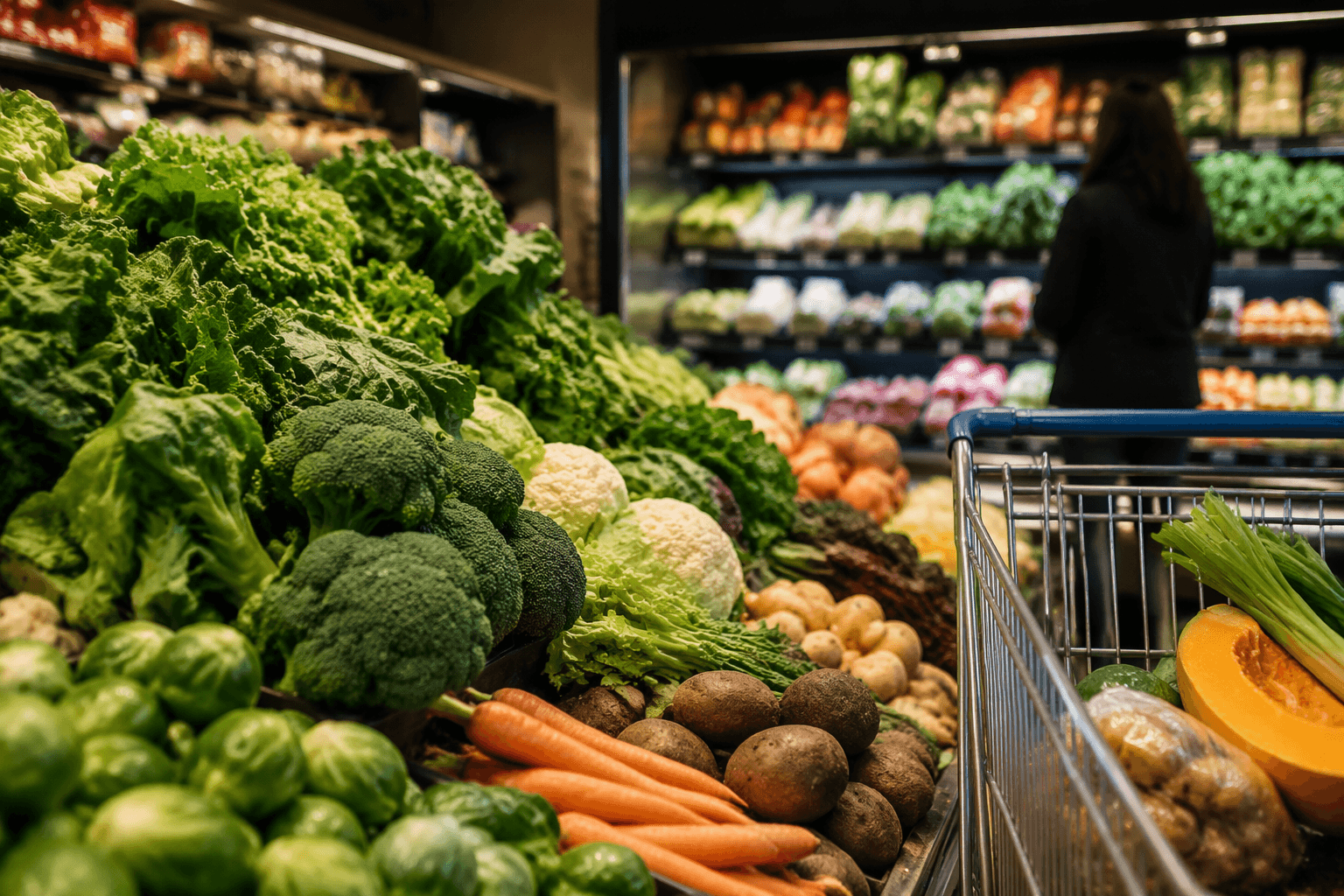
At the produce aisle, keto stops being abstract fast: leafy greens, cauliflower, broccoli, and zucchini fit easily, while potatoes, corn, peas, and larger portions of carrots or squash need a measuring cup instead of a free hand. Acibadem Hospitals Group’s health library frames the question plainly: which vegetables keep your carb count low enough to stay in ketosis, and which ones need a measuring cup instead of a free hand? Keto is a very-low-carbohydrate pattern that shifts the body from glucose to fat for fuel, so one oversized serving can change the whole plate.
Why the produce aisle matters on keto
The keto rule is simple in theory and annoying in practice. Harvard T.H. Chan School of Public Health and UC Davis Health describe keto as a strict, high-fat, very-low-carbohydrate eating pattern that moves the body away from glucose and toward fat as its primary fuel source. Once you look at vegetables through that lens, the usual “vegetables are healthy” advice is no longer enough.
The National Lipid Association’s 2019 scientific statement made that tradeoff plain: severe carbohydrate restriction narrows intake to nonstarchy vegetables and cuts out fiber-rich starchy vegetables, along with most fruits, legumes, and whole grains. That is the real keto grocery headache: vegetables are still on the menu, but the margin for error gets much smaller.
The vegetables that fit the easiest
The vegetables that fit easiest are leafy greens, spinach, cucumber, celery, cauliflower, broccoli, asparagus, zucchini, cabbage, and mushrooms.
Those are the vegetables that give keto meals some structure. Leafy greens and cucumber handle salads and crunch. Cauliflower can stand in for mash or rice when you want volume without a starch bomb. Broccoli, zucchini, cabbage, and mushrooms are the kind of vegetables that let you build a hot meal without turning it into a carb count game.
BBC Good Food’s January 17, 2025 low-carb vegetable guide put the broader point well: vegetables are packed with vitamins and minerals, but their carb levels vary greatly. That is exactly why the low-carb basket works best when you anchor it in nonstarchy produce.
The vegetables that need a tighter hand
This is where a lot of keto beginners get tripped up. Potatoes, corn, peas, and larger portions of carrots or squash can push carb totals up quickly, even when they look innocent on the plate. None of those foods are villains, but they are not “free” vegetables in a ketogenic plan.
The practical move is to treat them as measured add-ons, not the base of the meal. A baked potato, a heaped bowl of corn, or an oversized serving of roasted squash can eat up the same carb budget that would have covered several servings of leafy greens or broccoli.
How to build a keto plate without guessing
A solid keto grocery basket usually starts with salad greens, spinach, cucumber, celery, and cabbage, then adds something cooked, like cauliflower, broccoli, zucchini, asparagus, or mushrooms.
A few practical habits make that easier:
- Buy the vegetables that you can use in two ways, raw and cooked. Spinach, cucumber, cauliflower, broccoli, zucchini, and mushrooms give you that flexibility.
- Use the starchier vegetables as accents. Carrots, squash, peas, corn, and potatoes are the ones that need the most restraint.
- Watch the “healthy” extras. A keto meal can stay in range on vegetables alone and still drift upward if roasted vegetables get drowned in sauce or piled into a serving that is bigger than the rest of the plate.
- Keep fiber in the picture. Vegetables help supply fiber, potassium, magnesium, folate, vitamin C, and phytonutrients, all of which become harder to get when grains, fruit, and starchy staples disappear.
Constipation, low energy, and micronutrient gaps are common complaints when people transition into ketosis, and better vegetable choices and better portion control are the usual fix.
Why the clinical literature keeps circling back
A 2021 Frontiers in Nutrition narrative review treated low-carbohydrate ketogenic diets as a clinical nutrition topic, not a fad. A 2024 Frontiers in Nutrition study analyzed the nutrient content of three low-carbohydrate diets, which tells you the adequacy question is still alive in the research world.
The concern also shows up in more specific populations. A 2023 study on adolescents with type 1 diabetes examined micronutrient intake and status on a low-carbohydrate diet, reinforcing the point that tight carb restriction can narrow the nutrient field fast.
The bigger picture behind the keto label
It was originally developed in the 1920s as a medical therapy for epilepsy, then later became popular again for weight loss and metabolic health.
Every story on Keto Diet Magazine is assembled by an automated editorial system that works from verified research, official records, and credible reporting, then clears automated accuracy and moderation checks before it goes live. The standards that system follows are set and overseen by the people who run the publication. Read our full editorial policy.
Did this article answer your question?