Five minutes. Three ingredients. One skillet. If your keto mornings have been defaulting to plain scrambled eggs out of sheer exhaustion, this shakshuka-style hack is the reset you didn't know you needed.
The concept, popularized by the "In The Kitchen with Matt" quick-cook series, strips the classic North African and Middle Eastern egg dish down to its most macro-friendly bones: eggs, a low-carb tomato or pepper-based sauce, and your seasoning of choice. No sourdough. No chickpeas. No hidden sugar bombs. Just a warm, deeply satisfying skillet breakfast that delivers steady protein and fat before your first meeting of the day.
Why Shakshuka Works So Well for Keto
Traditional shakshuka is already close to keto-friendly by nature: eggs poached in a spiced tomato sauce, finished with herbs and sometimes cheese. The ketogenic adjustment is primarily about the sauce. Standard canned crushed tomatoes or jarred marinara can carry anywhere from 6 to 12 grams of sugar per half-cup serving, which eats into your daily carb ceiling fast. The three-ingredient version sidesteps that by using a reduced-carb sauce base and keeping the portion deliberately tight, so the net carb count stays manageable without sacrificing any of the richness that makes shakshuka so satisfying.
Shakshuka stores surprisingly well, which makes it an ideal candidate for weekday breakfast planning. But the real draw here is the five-minute execution: heat the pan, warm the sauce, crack the eggs, cover and cook. That's the entire workflow.
The Core Method
The skillet technique is straightforward and forgiving:
1. Heat a small non-stick or cast-iron skillet over medium heat and add a thin layer of your chosen low-carb tomato or roasted pepper sauce. A quarter to a third of a cup is plenty for two eggs.
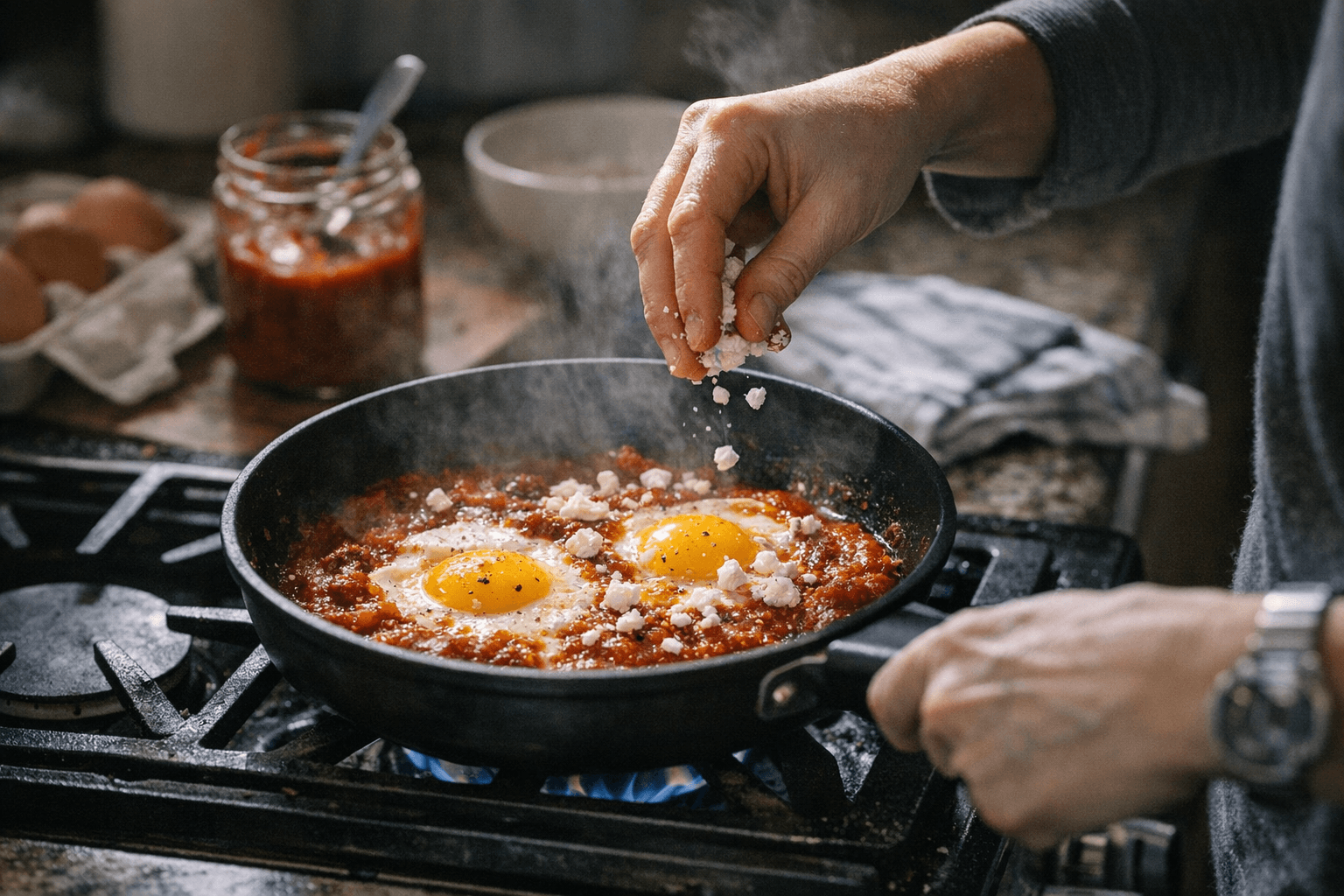
2. Once the sauce is bubbling gently, create small wells and crack your eggs directly into them.
3. Season immediately with salt, pepper, and any spice you like (smoked paprika, cumin, and chili flakes are the classic moves).
4. Cover the pan with a lid and let the eggs set for two to three minutes for runny yolks, or four to five for fully set whites.
5. Finish with a scattering of fresh herbs or a pinch of feta if you're keeping dairy in rotation.
The host demonstrates that portioning matters here: the sauce is a bed, not a pool. Too much sauce adds unnecessary carbs and lengthens cook time.
Getting the Macros Right
Two large eggs bring roughly 12 grams of protein and 10 grams of fat to the plate, with under 2 grams of carbohydrates. The sauce will add 2 to 4 grams of net carbs depending on the brand and volume. That puts the baseline meal around 14 grams of protein, 10 to 15 grams of fat (more with olive oil or cheese), and 4 to 6 grams of net carbs. If you're targeting a higher protein intake, three eggs is an easy upgrade that adds 6 more grams of protein with negligible carb impact.
The fat content is where most keto practitioners will want to customize. A drizzle of extra-virgin olive oil before plating, a spoonful of full-fat Greek yogurt on the side, or a crumble of aged cheddar over the top all push the meal firmly into ketogenic fat ratios without touching the carb count in any meaningful way.
The Grocery Label Trap: Choosing the Right Sauce
This is where many keto newcomers get burned. Jarred tomato and roasted pepper sauces vary wildly. Every keto-friendly option worth stocking should have less than 7 grams of sugar and 11 grams of carbs per half-cup serving. When you're scanning the shelf, flip the jar and go straight to the "Total Sugars" line. Added sugars are the main villain: many mainstream marinara brands add cane sugar or corn syrup to balance acidity, which has no place in a keto pantry.
A few things to look for on the label:
- Ingredient list length: Shorter is better. Tomatoes, olive oil, garlic, salt, and basil is the gold standard.
- Sugar per serving: Aim for 3 grams or under per quarter-cup portion (the amount you'd actually use in this recipe).
- "1 gram of sugar per half-cup serving" is achievable with clean-ingredient brands that use no added sugar. That's your benchmark.
- Serving size math: Labels often use a half-cup as the reference serving. You're using less, so calculate accordingly.
Roasted red pepper sauces can be a lower-sugar alternative to straight tomato, but always check: some brands add honey or brown sugar to the roasting process.
Make It Better: 3 Variations
Dairy-Free Version
Skip the cheese entirely (the eggs carry the richness on their own) and finish the skillet with a teaspoon of tahini swirled over the top after plating. Tahini adds creaminess, healthy fat, and a subtle nutty note that plays beautifully with the smoky paprika. Alternatively, a few drops of good olive oil and torn fresh basil do all the work without any dairy. For the egg-free or dairy-free crowd, tofu or a store-bought egg replacer like Just Egg can be cooked directly in the shakshuka sauce as a further adaptation, though the classic version with eggs is already naturally dairy-optional.
Higher-Protein Version
The simplest lever: go from two eggs to three, or add one to two ounces of crumbled cooked chorizo or Italian sausage to the sauce before adding the eggs. Both additions are zero-carb and dramatically increase the satiety ceiling of the meal. Pre-cooked ground lamb or turkey also works; brown it the night before, store in the fridge, and stir a spoonful into the sauce while it heats. This version is particularly useful if you're hitting the gym in the morning and need protein in the 25-to-30-gram range before training.
Meal-Prep Version
Make a double batch of the sauce, let it cool completely, and transfer it to an airtight container to store in the refrigerator for up to three days. Keep the sauce separate from the eggs when storing: add fresh eggs only when you're reheating. This preserves texture and prevents the dreaded rubbery, overcooked egg situation. On busy mornings, the sauce is already done; all you do is reheat, crack, cover, and eat. If the sauce thickens overnight, add a small splash of water to loosen it before the eggs go in.
Spinach and Pepper Add-Ons
The original tutorial suggests a handful of baby spinach wilted into the sauce before the eggs, or thin-sliced low-carb peppers laid flat across the top. Both additions are macro-safe. Baby spinach contributes less than 1 gram of net carbs per cup and adds magnesium and iron, two nutrients that tend to drop on restricted diets. Poblano or green bell pepper strips add crunch and a mild heat without spiking the carb count significantly, especially in the two-to-three-strip portions shown in the video.
The Bigger Picture
When you're on keto, it's important to get a punch of protein when you wake up, and breakfast tends to be the meal where most people aren't getting enough of it. A five-minute shakshuka fixes exactly that. It's warm, it's savory, it fills the gap that a cold protein shake often doesn't, and it keeps the mid-morning carb impulse at bay by delivering fat and protein together rather than in isolation.
The beauty of stripping shakshuka to three ingredients isn't that it's a lesser version of the dish. It's that it removes every friction point that keeps people reaching for cereal instead. Once the sauce is on the shelf and the eggs are in the fridge, there's genuinely no easier hot keto breakfast available on a Tuesday morning.
Every story on Keto Diet Magazine is assembled by an automated editorial system that works from verified research, official records, and credible reporting, then clears automated accuracy and moderation checks before it goes live. The standards that system follows are set and overseen by the people who run the publication. Read our full editorial policy.
Did this article answer your question?